
Family law cases often create financial stress when legal fees seem overwhelming. Many people avoid getting the help they need because they can’t afford large upfront payments.
We at Billie Jo Hopwood Family Law & Mediation, PLLC understand that finding family law lawyers that take payments can make the difference between getting proper representation and going without legal help. Payment plans allow you to spread costs over time while still receiving quality legal services.
Understanding Payment Plans for Family Law Services
Types of Payment Arrangements Available
Family law payment plans come in three main forms that work differently than traditional legal billing. Hourly payment plans allow you to pay monthly installments against your attorney’s hourly rate instead of large retainer fees upfront. Fixed monthly payment plans spread a predetermined total cost across several months and give you predictable expenses. Hybrid arrangements combine elements of both approaches, where you pay a smaller initial retainer followed by structured monthly payments as your case progresses.
Traditional Billing Creates Financial Barriers
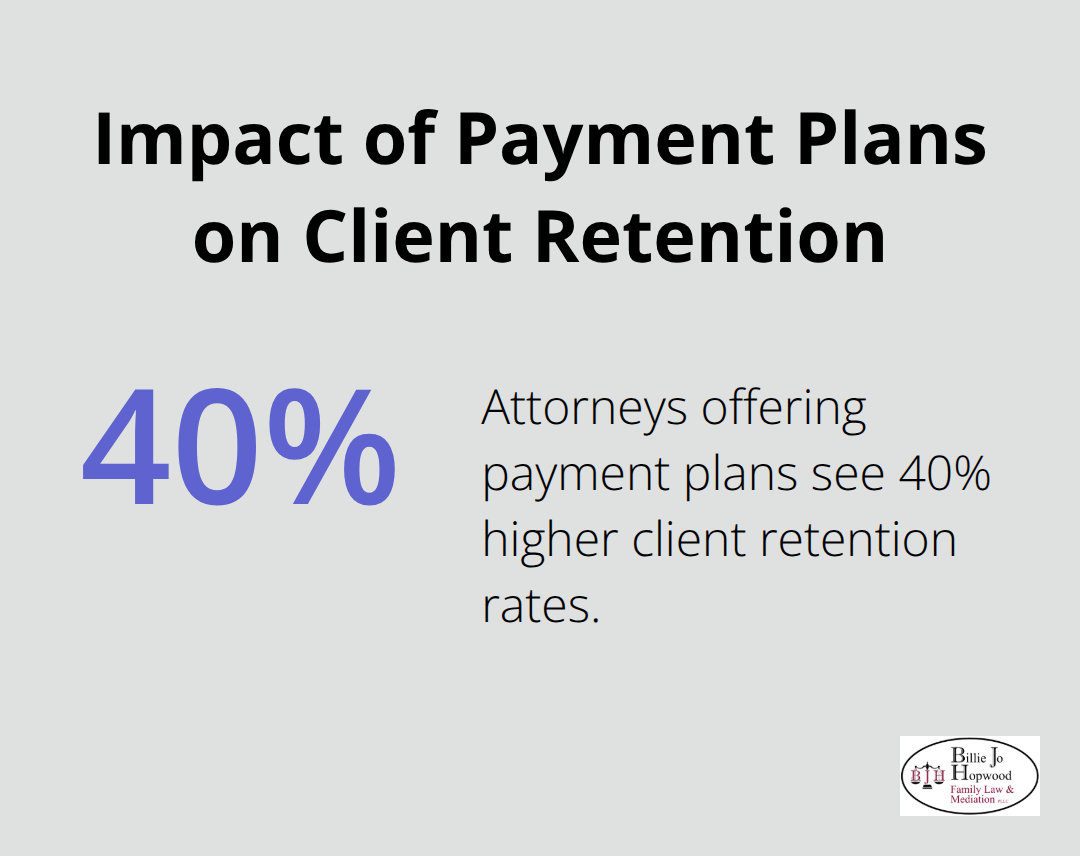
Traditional family law billing requires substantial upfront retainers, often $3,000 to $10,000 before work begins. This approach forces many people to delay legal action or represent themselves poorly. Payment plans eliminate this barrier and accept smaller initial payments (typically $500 to $1,500), then spread remaining costs over 3 to 12 months. The Florida Bar reports that attorneys who offer payment plans see 40% higher client retention rates because people can access legal services when they need them most rather than wait to save money.
Payment Plans Reduce Financial Stress During Legal Proceedings
Flexible payment arrangements provide immediate financial relief during already stressful family situations. Monthly payments of $200 to $800 fit better into household budgets than single large payments. Many attorneys structure payments to align with your income schedule, whether weekly, biweekly, or monthly. Some firms offer automatic payment options through debit cards or bank transfers and eliminate the worry of missed payments. This predictability helps you budget for other necessities while your divorce or child support case moves forward.
The next step involves understanding exactly how these payment structures work in practice and what documentation attorneys require to set up these arrangements.
How Payment Plans Work in Family Law Cases
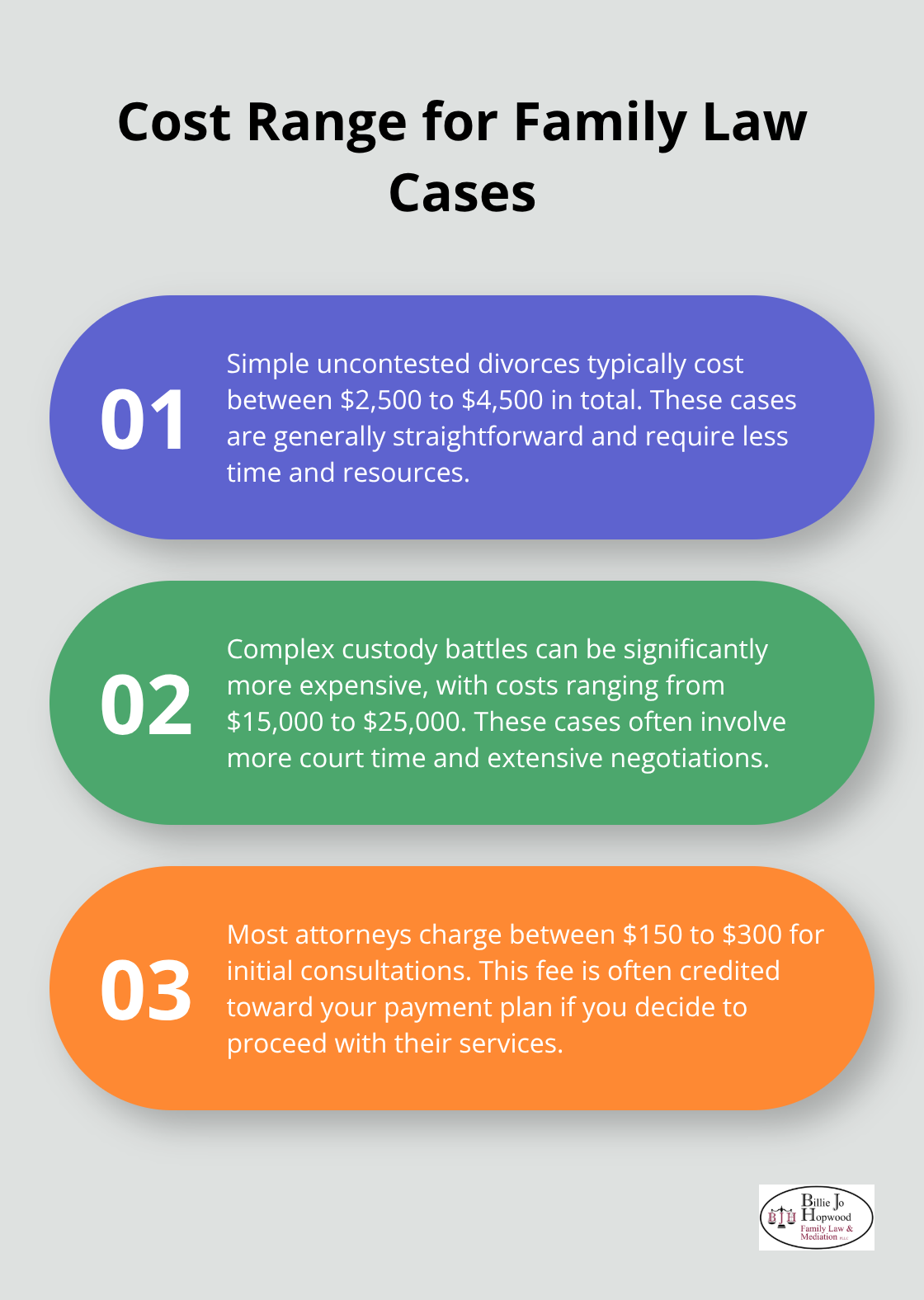
The payment plan process starts during your initial consultation when attorneys assess your case value and financial capacity. Most family law attorneys charge $150 to $300 for initial consultations, which they credit toward your payment plan if you proceed. During this meeting, attorneys evaluate case complexity, estimate total costs, and determine your monthly payment capability. Simple uncontested divorces might cost $2,500 to $4,500 total, while complex custody battles can reach $15,000 to $25,000. Attorneys typically require proof of income, monthly expenses, and basic financial information to structure realistic payment terms.
Initial Consultation and Fee Assessment Process
Attorneys conduct thorough financial assessments before they propose payment structures. They review your income statements, monthly obligations, and available resources to determine what you can afford. Most attorneys ask for recent pay stubs, bank statements, and a list of monthly expenses during this evaluation. This information helps them calculate sustainable payment amounts that won’t strain your budget. The assessment also includes discussion of case timeline and potential complications that might affect total costs.
Monthly Payment Structure Options
Payment plans typically span 6 to 18 months depending on case complexity and your financial situation. Attorneys calculate monthly payments by dividing estimated total costs minus your initial payment across the agreed timeframe. For an $8,000 divorce case with $1,500 down, you would pay approximately $540 monthly over 12 months. Most firms require automatic payments through bank transfers or credit cards to maintain consistent cash flow. Some attorneys offer seasonal payment adjustments for clients with variable income (such as teachers or seasonal workers).
Documentation and Agreement Requirements
Payment plan agreements must include specific terms that protect both parties from misunderstandings. These contracts specify total case costs, monthly payment amounts, late fee penalties (usually $25 to $50), and consequences for missed payments. Most attorneys require signed agreements that state legal work may pause if payments become 30 days overdue. Florida Bar guidelines require attorneys to maintain detailed records of all payment arrangements and provide clients with monthly statements that show payments received and remaining balances.
The next step involves finding attorneys who offer these flexible payment options and knowing what questions to ask during your search.
Finding Family Law Attorneys Who Offer Flexible Payment Options
Ask Direct Financial Questions During Consultations
Most attorneys don’t advertise payment plans prominently, so you must ask specific questions during initial consultations. Ask what percentage of clients use payment plans and request examples of typical arrangements for cases like yours. Inquire about minimum down payments, monthly payment ranges, and maximum plan duration. Request details about late payment penalties and what happens if you miss payments. Florida attorneys who regularly offer payment plans can provide immediate answers and show you sample agreements. Those who seem hesitant or vague likely don’t have established payment programs.
Identify Payment Plan Warning Signs
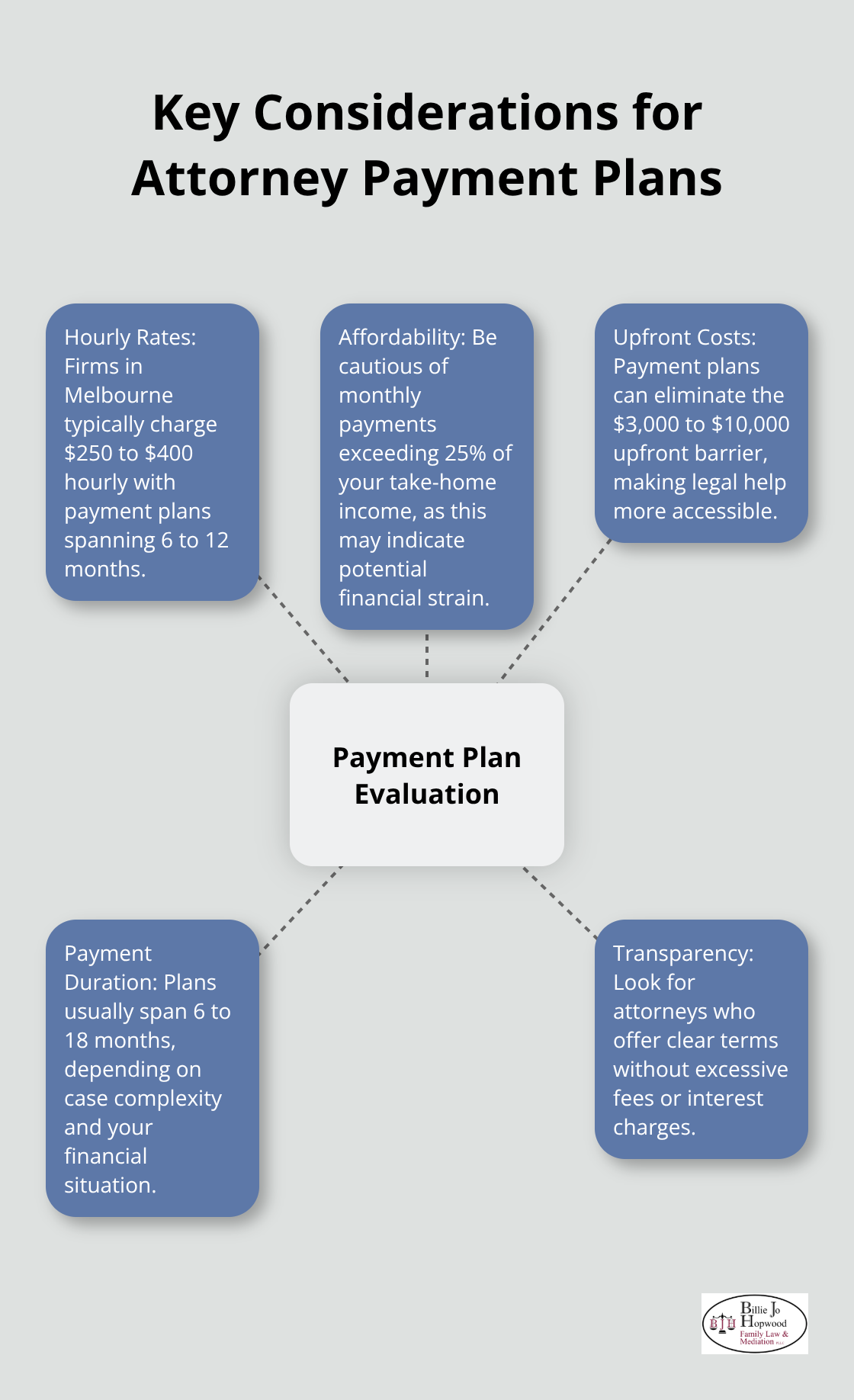
Avoid attorneys who demand full payment within 60 days or charge excessive late fees above $50 per missed payment. Red flags include attorneys who won’t put payment terms in writing, require credit checks for payment plans, or charge interest on monthly payments. Some attorneys use payment plans as marketing tools but still expect large lump sum payments during your case. The Florida Bar prohibits attorneys from charging unreasonable fees, so monthly payments that exceed 25% of your take-home income indicate potential problems. Attorneys who pressure you to borrow money or use credit cards instead of offering genuine payment plans don’t prioritize client financial wellness.
Compare Payment Structures Across Multiple Firms
Contact at least three family law firms to compare their payment options and total costs. Some attorneys offer fixed monthly payments of $300 to $600 regardless of case complexity, while others calculate payments based on estimated total costs. Many attorneys in Melbourne offer unbundled legal services, where you can pay for specific tasks rather than full representation. Firms in Melbourne typically charge $250 to $400 hourly with payment plans that span 6 to 12 months. Document each firm’s down payment requirements, monthly amounts, and total estimated costs for accurate comparison. Ask about automatic payment discounts and seasonal payment adjustments for variable income (particularly helpful for teachers or seasonal workers). The best payment plans align with your budget while they provide comprehensive legal representation throughout your case.
Evaluate Attorney Experience with Payment Plans
Choose attorneys who have established payment plan systems rather than those who offer them occasionally. Experienced attorneys can predict case costs more accurately and structure realistic payment schedules. They maintain clear documentation systems and provide regular payment statements. Ask how long the firm has offered payment plans and what percentage of their clients use these arrangements. Attorneys with extensive payment plan experience understand financial pressures families face and work to accommodate your needs while maintaining quality representation. Many families choose mediation because it offers a more private and flexible way to resolve disputes.
Final Thoughts
Payment plans transform family law representation from an unaffordable luxury into an accessible necessity. These arrangements eliminate the $3,000 to $10,000 upfront barrier that prevents many families from getting proper legal help. Monthly payments of $200 to $800 fit household budgets better than large lump sums, while automatic payment options reduce stress during difficult times.
When you select payment arrangements, prioritize attorneys who offer transparent terms without excessive late fees or interest charges. Compare down payment requirements, monthly amounts, and total costs across multiple firms. Avoid attorneys who pressure you toward credit cards or loans instead of genuine payment plans (these tactics often indicate poor financial practices).
Family law lawyers that take payments understand the financial pressures families face during legal proceedings. We at Billie Jo Hopwood Family Law & Mediation, PLLC provide compassionate guidance through divorce, child custody, alimony, and child support matters while we work within your budget constraints. Start by scheduling consultations with attorneys who offer established payment programs and ask direct questions about payment structures.