
Family law legal terms can feel overwhelming when you’re navigating custody arrangements, support obligations, or court procedures. Parents in Melbourne, Florida often find themselves confused by unfamiliar language that shapes critical decisions about their children and finances.
We at Billie Jo Hopwood Family Law & Mediation, PLLC created this guide to break down the terminology you’ll encounter. Understanding these terms puts you in control of your family’s future.
Parental Responsibility and Time-Sharing in Florida
Understanding Parental Responsibility and Time-Sharing
Florida courts no longer use the word custody, instead referring to parental responsibility and time-sharing. Parental responsibility defines who makes major decisions about your child’s education, healthcare, religion, and extracurricular activities. Time-sharing describes where your child lives and how many days they spend with each parent. These two concepts operate independently, which means one parent can hold parental responsibility for educational decisions while time-sharing is split evenly. Courts increasingly favor shared parental responsibility whenever safe, according to the Florida Chapter of the Association of Family and Conciliation Courts. In shared arrangements, both parents must consult on major decisions, though one parent can hold ultimate decision-making authority if disagreements arise. Sole parental responsibility goes to one parent only, typically when abuse, neglect, or serious instability exists.
Selecting a Time-Sharing Schedule That Works
Your time-sharing schedule comes in several formats, each with distinct advantages. The 1-week-on/1-week-off rotation provides consistency for school routines but requires frequent transitions. The 2-2-5-5 schedule alternates two days with one parent, two days with the other, then five days with the first parent again, reducing adjustment time for young children. The 3-4-4-3 rotation works well for parents with flexible work schedules.
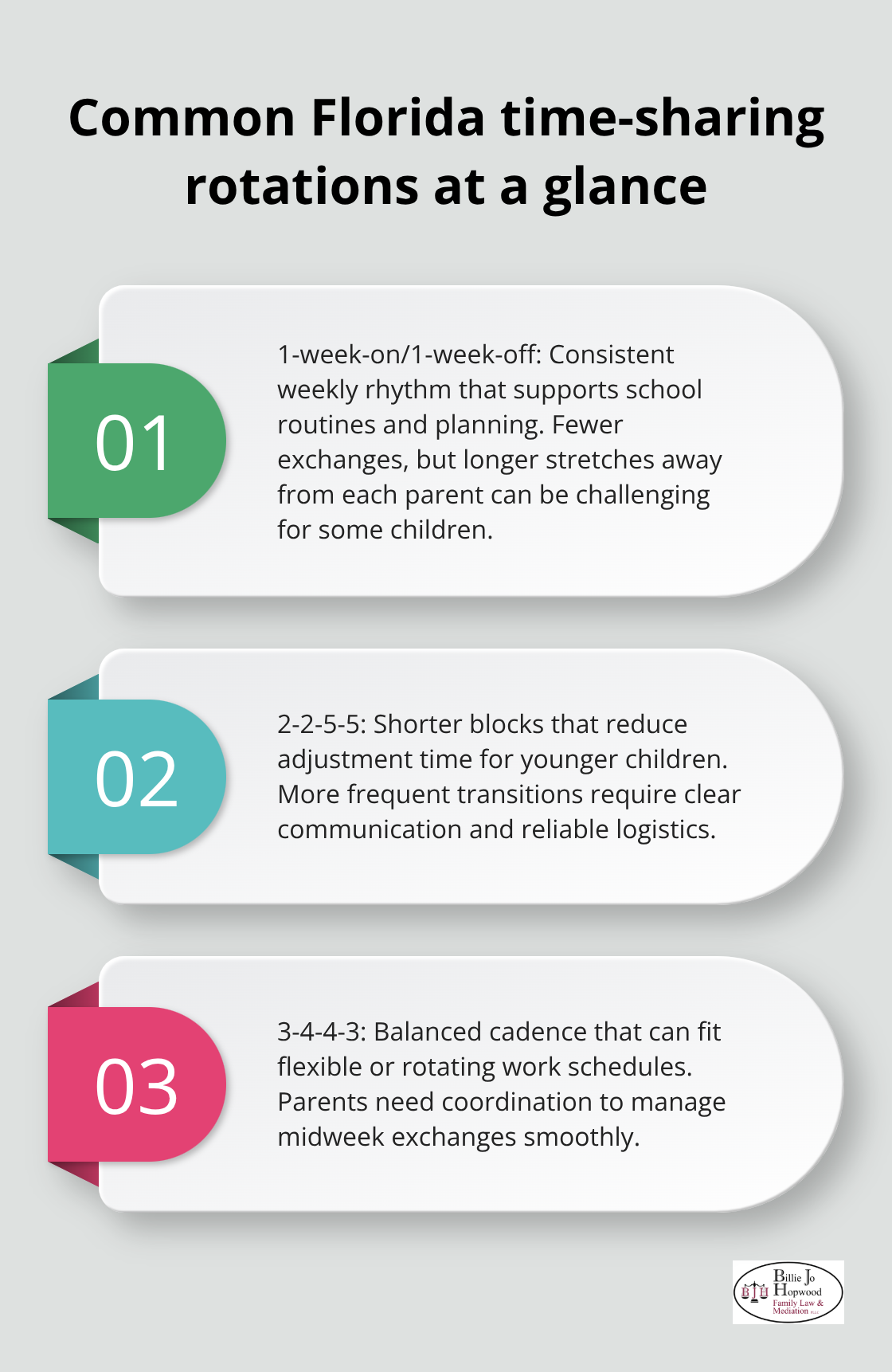
Courts evaluate each parent’s involvement in daily life, home stability, health, and ability to support the child’s relationship with the other parent before deciding arrangements. Your parenting plan must specify these details in writing, including transportation responsibilities, exchange locations, and holiday schedules, turning general principles into actionable logistics.
Building a Practical Parenting Plan
Your parenting plan becomes your operational manual for raising your child across two households. A well-drafted plan reduces ongoing conflict because expectations are explicit rather than assumed. Include contingencies for school changes, emergency procedures, and unexpected schedule conflicts. Courts in the 12th Judicial Circuit offer four standardized parenting plans-Basic, Long Distance, Highly Structured, and Safety Focused-designed to address different family scenarios. The Basic plan suits parents with standard scheduling needs. Long Distance accommodates parents separated geographically. Highly Structured works for families needing detailed daily routines. Safety Focused prioritizes protection when domestic violence or substance misuse is a concern.
When Circumstances Change
When both parents agree on all terms, courts typically approve uncontested arrangements quickly if they serve the child’s best interests. This path avoids lengthy litigation and preserves resources for your family’s future. If circumstances change significantly-a job relocation, health issues, behavioral concerns, or evolving child needs-you can petition for modification by showing substantial material change. Courts take these requests seriously because stability matters for child development, yet they also recognize that rigid plans fail real families. Financial support obligations often tie directly to your time-sharing arrangement and parental responsibility designation, which is why the next section addresses how courts calculate and adjust child support payments.
How Child Support and Financial Obligations Connect to Your Family Structure
Income Shares Model and Time-Sharing Impact
Your time-sharing arrangement directly determines your child support obligation in Florida. The state calculates child support using the income shares model, which considers both parents’ gross monthly income and the percentage of time each parent spends with the child. A parent earning $60,000 annually with 40% time-sharing pays less than a parent earning the same amount with only 20% time-sharing.
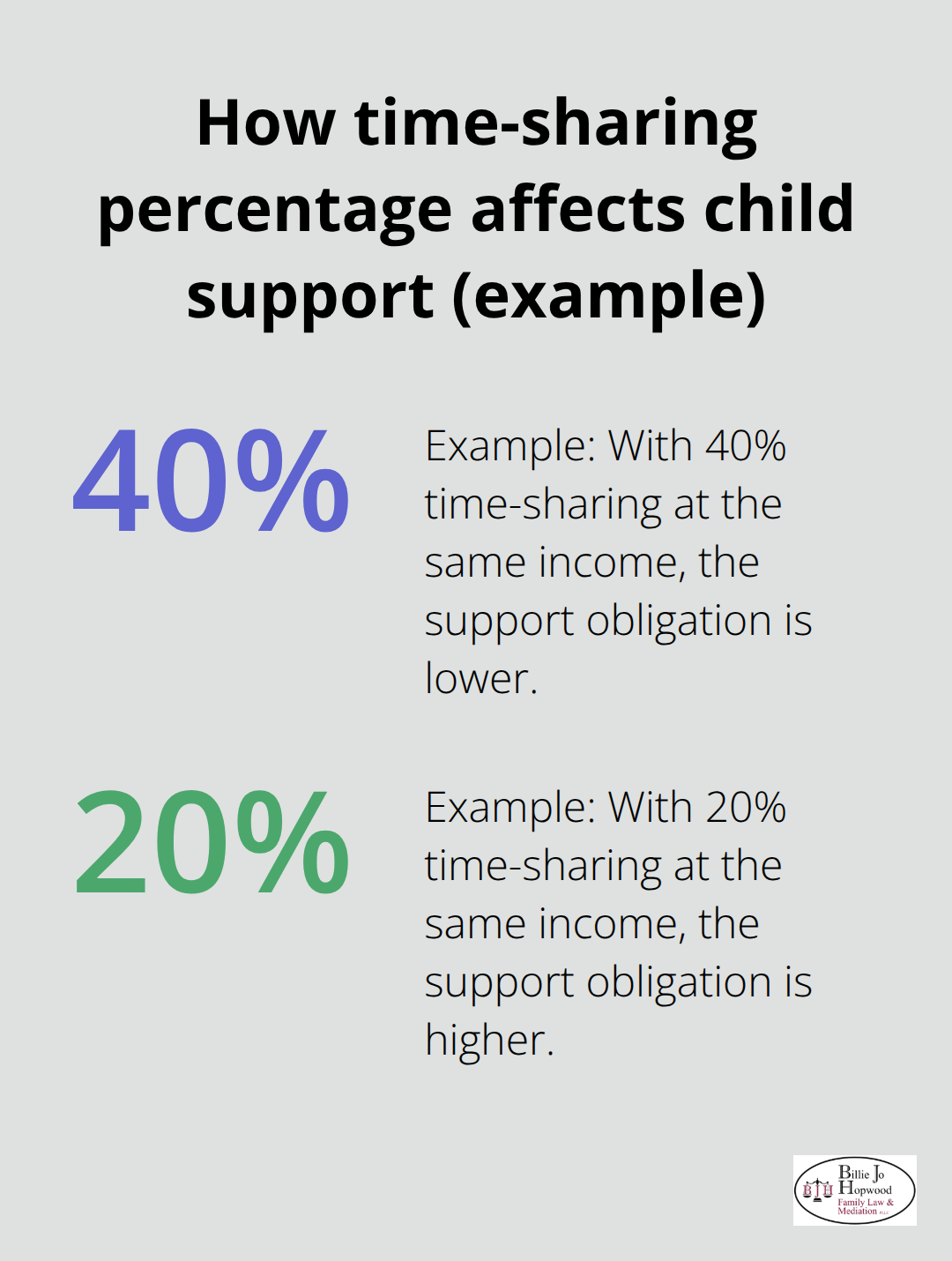
Florida courts start with a baseline calculation, then adjust for factors like healthcare costs, childcare expenses, and other children from different relationships.
Petitioning for Modifications When Life Changes
When circumstances shift-job loss, income increase, relocation affecting time-sharing, or health changes-either parent can petition for modification by demonstrating a substantial material change. Courts take these requests seriously because support amounts must reflect current reality, not outdated financial snapshots. The modification process typically takes 4-6 weeks from petition to hearing, though agreement between parents accelerates the timeline significantly.
Alimony Awards Based on Marriage Duration and Income Gap
Alimony awards in Florida depend primarily on marriage duration and the income gap between spouses. Marriages lasting under 10 years typically receive short-term alimony, while longer marriages may qualify for durational or permanent awards. A spouse who earned $45,000 annually while the other earned $120,000 has stronger grounds for support than spouses with similar earning potential. Courts examine each spouse’s ability to maintain the standard of living established during marriage and consider whether one spouse sacrificed career advancement for family responsibilities.
Equitable Distribution of Assets and Debts
Property division follows equitable distribution principles, meaning assets and debts divide fairly but not necessarily equally. Retirement accounts, real estate, vehicles, and business interests all fall into this calculation. A business valued at $500,000 might split 60/40 rather than 50/50 if one spouse’s separate property contributions or post-divorce earning capacity justify the disparity.
Financial Disclosure Requirements and Asset Transparency
You’ll need comprehensive financial disclosure including tax returns, bank statements, investment account statements, and property valuations-hiding assets carries serious legal consequences and can invalidate settlements. Melbourne parents navigating these financial terms benefit from early clarity about their actual income, assets, and obligations because vague or incomplete information leads to disputes that cost thousands in additional legal fees. Once you understand how support and property division work, the court procedures and documentation required to formalize these arrangements become your next focus.
How Court Documents Shape Your Family Law Case
Filing Your Petition Correctly
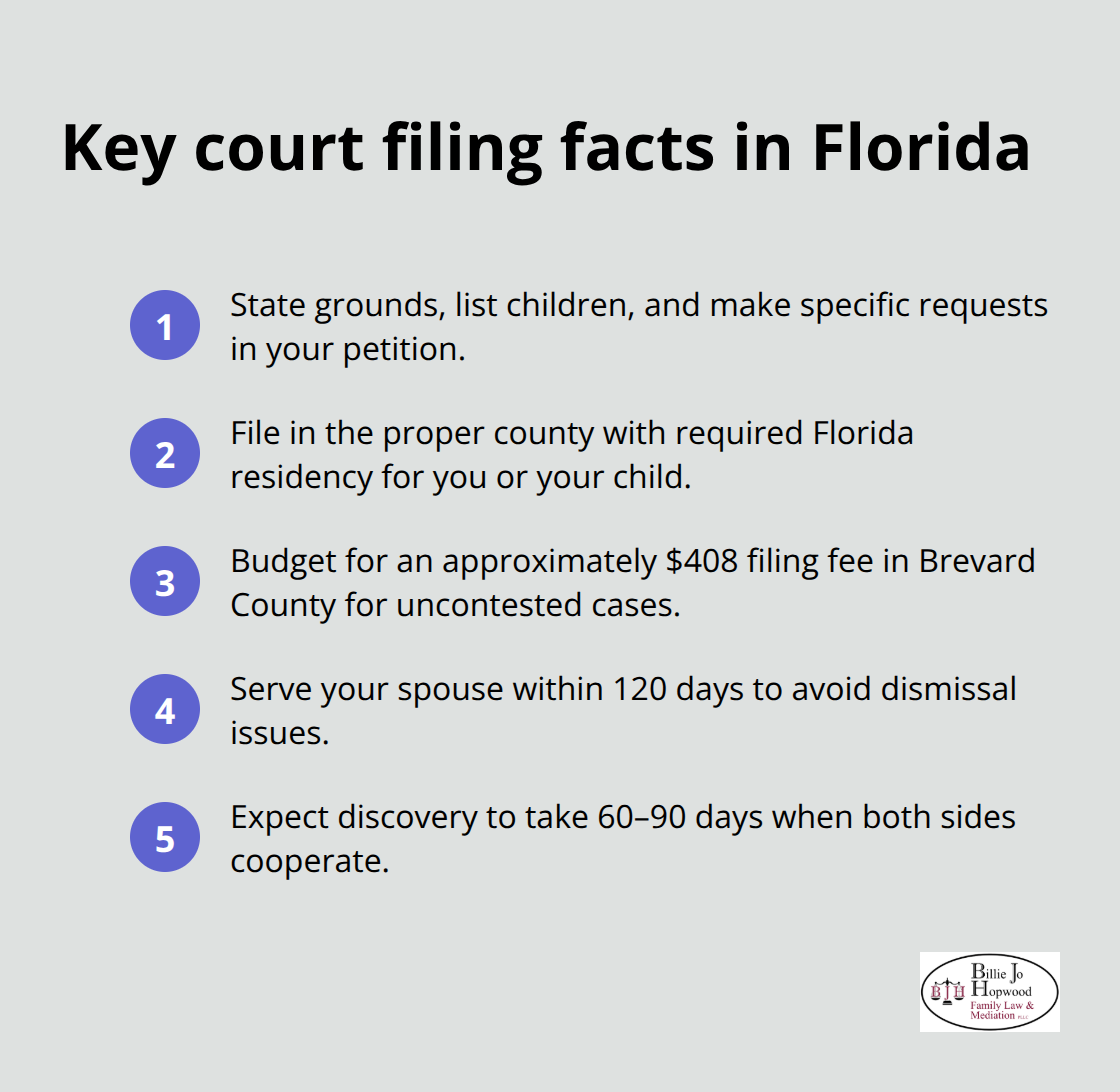
Your petition marks the official start of your family law case, and the document itself demands precision because courts reject incomplete or incorrectly formatted filings, forcing you to resubmit and delaying resolution. Your petition must state your grounds for divorce, identify all children, specify what you’re requesting regarding parental responsibility and time-sharing, and include financial information if child support or alimony is involved. Florida courts require you to file in the county where you or your spouse live, or where your child has lived for at least six consecutive months. The filing fee in Brevard County runs approximately $408 for an uncontested dissolution, though contested cases cost significantly more when you factor in attorney fees and court costs.
Serving Your Spouse Within Legal Timeframes
Once filed, you must serve your spouse with copies of all documents within a specific timeframe-typically within 120 days-or the court may dismiss your case entirely. Many parents underestimate how critical proper service is; a spouse who claims they never received documents can challenge the entire proceeding, forcing you to start over. Courts take service violations seriously because they affect your spouse’s right to respond and defend their interests.
Exchanging Financial Information Through Discovery
Discovery is where the real financial transparency happens, and it’s non-negotiable in contested cases. You’ll exchange tax returns covering the last three years, current bank statements, investment account statements, retirement account statements, property valuations, and a detailed financial affidavit listing all income sources and monthly expenses. If your spouse owns a business, you may need business tax returns and potentially a professional valuation. The discovery process typically takes 60 to 90 days when both sides cooperate, but uncooperative spouses can drag it out through requests for extensions or incomplete responses.
Protecting Against Financial Disclosure Violations
Courts in the 12th Judicial Circuit take financial disclosure violations seriously-judges have ordered sanctions, attorney fee shifts, and even contempt findings against parents who hide assets or provide false information. Settlement agreements must rest on complete and accurate financial information because a settlement built on hidden assets can face challenges for fraud later. Transparency at this stage prevents costly disputes that emerge years after your case closes.
Drafting Settlement Agreements That Address Real-World Changes
Once both sides have disclosed everything and negotiated terms, your settlement agreement becomes the blueprint for your final court order. That order is legally binding and enforceable, meaning if your ex fails to pay child support on time or violates the time-sharing schedule, you have concrete grounds to return to court for enforcement. A well-drafted settlement agreement prevents future disputes by addressing contingencies-what happens if one parent relocates, loses income, or faces a health crisis. Agreements that account for these scenarios withstand real-world changes rather than falling apart when circumstances shift.
Final Thoughts
Family law legal terms shape decisions that affect your children, finances, and future stability. Parental responsibility, time-sharing, child support calculations, equitable distribution, and settlement agreements aren’t just legal jargon-they’re the framework that determines how your family operates after divorce or separation. When you understand these terms, you move from confusion to clarity, and clarity gives you control over outcomes that matter most.
The terminology covered in this guide reflects how Florida courts actually work. Parental responsibility and time-sharing replace outdated custody language because they better describe what parents actually do: make decisions and spend time with their children. Income shares models for child support connect directly to your time-sharing percentage because courts recognize that parenting time affects financial obligations. Equitable distribution doesn’t mean equal division; it means fair division based on each spouse’s contributions and circumstances.
Parents in Melbourne, Florida benefit from understanding these family law legal terms before walking into mediation or court. Contact Billie Jo Hopwood Family Law & Mediation, PLLC to discuss your situation and explore the path forward that protects your family’s interests.