
Divorce doesn’t have to be a courtroom battle. Melbourne Florida divorce mediation offers couples a faster, less expensive path to separation that keeps control in your hands rather than a judge’s.
At Billie Jo Hopwood Family Law & Mediation, PLLC, we’ve seen firsthand how mediation transforms what could be a destructive process into one where both parties walk away with dignity and fair agreements.
What Happens in Divorce Mediation
The Mediation Process Explained
Divorce mediation in Melbourne, Florida is a structured negotiation where a neutral third party helps you and your spouse reach agreements on the issues that matter most. A Florida Supreme Court-certified mediator does not make decisions for you or act as a judge; instead, they facilitate conversation, clarify concerns, and guide you toward workable solutions. The mediator sets ground rules, manages the tone of discussions, and often holds private sessions (called caucuses) with each spouse separately to explore positions without the other person present. These private sessions remain confidential and the mediator will not repeat what you say without permission.
Most mediation cases in Florida require between 3 and 10 hours of session time spread across 2 to 4 meetings, according to the Florida Dispute Resolution Center. You start with a joint session where the mediator explains the process, then move into information exchange, guided negotiations, and finally draft a memorandum of understanding that becomes the foundation for your divorce agreement. The entire mediation process from start to court approval typically takes 2 to 4 weeks, which is dramatically faster than litigation that can drag on for years.
The Real Cost Difference
The financial difference between mediation and litigation is stark and worth understanding upfront. Mediation costs roughly $300 per hour, with most cases totaling between $3,000 and $7,000 for both parties combined, according to the Florida Dispute Resolution Center. Litigation, by contrast, costs $15,000 to $30,000 per person due to depositions, expert witnesses, and extended court dockets. Studies show mediation can save 40 to 60 percent in costs compared with litigated divorces.
Why Control and Privacy Matter
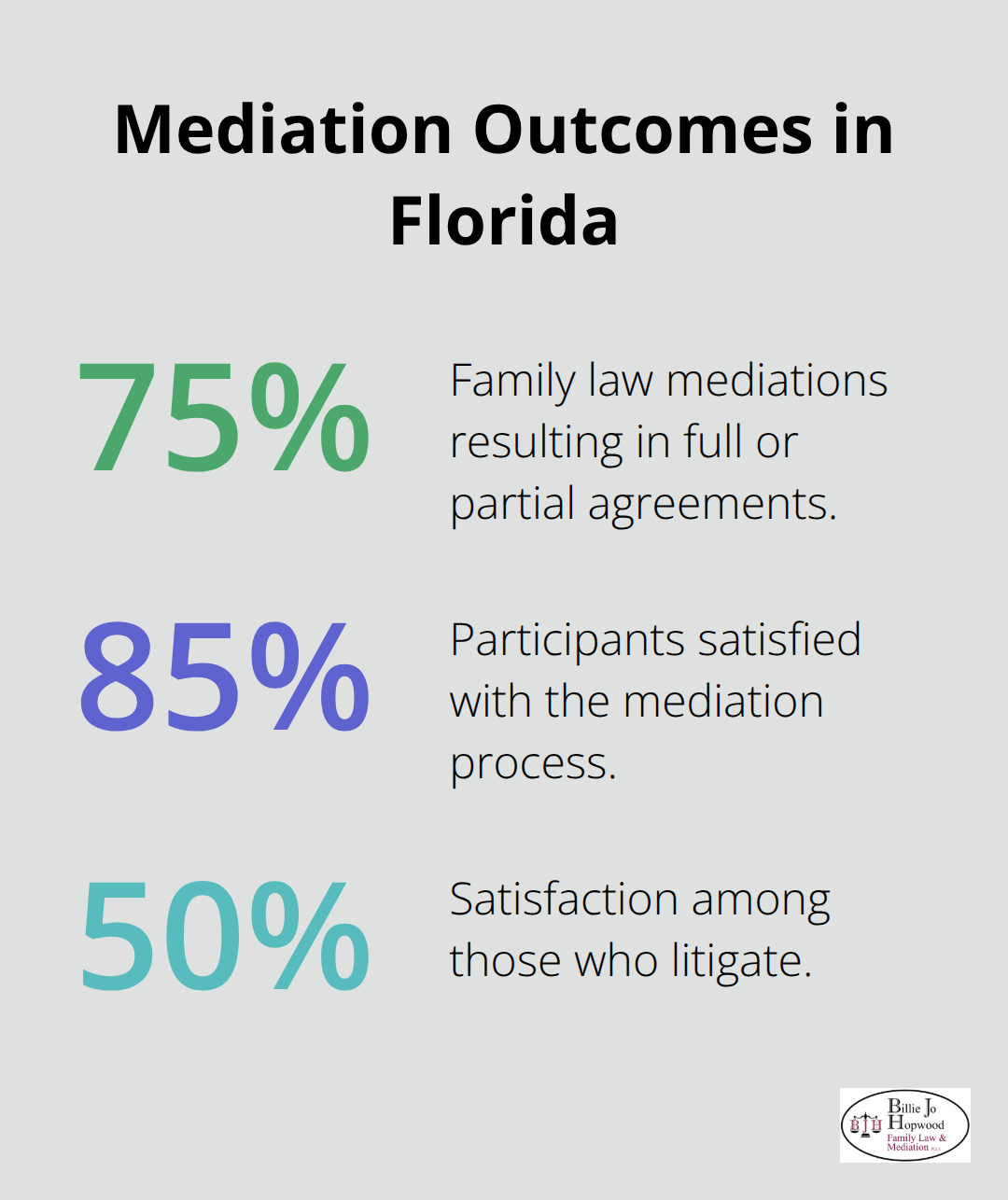
Mediation gives you control over outcomes rather than surrendering decisions to a judge. About 75 percent of family law mediations in Florida result in full or partial agreements, and 85 percent of participants report satisfaction with the process compared to roughly 50 percent satisfaction among those who litigate.
Mediation also protects your privacy; discussions and documents remain confidential and off public records, which is especially valuable when children are involved.
Melbourne couples increasingly choose mediation because it preserves relationships needed for co-parenting, reduces emotional stress, and produces agreements tailored to your family’s specific needs rather than one-size-fits-all court orders. Understanding what actually happens in mediation sessions-and how the process unfolds-prepares you for the step-by-step journey ahead.
How Mediation Actually Unfolds in Melbourne Florida
Starting With Your Initial Consultation
The mediation journey starts with a concrete first step: scheduling your initial consultation with a Florida Supreme Court-certified mediator. During this session, the mediator explains exactly how the process works, what you’ll discuss, and what outcomes are realistic for your situation. This is your chance to ask questions and decide whether mediation fits your needs. Both you and your spouse must agree to participate; mediation only works when both parties commit to the process. The mediator will discuss confidentiality rules, explain that they won’t make decisions for you, and clarify their role as a neutral facilitator. Once you both sign the mediation agreement, the real work begins.
Gathering Your Financial Documentation
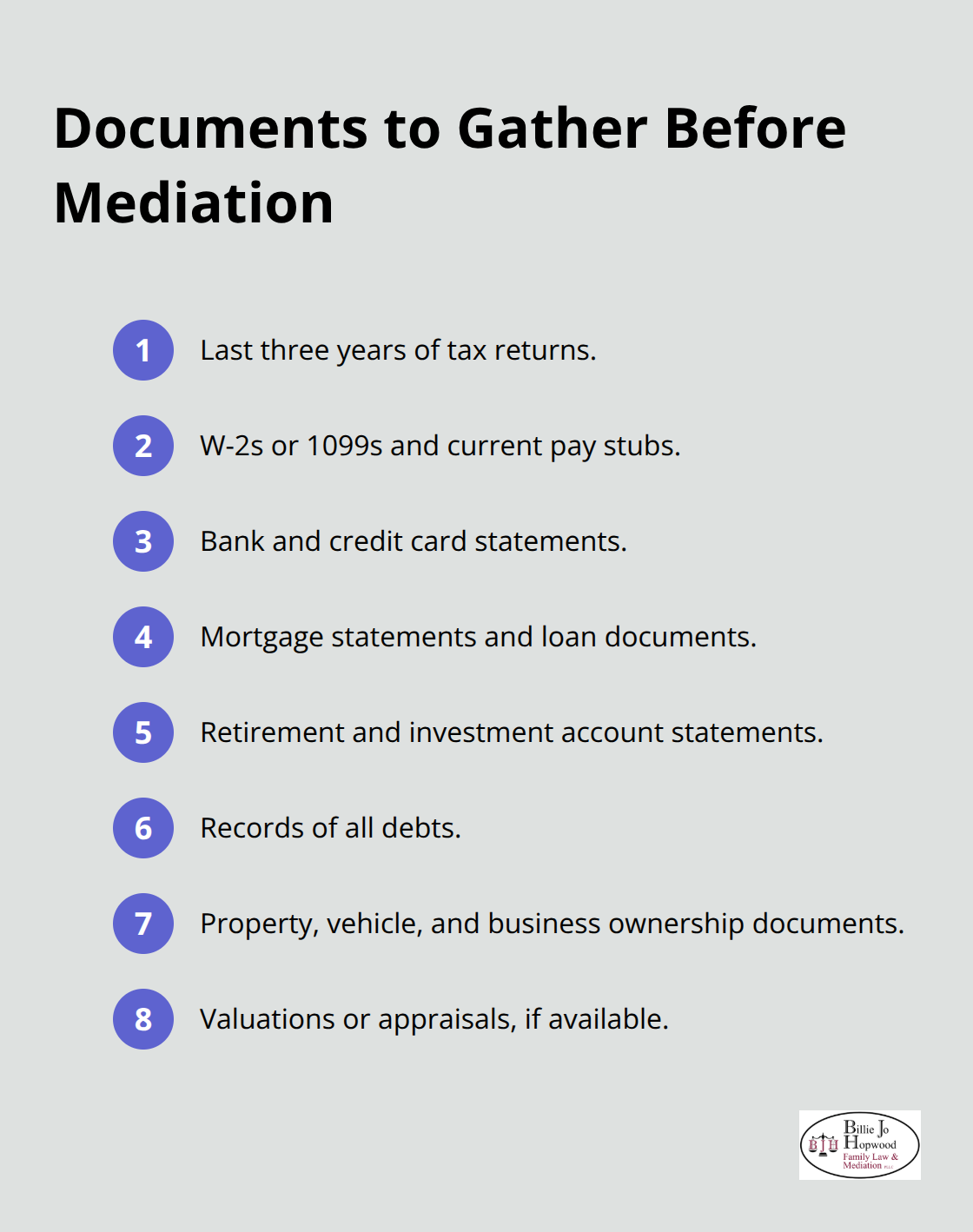
Before your first negotiation session, you need to gather financial documentation. Bring tax returns from the last three years, W-2s or 1099s, current pay stubs, bank statements, credit card statements, mortgage statements, retirement account statements, investment account statements, and records of any debts. For asset division, include documents showing ownership of property, vehicles, business interests, and valuations if available.
If children are involved, bring birth certificates, school records, and any existing custody or support agreements. According to the Florida Bar, thorough preparation can cut mediation time by up to 30 percent, which directly reduces your costs. You’ll exchange this financial information with your spouse and the mediator before negotiation sessions begin, so everyone operates from the same facts rather than guessing or hiding details that surface later.
Moving Into Negotiation Sessions
Negotiation sessions typically happen in a conference room rather than a courtroom, creating a less adversarial environment. The mediator often starts with a joint session where both spouses present their priorities and concerns. Then the mediator may hold private caucuses with each of you separately to explore your positions, underlying interests, and flexibility on specific issues. These private conversations remain confidential; the mediator won’t share what you say without your permission. The mediator’s job is to identify common ground, propose creative solutions, and reality-test your expectations against what a judge might order. Most couples need between 3 and 10 hours across 2 to 4 meetings to reach full or partial agreements, according to the Florida Dispute Resolution Center. Some cases resolve faster if both parties come prepared and willing to compromise on secondary issues to protect what matters most.
Drafting Your Memorandum of Understanding
Once you’ve reached agreements on the issues that matter-asset division, child custody, support amounts, or alimony-the mediator drafts a memorandum of understanding that summarizes everything you’ve decided. This document isn’t yet legally binding, but it captures your agreements in writing so nothing gets lost or misremembered. Many couples choose to have an attorney review this memorandum before signing to verify the terms protect their interests under Florida law. After both spouses sign the memorandum, your attorney converts it into a formal settlement agreement or petition for dissolution. You then file this with the Brevard County court, and the judge reviews and approves it, typically within 2 to 4 weeks. Once the judge signs off, your mediated agreement becomes a legally binding court order that you must follow.
Moving Forward With Your Settlement
This entire pathway from first consultation to final court approval moves faster and costs far less than litigation because you’ve already settled the hard issues outside the courtroom. With your agreement finalized and court-approved, you’re positioned to address the specific issues that shaped your mediation journey-asset division, custody arrangements, and support calculations-each of which carries its own complexities and opportunities for creative solutions.
Common Issues Resolved Through Mediation
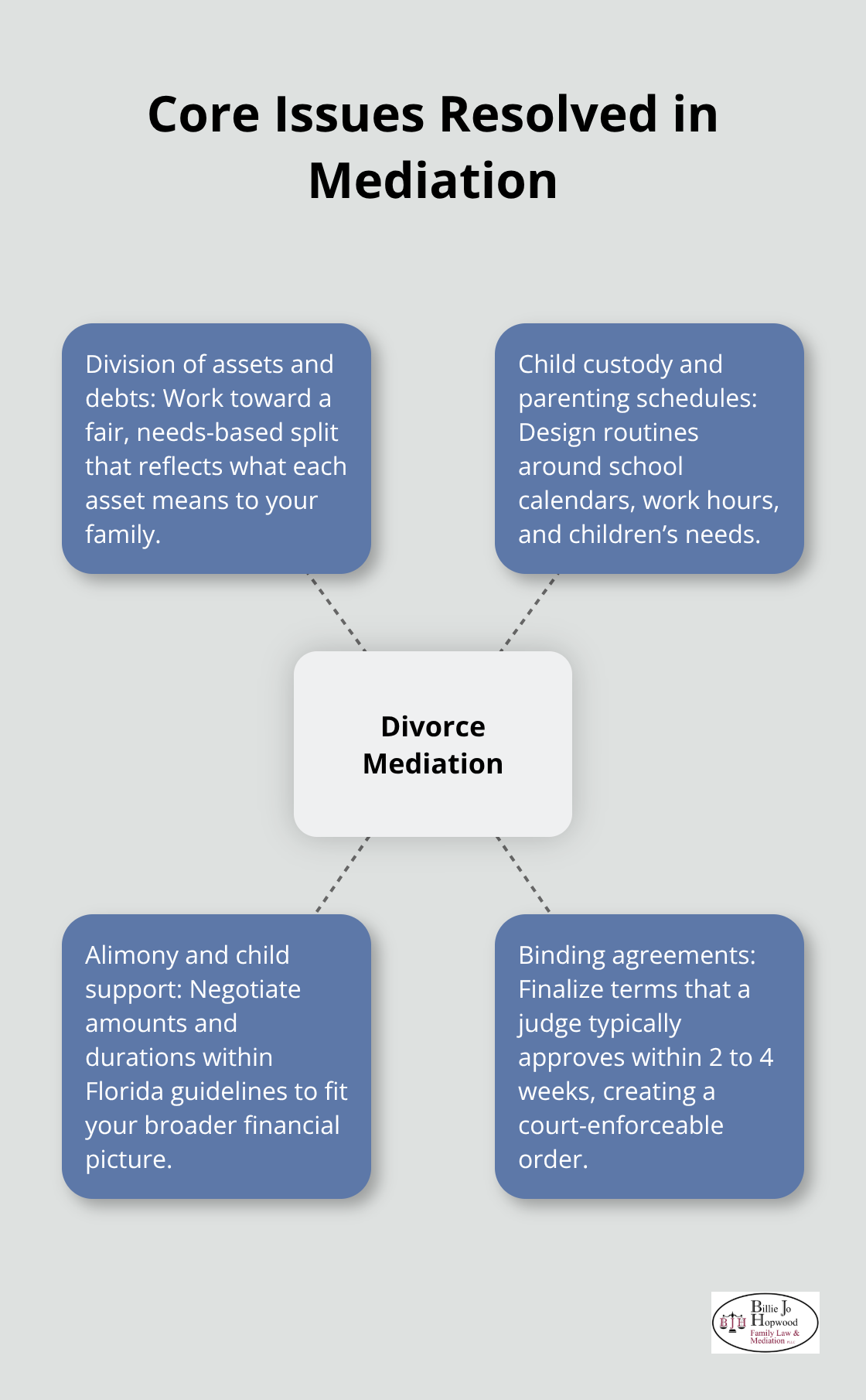
Mediation in Melbourne, Florida handles the three heaviest issues couples face during divorce: dividing assets and debts, arranging custody and parenting time, and calculating support payments. These aren’t abstract legal questions-they’re concrete decisions that shape your financial life and your relationship with your children for years ahead. Mediation works because it lets you negotiate these issues directly rather than having a judge impose solutions based on what Florida law permits.
Division of Assets and Debts
Florida uses equitable distribution for assets and debts, meaning a fair rather than strictly equal split, and inheritances typically stay separate unless you’ve mixed them with marital funds. In mediation, you can negotiate asset division more flexibly than a court would allow-perhaps one spouse keeps the family home while the other receives retirement accounts, or you agree to sell a business and split proceeds in a way that makes sense for your situation. The mediator helps you identify what you own, what you owe, and what each asset means to your family, then guides you toward a division both parties can live with.
Child Custody and Parenting Schedules
Mediation addresses child custody and parenting schedules in ways courts simply cannot. Instead of a judge imposing a standard custody arrangement, you can design a parenting plan that reflects your children’s school schedules, your work hours, and your family’s actual needs. One parent might have primary custody while the other has extended weekends and midweek dinners; another family might choose 50/50 shared custody with alternating weeks. The flexibility matters enormously because children respond better to arrangements their parents created together rather than orders handed down from a courtroom.
Alimony and Child Support Arrangements
Support payments-both child support and alimony-round out the mediation conversation, though child support amounts follow state calculations that courts oversee. Florida requires child support based on each parent’s income and the custody arrangement, but mediation lets you discuss how that obligation fits into your broader financial picture and whether you want to adjust other terms accordingly. If one spouse pays alimony, you negotiate the amount and duration rather than accepting what a judge decides, and you can structure these payments in ways that work for your specific circumstances (flexible payment schedules, lump-sum options, or adjustments tied to life changes).
Reaching Binding Agreements
According to the Florida Dispute Resolution Center, roughly 75 percent of family law mediations result in full or partial agreements on these issues, which means most couples successfully navigate asset division, custody decisions, and support calculations without litigation. The agreements you reach become legally binding once a judge approves them, giving you the security of a court order without the adversarial process that damages relationships and depletes your resources. Mediation doesn’t eliminate hard conversations about money and children-it simply gives you control over how those conversations happen and what outcomes you reach.
Final Thoughts
Melbourne Florida divorce mediation puts control of your future in your hands rather than a judge’s courtroom. The financial advantage alone justifies serious consideration: mediation costs 40 to 60 percent less than litigation, resolves in weeks rather than years, and produces 85 percent satisfaction rates compared to roughly 50 percent for those who litigate. When children are involved, the benefits multiply because you negotiate agreements together instead of fighting over them in court, which strengthens your ability to co-parent effectively for years ahead.
Couples who mediate report improved communication and more amicable relationships after the process concludes, a shift that matters enormously when ongoing contact remains necessary. Mediated agreements also offer flexibility that court orders cannot match; you can modify custody schedules, support amounts, or other terms without returning to litigation if both parties agree to the change. This adaptability means your agreement grows with your family’s circumstances rather than becoming rigid and outdated.
We at Billie Jo Hopwood Family Law & Mediation, PLLC stand ready to guide you through this process. Schedule a consultation to learn how Melbourne Florida divorce mediation can work for your situation.