
Co-parenting after separation requires more than good intentions. A solid parenting plan Melbourne provides the framework that keeps children stable while reducing conflict between parents.
We at Billie Jo Hopwood Family Law & Mediation, PLLC see firsthand how the right structure transforms co-parenting relationships. This guide walks you through building a plan that actually works for your family.
What Makes a Strong Parenting Plan
Specific Times and Locations Matter
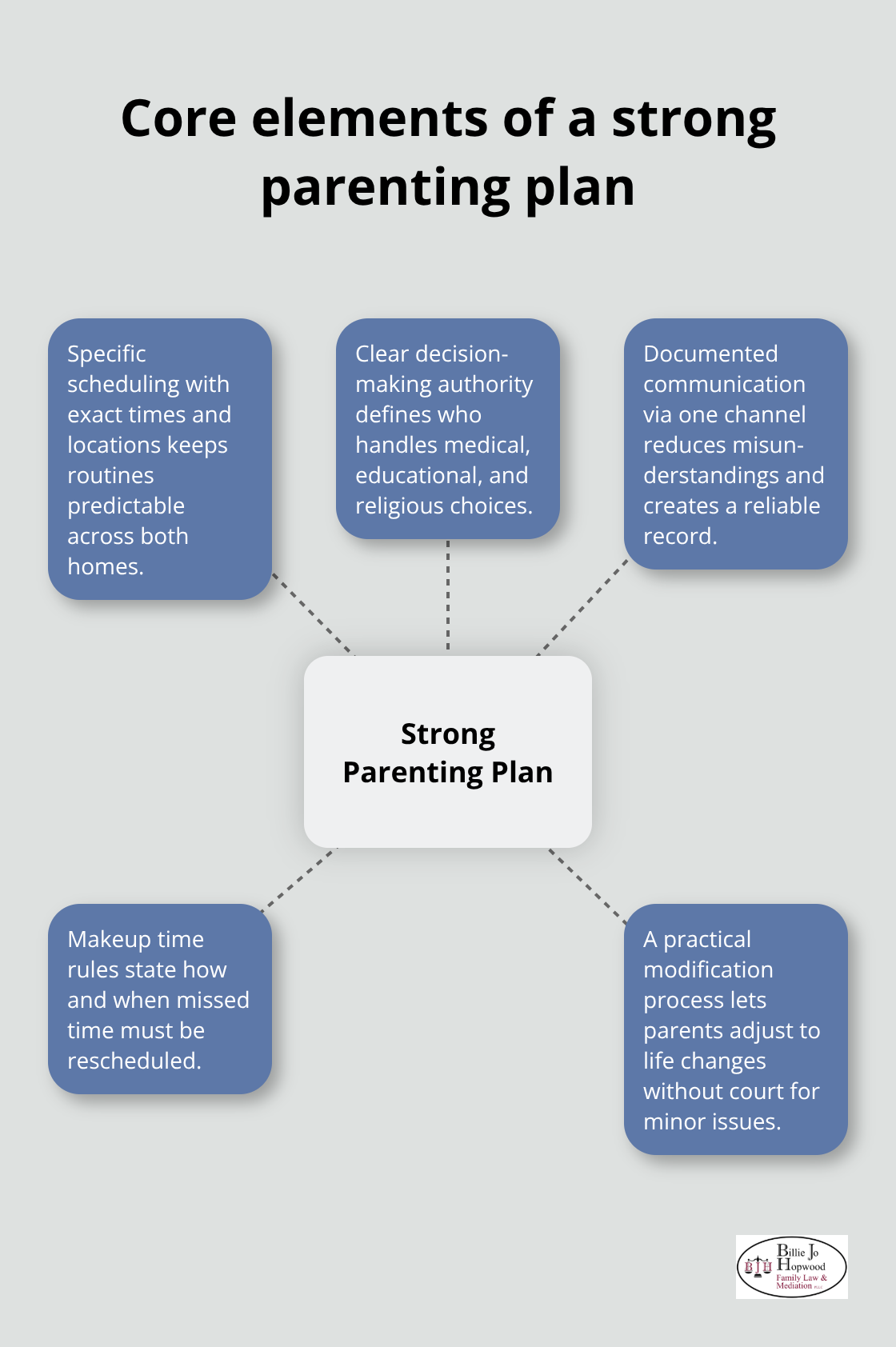
A strong parenting plan must specify exact times, not vague language. Instead of saying your child spends time with each parent, state that Monday through Friday exchanges happen at 3:15 p.m. at the school pickup location, and Friday evening transitions to the other parent at 6:00 p.m. at home. Research from the Raising Children Network shows that children thrive when routines are predictable and consistent across both households. The 12th Judicial Circuit in Florida approves four parenting plan frameworks-Basic, Long Distance, Highly Structured, and Safety Focused-each with detailed instructions and assessments to match your family’s actual situation.
Your plan should assign who handles school drop-offs, after-school care, bedtime routines, homework supervision, and extracurricular activities. Without this level of detail, parents end up negotiating the same issues repeatedly, creating conflict that children absorb.
Clear Decision-Making Authority
Decision-making authority must be equally clear. Specify which parent makes medical decisions, educational choices, religious upbringing decisions, and major purchases. Many plans assign joint decision-making for significant matters while giving each parent authority over day-to-day choices in their home.
Communication Channels and Documentation
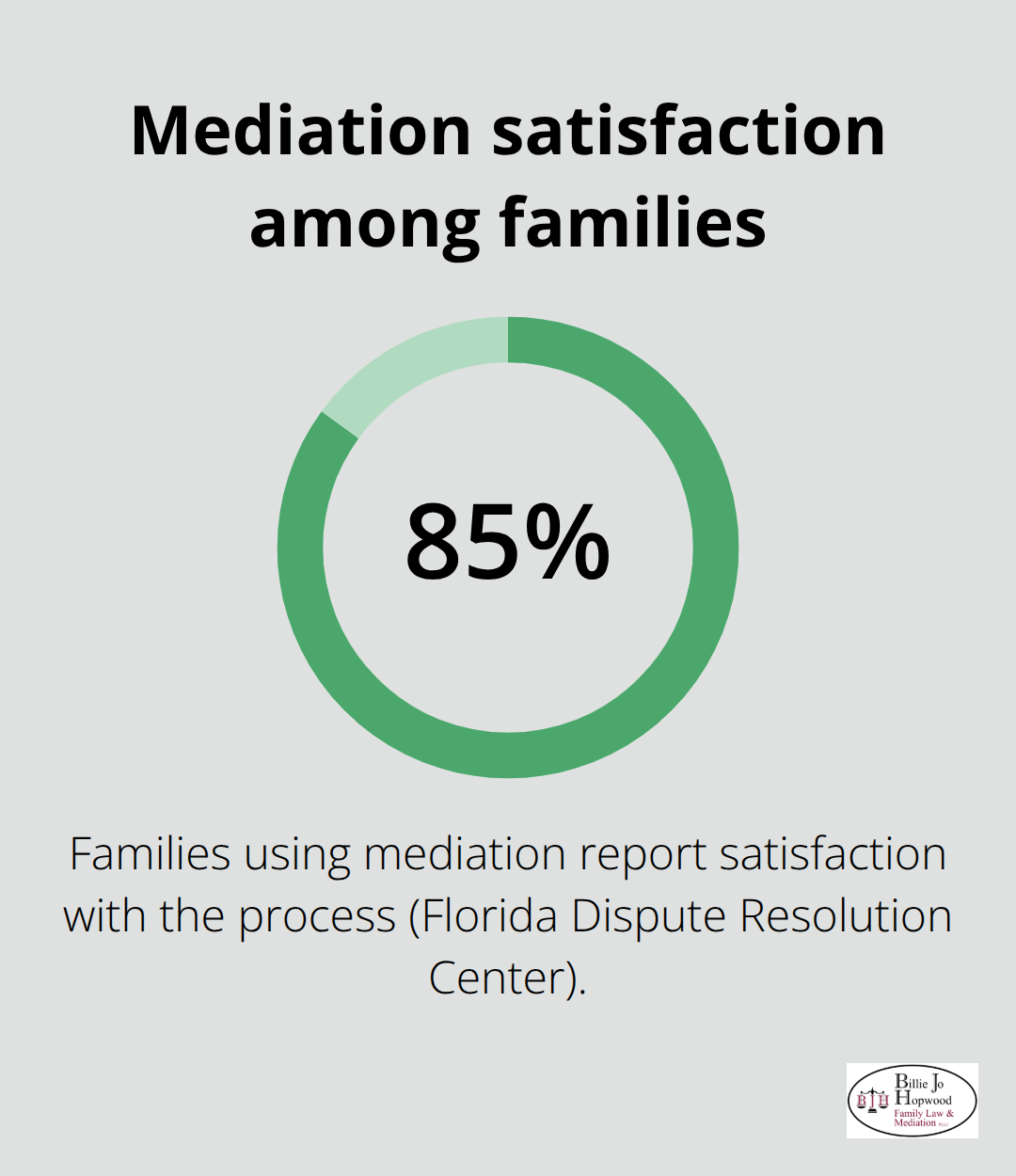
Communication between parents matters more than most people realize. About 85 percent of families using mediation report satisfaction with the process, according to the Florida Dispute Resolution Center, partly because mediation establishes communication frameworks that stick. Try a single channel-email, a co-parenting app like OurFamilyWizard or TalkingParents, or scheduled phone calls-rather than mixing texts, calls, and in-person conversations that breed misunderstandings.
Document everything. When you use a communication tool consistently, you create a record that protects both parents and prevents disputes about what was agreed (this documentation becomes critical if enforcement becomes necessary later). The plan should also include makeup time provisions for when one parent misses scheduled time due to illness, work emergencies, or travel, with clear conditions about how quickly that time must be rescheduled.
Over 75 percent of family law mediations result in full or partial agreements, the Florida Dispute Resolution Center reports, because mediation helps families build realistic plans they can actually follow rather than court-imposed orders that ignore real-world logistics. These structured agreements set the stage for addressing the conflicts that inevitably arise during co-parenting.
Common Challenges in Co-Parenting and How to Address Them
When Parenting Styles Clash
Co-parents often disagree on everything from screen time rules to bedtime hours to how strictly homework gets enforced. One parent runs a structured household with early bedtimes and limited devices; the other takes a relaxed approach. Rather than fight over whose way is right, the practical solution is to allow each parent autonomy within their own home while maintaining consistency on non-negotiables that directly affect the child’s health or safety. Bedtime can shift between households, but both parents should agree that the child attends school on time and receives necessary medical care. This separation of concerns eliminates endless battles over parenting philosophy while protecting what actually matters.
Handling Changes in Circumstances
When circumstances change-a job relocation, a new partner, a school transfer, or financial shifts-the original plan becomes unworkable. Florida courts recognize that life happens, and modifications are possible when there is a substantial change in circumstances. Rather than ignore the broken plan and create a new conflict, file a formal modification request with the court. This keeps everything documented and prevents years of resentment over an agreement neither parent can follow. Changes in a child’s needs matter too. A teenager may want different scheduling than a six-year-old, and a plan should adapt as your child grows.
Resolving Disputes Without Court Involvement
Disputes between co-parents rarely resolve themselves through willpower or repeated arguments. Mediation offers a structured alternative where a neutral third party helps both parents communicate without the expense and timeline of court intervention. Sessions typically last about three hours and focus on identifying each parent’s concerns and exploring solutions together. Mediation costs around $300 per hour for unrepresented parties in Florida, substantially less than litigation that can stretch years and drain tens of thousands in legal fees. The Florida Dispute Resolution Center reports that over 75 percent of family law mediations produce full or partial agreements, meaning most families actually reach workable solutions outside a courtroom.
When mediation produces an agreement, the mediator creates a memorandum of understanding that becomes legally binding once signed and filed with the court. Documentation tools matter during disputes too. If one parent consistently violates the plan-missing exchanges, refusing to pay for activities, or interfering with scheduled time-use a co-parenting app like OurFamilyWizard or TalkingParents to record every violation with dates and times. This documentation becomes critical evidence if you later need to pursue enforcement through the court. Attempt resolution directly first to show good faith and often prevent escalation. Only after genuine attempts at cooperation fail should you involve attorneys or courts. These enforcement steps and documentation practices set the stage for creating a plan that actually holds up in your specific Melbourne community.
Creating a Parenting Plan That Works in Melbourne Florida
Choose the Right Framework for Your Family
The 12th Judicial Circuit in Florida provides four approved parenting plan frameworks-Basic, Long Distance, Highly Structured, and Safety Focused-each designed to match different family situations. The Basic plan works for families with straightforward schedules and low conflict. The Long Distance plan addresses travel logistics when parents live far apart. The Highly Structured plan provides detailed timetables for complex work schedules or multiple children with different activities.
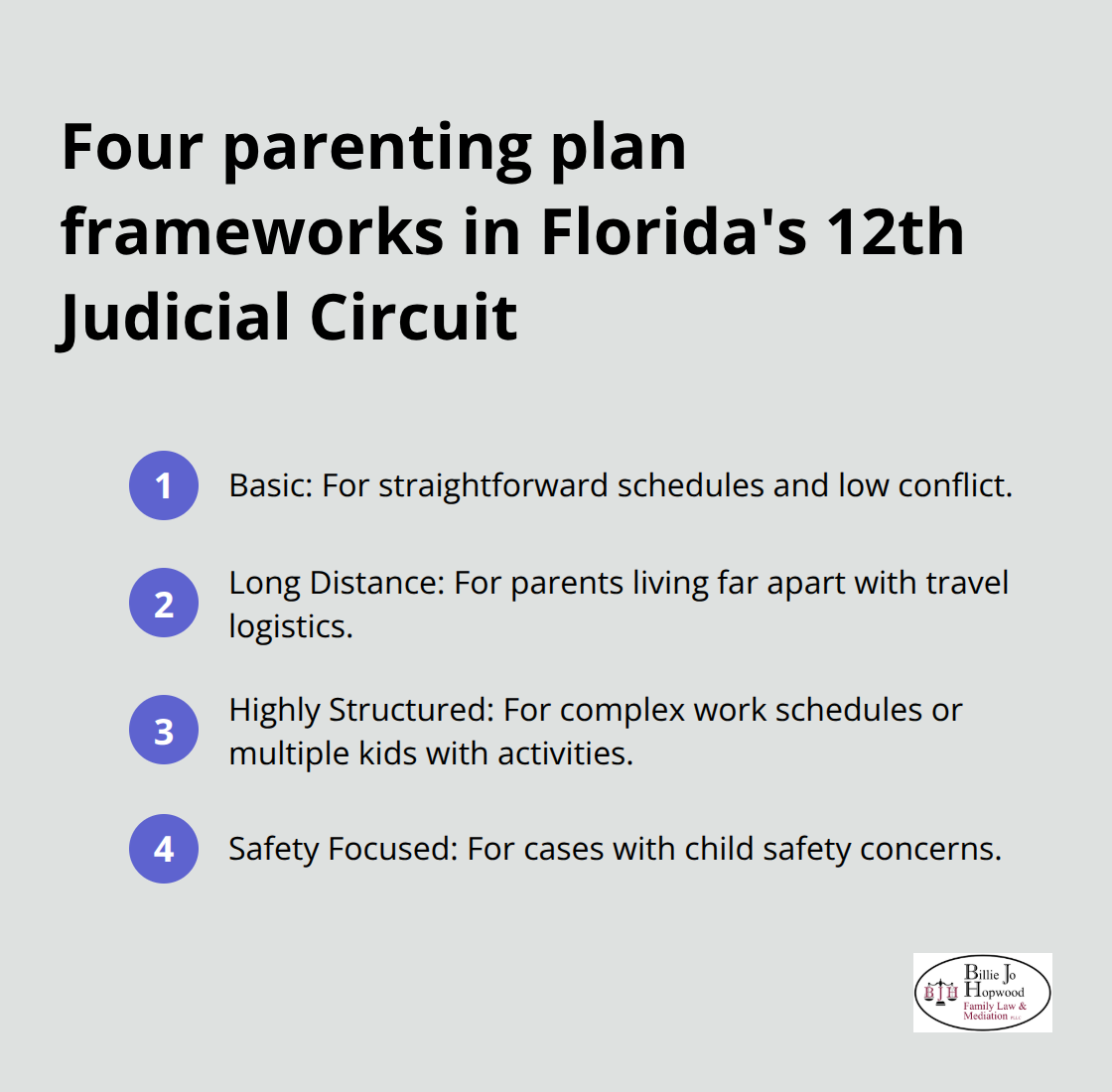
The Safety Focused plan includes provisions when child safety concerns exist. Each framework comes with specific instructions and assessments to help you choose correctly rather than guessing. Using these circuit-approved forms matters because they ensure consistency with what Melbourne courts expect and accept. Starting with the right framework prevents costly modifications later.
File With or Without an Attorney
The 12th Judicial Circuit provides Pro Se forms and instructions if you file without an attorney. However, working with a family law professional ensures your plan actually protects your rights and your child’s interests. An attorney can identify gaps in your plan that you might miss and ensure the document meets all local requirements.
Build Flexibility Into Your Agreement
Flexibility prevents your plan from becoming obsolete within months. Specify makeup time provisions that actually work-if one parent misses a weekend due to illness, state exactly how many days must be rescheduled and by when, rather than leaving it vague. Include contingency plans for school closures, weather emergencies, or unexpected work demands. Address how you’ll handle schedule changes when your child starts new activities or switches schools. Document exchange locations and times precisely, but also include a process for requesting changes when life shifts.
Create a Modification Process That Works
Many parents fail here. They create rigid plans that ignore reality, then abandon the plan entirely when circumstances change. Instead, establish a modification process that doesn’t require court intervention for minor adjustments. Co-parenting apps like OurFamilyWizard and TalkingParents let both parents propose and track changes in real time, creating a documented trail that protects everyone. This documentation becomes critical if disputes arise later-you’ll have clear evidence of what was agreed, what changed, and who agreed to each modification.
Final Thoughts
A parenting plan Melbourne that actually works combines three essential elements: specific scheduling with exact times and locations, clear decision-making authority for medical and educational choices, and documented communication between parents. Without these foundations, co-parents spend years renegotiating the same conflicts while children absorb the tension. The 12th Judicial Circuit’s four approved frameworks-Basic, Long Distance, Highly Structured, and Safety Focused-give you a proven starting point rather than forcing you to build from scratch.
Mediation transforms how families approach these plans. When both parents work with a neutral mediator, they move beyond blame and defensiveness into problem-solving mode. The Florida Dispute Resolution Center reports that over 75 percent of family law mediations produce full or partial agreements, and about 85 percent of participants report satisfaction with the process (this matters because mediation-built plans reflect real-world logistics and both parents’ actual concerns, making them far more likely to stick than court-imposed orders). Mediation also costs around $300 per hour compared to litigation that stretches years and drains tens of thousands in legal fees.
Your parenting plan will need adjustments as circumstances change, so build flexibility into your agreement from the start with clear modification processes and makeup time provisions. Use co-parenting apps to document changes and communication, creating a trail that protects everyone if disputes arise. When conflicts emerge that you cannot resolve directly, contact our firm in Melbourne, Florida to explore how mediation and professional guidance can help you structure a parenting plan that serves your family’s actual needs.