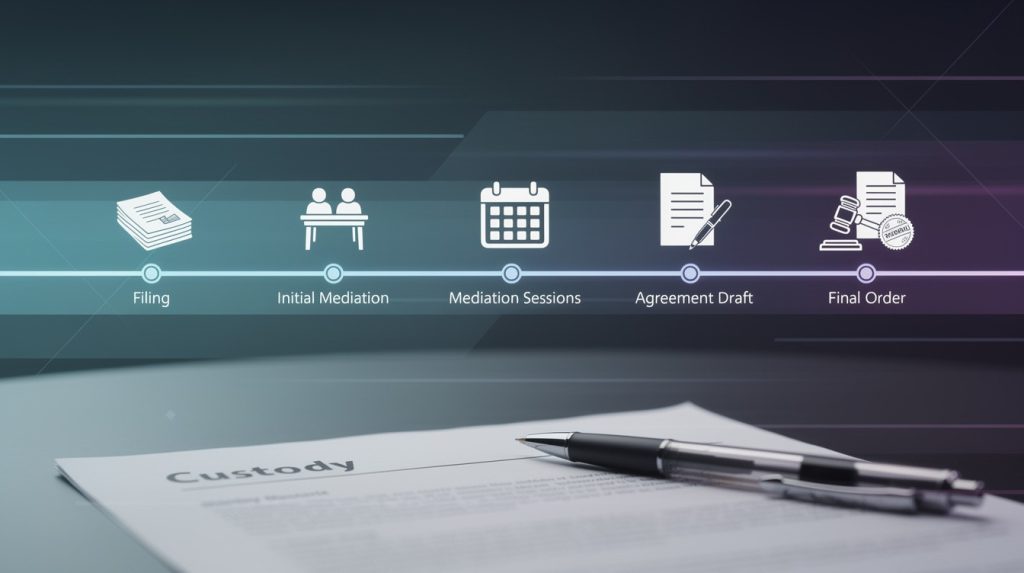
Child custody mediation in Melbourne, Florida moves through distinct phases, each with its own timeline and requirements. Understanding what happens at each stage helps you prepare mentally and practically for the process ahead.
We at Billie Jo Hopwood Family Law & Mediation, PLLC walk families through this journey regularly, and we’ve created this guide to show you exactly what to expect from your initial consultation all the way to your final court order.
Initial Consultation and Case Assessment
Your initial consultation sets the tone for the entire mediation process, and preparation at this stage directly impacts how quickly you’ll reach an agreement. The first meeting typically lasts 30 to 60 minutes and focuses on understanding your custody goals, assessing what documentation you’ll need, and creating a realistic timeline for resolution. During this consultation, you’ll discuss the specifics of your parenting situation-where your child currently lives, how much time each parent spends with them, and what changes you’re seeking in the custody arrangement. The mediator will ask about any safety concerns, the child’s school and medical needs, and both parents’ work schedules. This is where you should be completely honest about what matters most to you. If your primary goal is maintaining equal time with your child, state it clearly. If you’re concerned about relocation or need flexibility for work travel, bring that up now. Vague goals waste time later.
Gathering Your Documents Before the First Session
Collect your documents at least two weeks before your first mediation session. You’ll need tax returns from the last three years, recent bank statements and investment account statements, property deeds and mortgage information, business records or valuations if either parent owns a business, and insurance policies with beneficiary information. Additionally, compile your child’s school records, medical records, and vaccination history. Create a detailed timeline showing where your child has lived since birth, which parent provided primary care during each period, and any significant changes in the parenting arrangement. If you have a current custody order or parenting plan, bring copies. Take screenshots or print emails showing communication patterns with the other parent, especially if there are concerns about reliability or responsiveness. Document your work schedule, including any flexibility you have for parenting time. If you’ve already created a proposed parenting schedule, prepare it in writing. The Florida Courts require parenting plans to address decision-making authority for medical, educational, and religious matters, so think through how you want these responsibilities divided. Disorganized parents typically take longer to reach agreements-mediators report that families who arrive prepared often resolve custody matters in a single 2 to 3-hour session, while unprepared families may need multiple sessions spanning weeks.
Identifying Your Core Issues and Non-Negotiables
Before your mediation begins, identify which issues actually matter and which ones you’re willing to negotiate. Most custody disputes center on three core questions: where will the child live most of the time, how much time will each parent have, and who makes major decisions about education, medical care, and religion. If you’re fighting about minor details like which parent buys school supplies or who attends every soccer game, you’re creating unnecessary delays. Write down your non-negotiable items-these are typically safety concerns, relocation needs, or fundamental parenting philosophies-and distinguish them from preferences you can adjust. If the other parent wants the child every other weekend but you want every weekend, that’s negotiable. If the other parent has a substance abuse problem and you need safeguards around parenting time, that’s non-negotiable. Mediators in Florida work most effectively when both parents narrow disputes to genuine conflicts. Families that approach mediation with realistic expectations and flexibility on secondary issues tend to settle faster and with less ongoing conflict. Set a written agenda for your mediation sessions listing the two or three most important issues first, and plan to address them before moving to secondary concerns. This preparation positions you to move directly into the mediation process itself, where the real work of building your custody agreement takes place.
What Happens During Your Mediation Sessions
Once your documents are organized and your priorities are clear, you enter the active mediation phase where agreements actually get built. In Melbourne, Florida, most family mediators conduct initial sessions that run two to three hours, though the length depends entirely on how complex your custody situation is.
The Joint Opening Session
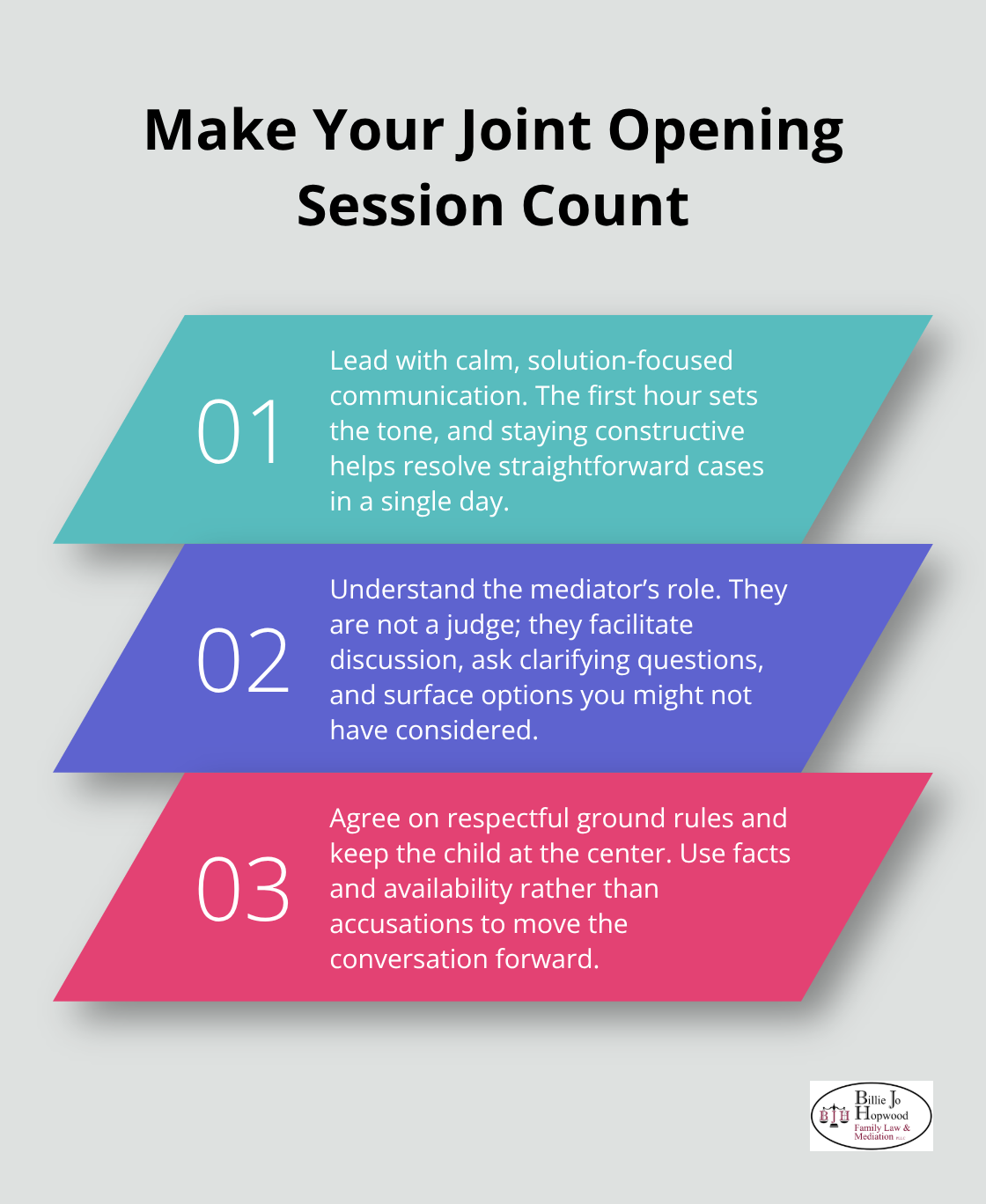
The mediator will start with a joint session where both parents and the mediator meet together to review the issues you’ve identified and establish ground rules for respectful communication. This opening session matters more than you might think-mediators report that families who stay calm and solution-focused during the first hour typically resolve straightforward custody matters in a single day, while those who rehash old conflicts or make accusations often need multiple sessions stretched across weeks. The mediator is not a judge and will not make decisions for you. Instead, they facilitate conversation, ask clarifying questions about your child’s needs and each parent’s capabilities, and help you explore options you may not have considered.
Shuttle Mediation for High-Conflict Situations
If tensions run high between you and the other parent, the mediator will separate you into individual rooms and shuttle back and forth, presenting proposals and testing whether movement is possible on specific issues. This shuttle mediation approach works well in high-conflict situations because it removes the pressure of face-to-face negotiation while keeping momentum toward resolution. You’ll present your position without the other parent interrupting or escalating emotions. The mediator then carries your proposals to the other room and returns with counteroffers or questions that move the conversation forward.
Presenting Fact-Based Arguments in Separate Sessions
During separate sessions, bring concrete information about your proposed schedule, your work flexibility, and your reasoning tied directly to your child’s wellbeing rather than your preferences. A mediator in Brevard or Seminole County will listen carefully to safety concerns, school schedules, extracurricular activities, and each parent’s availability. If you claim you need primary custody because you want more time with your child, that’s a preference. If you need primary custody because the other parent works irregular night shifts and your child’s school starts at 7:45 a.m., that’s a fact-based argument the mediator can work with.
Building Your Parenting Plan Agreement
Come prepared to discuss specific parenting time arrangements-not vague concepts like 50/50 custody, but actual calendar dates and times. For example, Monday through Wednesday evenings with one parent, Thursday through Sunday with the other, with specific pickup and drop-off times. Decision-making authority for medical care, education, and religion requires separate discussion from physical time-sharing, so prepare your position on each. The mediator will draft a preliminary custody agreement once both parents move toward consensus, and you’ll review it carefully before signing. Florida courts require that any mediated settlement agreement be in writing and signed by all parties to be enforceable, so nothing becomes final until you’ve approved the language in writing. Most families in Melbourne report that having a written parenting plan template prepared beforehand (even a rough draft) cuts mediation time significantly because the mediator can work from your framework rather than building one from scratch.
Once you and the other parent reach agreement on your parenting plan, the mediator prepares the final settlement document for both of you to sign. This signed agreement then moves into the court filing phase, where your mediated plan transforms into an official court order.
Moving Your Mediated Agreement Into Court
Your signed mediation agreement is not yet a court order, and that distinction matters enormously. Once both parents sign the settlement document, you must file it with the Brevard or Seminole County court to transform your private agreement into an enforceable legal order.
Filing Your Settlement Agreement With the Court
The filing process in Florida requires you to submit the mediated settlement agreement along with a proposed Final Judgment on Parenting Plan, which incorporates the custody terms you negotiated. Florida Rule of Civil Procedure 1.730 mandates that any mediated settlement agreement be in writing and signed by all parties to be enforceable, so your mediator will prepare documents that meet this requirement. File these documents at the courthouse or electronically through the court’s filing system; electronic filing is now standard in most Florida courts and typically costs between $50 and $100 in filing fees. If you cannot afford these fees, you can apply for Civil Indigent Status with the Clerk of Court to reduce or eliminate them.
What the Court Reviews in Your Agreement
After filing, the court typically reviews your agreement within 7 to 14 days to confirm that the parenting plan serves your child’s best interests and complies with Florida law. Courts rarely reject mediated agreements that both parents signed voluntarily, but the judge will examine whether decision-making authority is clearly assigned, whether the parenting schedule is specific enough to follow, and whether child support is addressed if applicable. Most judges approve mediated custody agreements without requiring you to appear in court, which is one of mediation’s strongest advantages over litigation.
Timeline From Filing to Final Order
The timeline from filing to final order typically spans 2 to 4 weeks in Melbourne, Florida, though this varies based on court backlogs and how quickly you submit all required documents. Once the judge approves your agreement and signs the Final Judgment on Parenting Plan, you receive an official court order that governs custody and parenting time going forward. This order is now legally binding and enforceable through the court system. If either parent violates the order later, the other parent can file a Motion for Contempt to enforce compliance.
Obtaining and Storing Your Final Order
Keep multiple certified copies of your final order because you will need them for school enrollment, medical providers, and childcare facilities. Request certified copies from the Clerk of Court when you file; they typically cost $1 to $2 per page. Some families file their final order within days of mediation completion, while others wait weeks because they delayed organizing documents or submitting paperwork. The families who move fastest are those who prepare their filing documents during mediation itself, working with their mediator or attorney to confirm everything is court-ready before both parents sign the settlement agreement. This approach eliminates the gap between settlement and court approval, and you will receive your final order within 10 to 14 days rather than 30 to 45 days.
Final Thoughts
The child custody mediation timeline from initial consultation to final court order typically spans four to eight weeks, though families who prepare thoroughly often compress this into three to four weeks. Your journey begins with a 30 to 60-minute consultation where you clarify your goals and gather documents, moves into active mediation sessions lasting two to three hours, and concludes when the judge signs your Final Judgment on Parenting Plan. The speed of your process depends almost entirely on preparation and willingness to negotiate on secondary issues.
Once your mediated agreement is signed, filing with the Brevard or Seminole County court takes one to two weeks, and court approval typically follows within 7 to 14 days. Request certified copies of your final order immediately after the judge signs it, as you will need these for school enrollment, medical providers, and childcare facilities. Store multiple copies in a safe location and keep one accessible for reference.
After your final order is issued, your custody arrangement becomes legally binding and enforceable. If circumstances change significantly-your work schedule shifts, the other parent relocates, or your child’s needs evolve-you can file a Motion to Modify the parenting plan rather than returning to full mediation. Contact our Melbourne office to speak with someone who can address your concerns about your child custody mediation timeline and help you navigate your specific situation.