
Family law disputes don’t have to follow the courtroom path. At Billie Jo Hopwood Family Law & Mediation, PLLC in Melbourne, Florida, we see families choosing collaborative law as an alternative that keeps control in their hands.
This approach brings both parties and their attorneys together to work toward solutions that work for everyone involved.
What Collaborative Law Actually Means
Collaborative law brings both spouses and their attorneys into structured meetings where everyone agrees upfront to resolve disputes without court. Each spouse hires an attorney trained in collaborative practice, and both sides commit to sharing information openly and negotiating in good faith. According to Katherine E. Stoner’s research on divorce without court, this approach typically involves four-way meetings where both spouses, both attorneys, and sometimes additional professionals like financial advisors or parenting coordinators work together on specific issues. The participation agreement signed at the start creates a binding commitment: if either party walks away to pursue litigation, both collaborative attorneys must withdraw, forcing everyone to hire new counsel. This exit consequence makes the process meaningful because it discourages posturing and encourages genuine problem-solving from day one.
How Collaborative Law Differs from Courtroom Battles
Traditional litigation hands control to judges or juries who impose decisions based on legal rules, not family needs. Your case becomes public record, court calendars dictate timing, and discovery costs mount quickly. Collaborative law operates the opposite way: you control the pace, the solutions remain private, and outcomes reflect what actually works for your family rather than what a judge decides is legally correct.
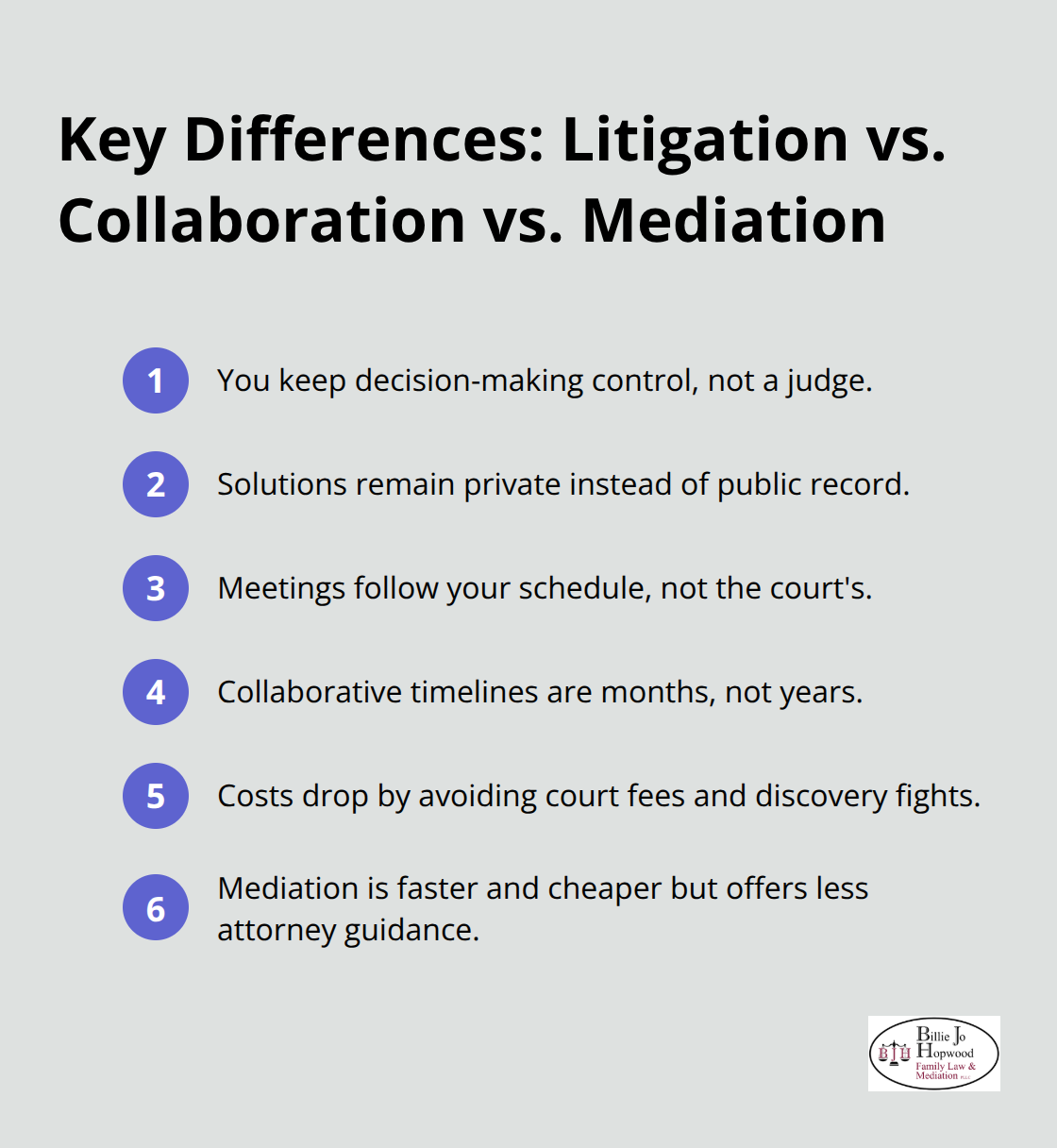
The typical Philadelphia collaborative divorce takes a few months to about a year depending on complexity, whereas litigation often stretches longer due to court backlogs and procedural delays. Cost differences matter significantly-litigation typically runs higher due to court fees, discovery expenses, and multiple hearings. Mediation sits between these approaches: a neutral mediator facilitates discussions without attorneys present at every meeting, making it faster and cheaper than collaboration but offering less attorney guidance during negotiations. Mediation works well for straightforward disputes, but collaborative law gives you active legal counsel steering every conversation, which proves valuable when finances or custody arrangements grow complicated.
The Core Commitment Collaborative Law Requires
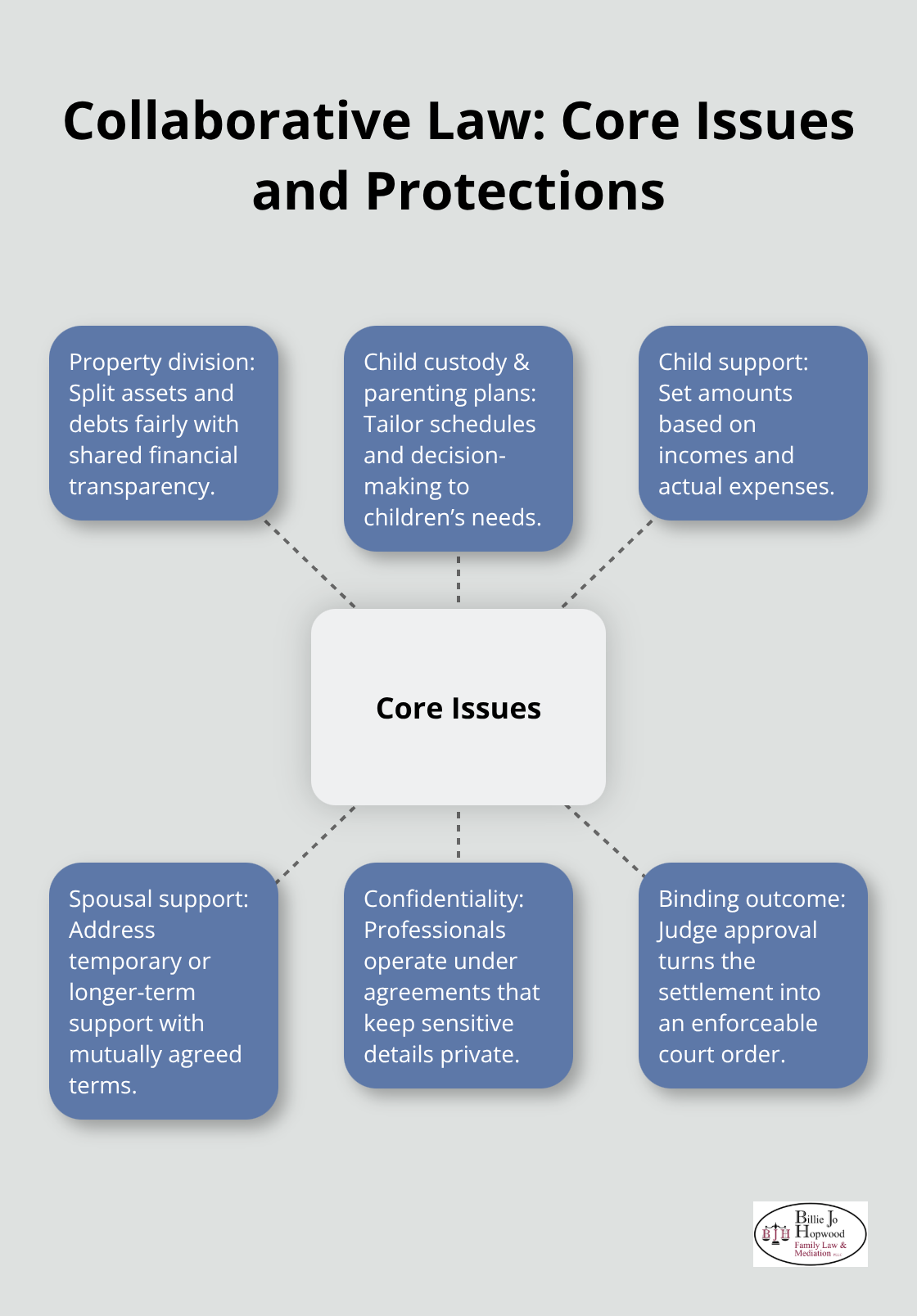
Both spouses must genuinely want to cooperate and share information honestly. The process fails immediately if one person hides assets, uses intimidation, or refuses to negotiate fairly. This reality means collaborative law works best for moderate-conflict situations where both parties recognize that court would harm their family more than compromise would. If domestic violence, abuse, or severe power imbalances exist in your relationship, traditional litigation with its court protections serves you better. The collaborative attorneys guide negotiations on core issues including property division, child custody and parenting plans, child support, and spousal support. Each professional in the room-attorneys, financial advisors, therapists-operates under confidentiality agreements, keeping sensitive family details private. When collaboration succeeds, the final settlement agreement becomes binding once a judge approves it, carrying the same legal weight as a court order.
Before you commit to this path, you need to assess whether both spouses can truly cooperate, which brings us to the practical steps that launch the collaborative process itself.
How the Collaborative Process Unfolds in Family Law
The Participation Agreement and Initial Setup
Both spouses sign a participation agreement that commits them to the process and establishes ground rules for how decisions get made. This agreement typically includes a clause requiring both collaborative attorneys to withdraw if either party chooses litigation, which creates real accountability for staying at the negotiation table. Once signed, the first four-way meeting happens within weeks, bringing both spouses and both attorneys together to discuss what matters most to each family. You identify which professionals you need beyond attorneys-a financial advisor helps when property division or business valuations complicate things, while a parenting coordinator addresses custody and scheduling disputes. Katherine E. Stoner’s research on divorce without court shows that adding these professionals early prevents delays later and keeps meetings focused on actual problems rather than legal posturing. The participation agreement also establishes confidentiality protections, meaning what gets discussed stays private and won’t appear in court filings or public records. This privacy matters significantly for families worried about business information, health details, or parenting approaches becoming public knowledge.
Meeting Structure and Professional Costs
Initial meetings typically run two to three hours and cost between $500 and $1,500 total depending on attorney hourly rates in your area, making this startup phase far cheaper than filing court petitions and discovery motions. Information sharing happens on a schedule both parties agree to, not on a judge’s calendar or a lawyer’s pressure tactics. Each spouse provides bank statements, tax returns, property valuations, and income documentation within agreed timeframes-usually two to four weeks between meetings. The structured nature prevents the endless back-and-forth that drains litigation budgets; you know exactly what documents matter and when they’re due.
Focused Negotiations and Shared Experts
Negotiations focus on one issue at a time rather than everything at once, which keeps people from getting overwhelmed or retreating to defensive positions. When property division requires appraisals or business valuations, the collaborative team hires a single neutral appraiser both sides trust rather than each party hiring competing valuers to argue over numbers. This shared-expert model cuts costs roughly in half compared to traditional litigation where both sides maintain separate professionals. Once all issues reach agreement-property split, custody arrangements, support amounts, and any modification clauses for future changes-the attorneys draft a settlement agreement reflecting what you’ve negotiated.
Finalizing Agreements and Legal Binding
A judge reviews and signs these documents, making them legally binding with the same enforceability as a court-imposed order. The entire process typically takes three to nine months for straightforward cases, though complex situations involving businesses or significant assets may extend to a year. The advantages of this timeline and cost structure become even clearer when you compare what collaborative law actually saves your family compared to traditional courtroom battles.
Why Collaborative Law Saves Money and Time
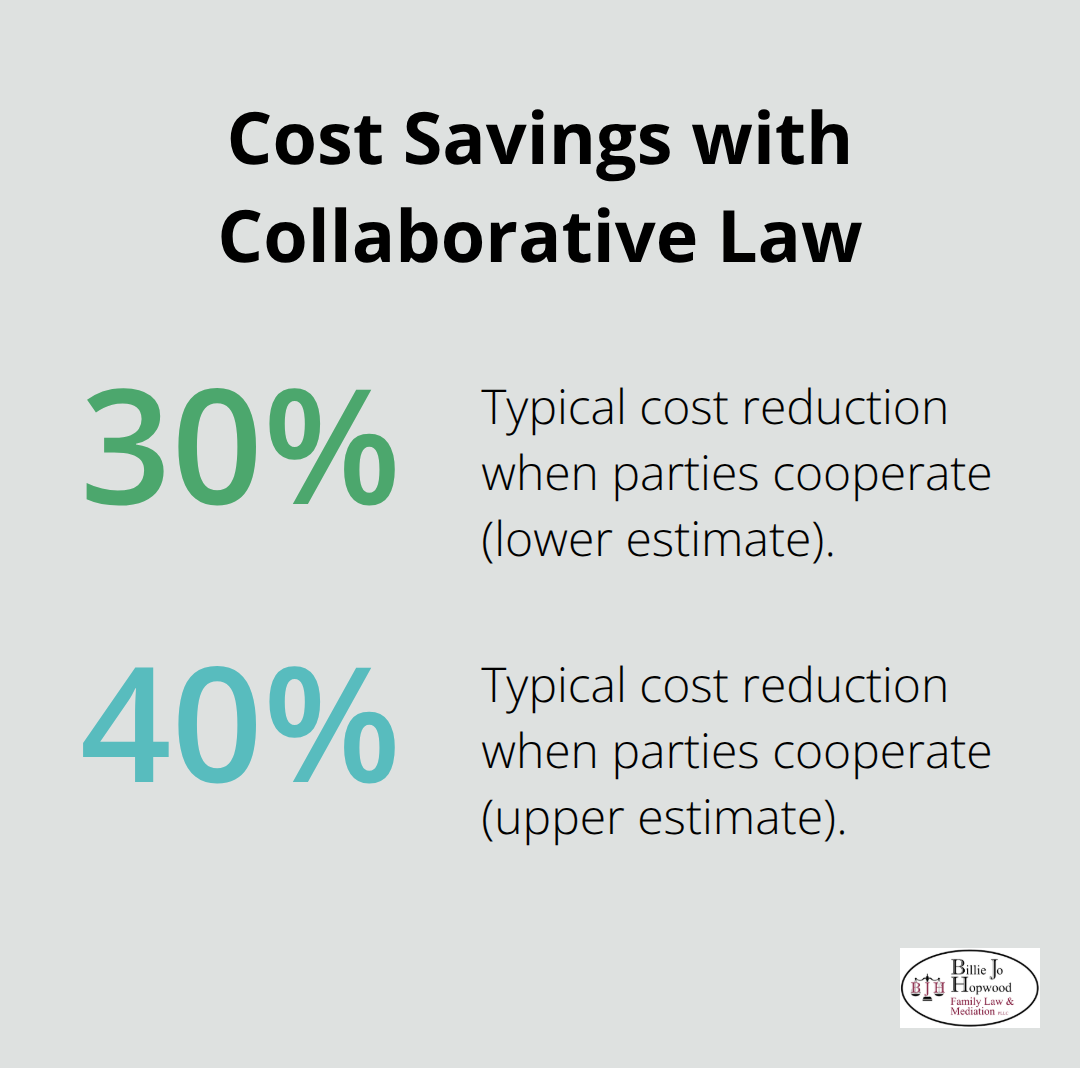
Collaborative law cuts litigation costs dramatically because you avoid the expense machinery that traditional divorce activates. Court filing fees, discovery motions, depositions, and multiple hearings add thousands to your bill within months. Research on divorce without court shows collaborative cases typically cost 30-40% less than litigation when both parties genuinely cooperate.
Initial four-way meetings run $500 to $1,500 total depending on attorney rates, compared to filing a court petition alone which costs $300-$500 plus attorney fees just to start the adversarial process. A single discovery dispute in litigation can generate $2,000-$5,000 in additional legal fees as attorneys fight over document production and depositions.
Information Sharing Without the Fight
Collaborative law eliminates this waste because information sharing follows an agreed schedule with no fighting over what documents matter. You know exactly which financial statements, tax returns, and property records each side needs within two to four weeks, eliminating the endless back-and-forth that bleeds litigation budgets dry. When shared experts handle valuations, you pay one appraiser instead of two competing professionals charging opposing rates, cutting that specific cost roughly in half. This structured approach prevents the discovery disputes that plague traditional litigation and drain resources that could support your family’s transition instead.
Timeline Advantages That Actually Matter
Collaborative cases reach settlement in three to nine months for straightforward situations, while litigation often stretches 18-24 months due to court calendar backlogs and procedural delays. This speed matters financially because every month your case stays open means additional attorney time, expert fees, and stress that affects your ability to move forward with life decisions. You cannot refinance a home, sell property, or modify custody arrangements until your case closes, so faster resolution means you regain control sooner. The schedule stays in your hands rather than a judge’s docket, so meetings happen when both parties and their attorneys can attend, avoiding continuances that plague court calendars.
Control Over Outcomes That Fit Your Family
Greater control over outcomes means you craft custody arrangements that actually fit your family’s reality instead of accepting a judge’s standard orders that may not work for your schedule or your children’s needs. One parent might need flexibility for a new job, while the other manages school pickups and activities, so your agreement can reflect those specific circumstances rather than generic court templates that treat all families identically. Families recover financially and emotionally faster through collaborative processes because they move deliberately toward solutions rather than waiting months between court dates. This direct path forward allows you to address your family’s actual needs rather than conform to rigid judicial templates.
Final Thoughts
Collaborative law offers families a path forward that traditional litigation cannot match because you maintain control over decisions affecting your children, your finances, and your future rather than handing those choices to a judge unfamiliar with your family’s actual needs. The process costs significantly less since you avoid court fees and discovery battles, and settlement arrives in months rather than years. This collaborative law alternative works best when both spouses genuinely want to resolve disputes fairly and share information honestly.
High-conflict situations with domestic violence or severe power imbalances require traditional litigation’s court protections instead, as the collaborative approach fails when one party refuses to cooperate or hides assets. Assess whether both you and your spouse can commit to good-faith negotiation before pursuing this path, since mutual willingness to negotiate determines whether the process succeeds or stalls. Most importantly, collaborative law preserves relationships when ongoing cooperation matters most, particularly for co-parenting arrangements that will shape your children’s lives for years to come.
We at Billie Jo Hopwood Family Law & Mediation, PLLC in Melbourne, Florida help families navigate this decision and guide you through collaborative processes that protect your interests while preserving your family’s wellbeing. Contact us to discuss whether this approach works for your circumstances and learn how we can support your path forward.