
Divorce doesn’t have to mean months of courtroom battles and mounting legal bills. At Billie Jo Hopwood Family Law & Mediation, PLLC, we’ve seen how Brevard County divorce mediation transforms what could be an adversarial process into a collaborative one.
When both spouses work with a neutral mediator, you control the outcome instead of leaving decisions to a judge. This guide walks you through how mediation works and why it’s the smarter path for most families.
How Divorce Mediation Works in Brevard County
The Role of a Neutral Mediator
A neutral mediator does not decide your case-they guide you and your spouse toward decisions you both can live with. In Brevard County, all mediators who handle family matters hold certification from the Florida Supreme Court and complete 16 hours of continuing education every two years. This training ensures you work with someone prepared to manage the specific pressures of divorce. The mediator maintains confidentiality and keeps discussions balanced, preventing one spouse from dominating conversations while the other remains silent. Research from the American Bar Association shows that mediated divorces produce higher satisfaction rates and better long-term family outcomes than litigation.
What Happens During Mediation Sessions
You will typically need multiple sessions to work through property division, custody arrangements, and financial support-one meeting rarely resolves everything. The first session establishes ground rules, identifies the main issues you need to address, and builds enough trust that both parties feel heard. Mediators adapt their approach based on your situation: some facilitate direct conversation between spouses, while others move between separate rooms if tension runs too high. This flexibility helps couples who cannot sit across from each other without escalating conflict.
Brevard County offers both in-person and video conference options, which removes scheduling barriers that might otherwise prevent attendance. A typical session runs 1.5 hours, and most divorces settle within 4 to 8 weeks after mediation concludes and paperwork gets filed.
Costs and Financial Requirements
The cost depends on your combined household income. If you earn under $50,000 annually, mediation costs $60 per party per session; between $50,000 and $100,000, it costs $120 per party; above that threshold, you will need private mediation. You must bring complete financial documentation-tax returns, bank statements, property valuations, and investment accounts-because Florida law requires full financial disclosure from both spouses. Hiding assets during mediation does not just damage trust; it can invalidate your agreement or trigger legal consequences later.
Protecting Your Rights Through the Process
The mediator will not provide legal advice, so having an attorney review your settlement agreement before you sign protects your rights under Florida law. Once both parties sign the mediated agreement, it becomes a Marital Settlement Agreement that your judge will review and approve, typically within 2 to 4 weeks in the Melbourne area. This agreement addresses the specific issues you and your spouse negotiated, which means the next phase focuses on understanding what happens when you present this agreement to the court.
What Mediation Actually Resolves
Mediation in Brevard County addresses the three financial and custody matters that consume most divorce negotiations: how you split assets, who spends time with the children, and whether either spouse receives ongoing support payments. These are not abstract discussions-they involve real numbers, real schedules, and real consequences for your family’s financial security. The mediator keeps both parties focused on workable solutions rather than rehashing grievances, which means you move faster toward settlement than litigation allows.
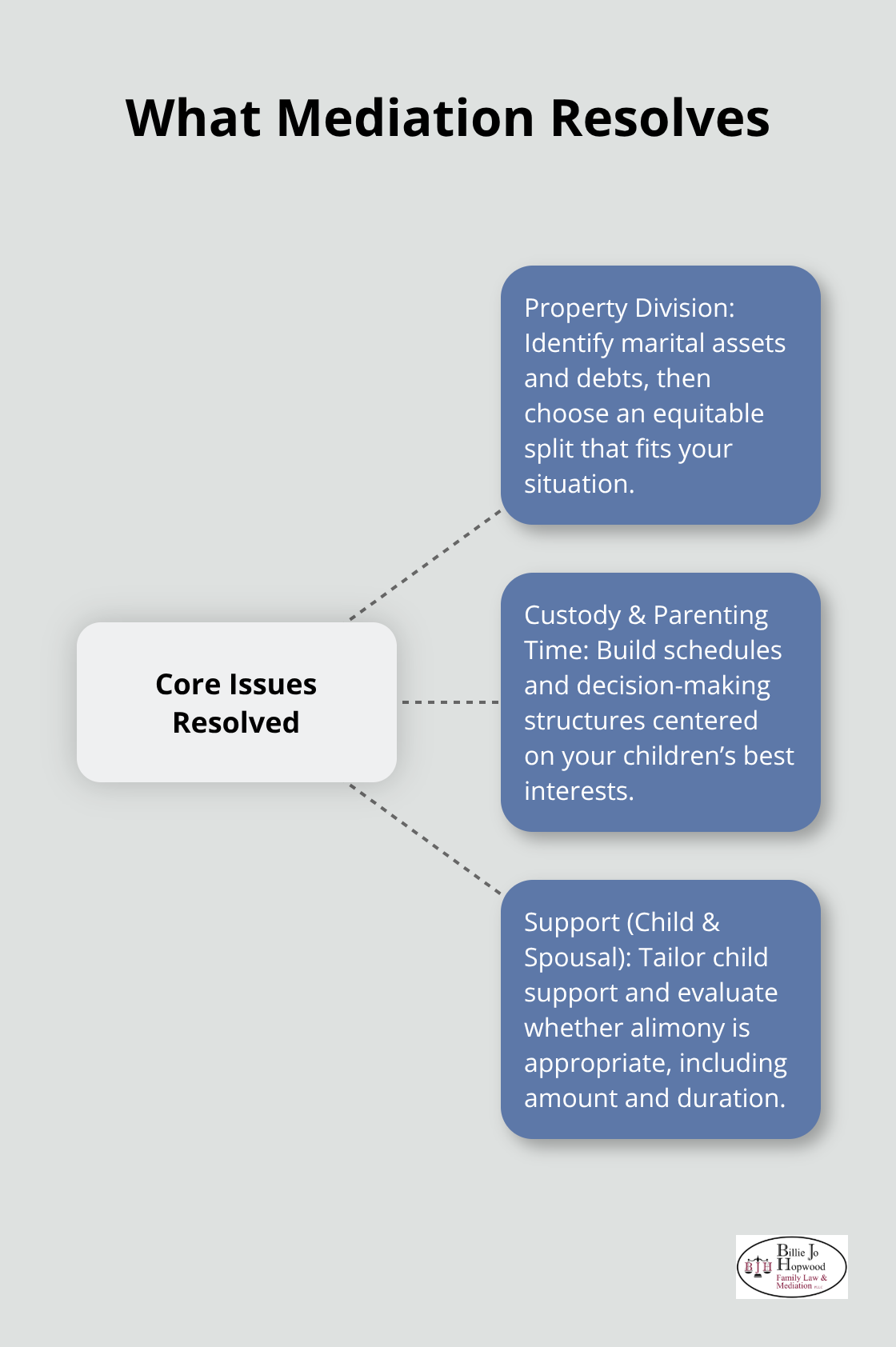
Most couples settle these core issues within 4 to 8 weeks through mediation, compared to contested divorces that can stretch 12 to 18 months or longer in Brevard County courts.
How Property Division Works in Mediation
Property division requires complete financial transparency from both spouses. You must bring tax returns for the past three years, current bank and investment statements, property valuations, retirement account statements, and documentation of any debts. Florida law treats marital property as equally divisible unless you and your spouse agree otherwise, so the mediator helps you decide what equal means in your situation-sometimes that is a 50-50 split, sometimes it is weighted differently based on one spouse’s future earning capacity or non-monetary contributions to the marriage.
The American Bar Association notes that mediated property settlements reflect the specific circumstances of each couple rather than applying a one-size-fits-all judicial formula, which often results in outcomes both parties find more acceptable than what a judge would impose. Hiding assets during mediation carries serious penalties: courts can invalidate agreements, award sanctions against you, or hold you in contempt, so full disclosure protects your settlement’s enforceability.
Custody and Parenting Time Arrangements
Child custody and parenting time arrangements demand particular attention because Florida law prioritizes the best interests of the child, which means the mediator will push you toward schedules and decision-making structures that minimize disruption to your children’s routines and relationships with both parents. Your mediator will ask detailed questions about school schedules, extracurricular activities, work demands, and each parent’s availability to ensure the parenting plan is realistic and sustainable, not just theoretically fair.
The Florida Chapter of the Association of Family and Conciliation Courts reports that children adapt more successfully to divorce when parents negotiate custody arrangements collaboratively rather than through adversarial litigation, and mediation directly supports this outcome by keeping both parents engaged in problem-solving instead of positioning them as opponents.
Support Calculations and Negotiations
Child support calculations follow Florida’s income-sharing formula, which considers both parents’ gross income, the number of overnights each parent has, and health insurance costs for the children. Spousal support, also called alimony, depends on factors like the length of your marriage, each spouse’s earning capacity, and the standard of living during the marriage-the mediator helps you evaluate whether alimony makes sense for your situation and, if so, what amount and duration work for both of you.
Unlike litigation where a judge makes these decisions unilaterally, mediation lets you negotiate support arrangements that reflect your actual circumstances and future plans, whether that means temporary support during a career transition or long-term support based on a significant income disparity. Once you and your spouse reach agreement on these three areas, you move into the phase where your settlement takes legal form and heads toward court approval.
Why Mediation Outperforms Litigation for Most Families
Time and Cost Advantages That Matter
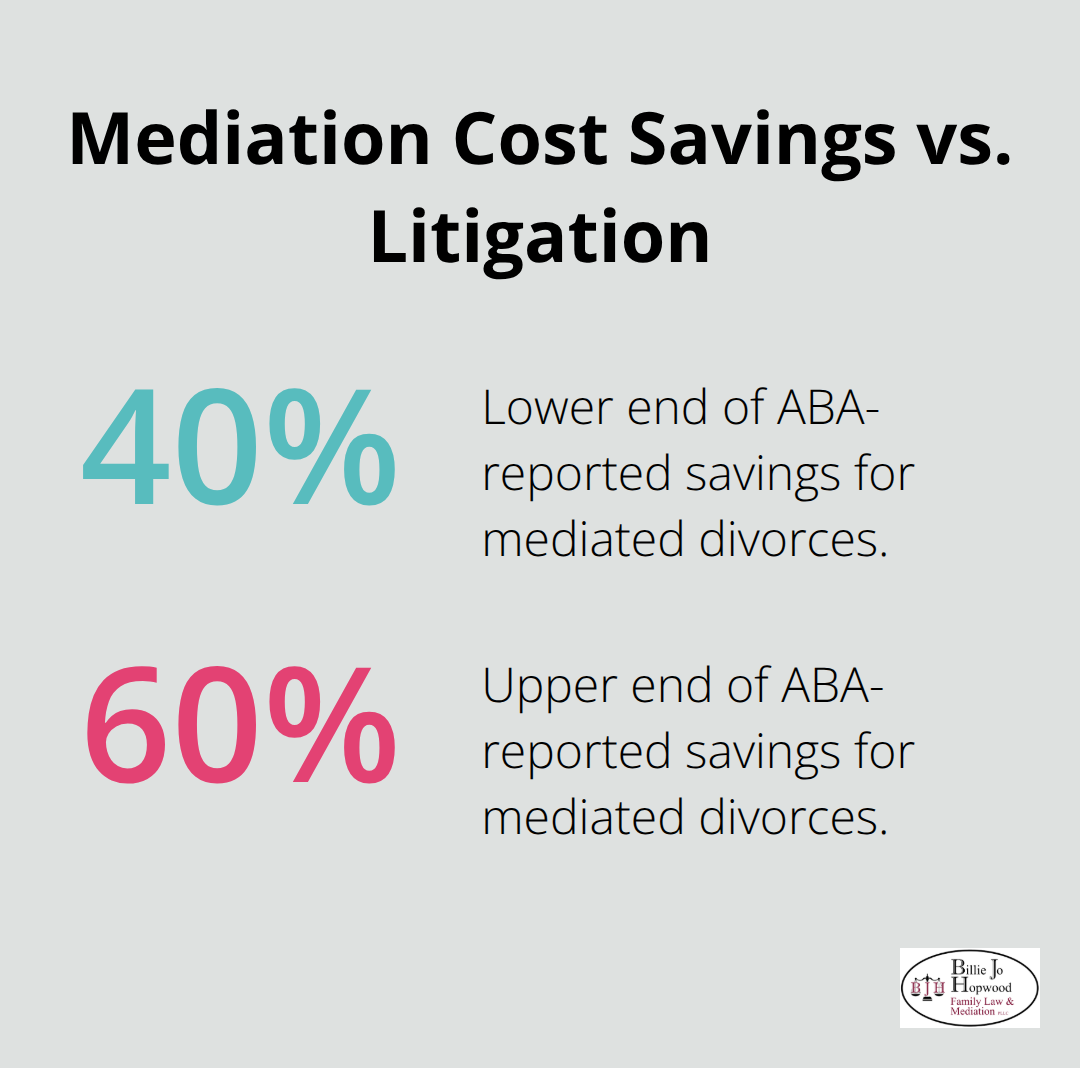
Litigation consumes time and money at rates that shock most families who enter the court system unprepared. A contested divorce in Brevard County routinely stretches 12 to 18 months, while mediated divorces settle within 4 to 8 weeks after paperwork is filed. The cost difference is staggering: the American Bar Association reports that mediated divorces run 40 to 60 percent cheaper than litigated ones, which means families preserve substantially more assets for their actual post-divorce lives instead of transferring them to attorneys. When you litigate, you pay for discovery disputes, motion hearings, depositions, and trial preparation-each billable hour accumulates while your case sits in a judge’s crowded docket. Mediation eliminates most of this overhead because you negotiate directly with your spouse under a mediator’s guidance, cutting out the procedural machinery that makes litigation so expensive.
Financial Affidavits remain required in Brevard County divorces regardless of your path, but mediation avoids the adversarial posturing that turns document exchanges into expensive negotiation theater. You move faster toward settlement than litigation allows, which reduces the total hours you spend on your divorce and the corresponding legal fees that drain your resources.
How Children Adapt Better Through Mediation
The emotional toll on children differs dramatically between mediation and litigation. The Florida Chapter of the Association of Family and Conciliation Courts documents that children adapt more successfully when parents collaborate on custody arrangements rather than battle through court, and this advantage starts immediately once you select mediation. Contested divorces force children to watch their parents positioned as opponents, sometimes testifying against one parent or absorbing the stress of trial preparation. Mediation keeps both parents problem-solving together, which demonstrates to your children that divorce changes the family structure but not the commitment both parents maintain toward their wellbeing.
Research shows that children experience less stress when their parents negotiate custody arrangements collaboratively instead of through adversarial litigation. This protective effect extends beyond the immediate divorce process-children who see their parents work together tend to maintain healthier relationships with both parents after the split.
Control Over Your Family’s Outcomes
You control the outcome in mediation instead of gambling on a judge’s interpretation of what serves your family best. A judge applies legal formulas to child support and property division, but your mediator helps you craft arrangements that reflect your actual circumstances-your job flexibility, your children’s specific needs, your post-divorce financial reality. This control matters because you live with the consequences of the agreement for years; when you negotiate it yourself rather than having it imposed, you are far more likely to follow through on your commitments and adapt the arrangement if circumstances change.
Mediation produces settlements that both parties find more acceptable than what a judge would impose, since you shape the terms to fit your specific situation rather than accepting a one-size-fits-all judicial formula.
Final Thoughts
Mediation protects your family’s future by keeping decisions in your hands rather than leaving them to a judge who knows nothing about your specific circumstances. When you choose Brevard County divorce mediation, you avoid the adversarial machinery that damages co-parenting relationships and drains resources your family needs after the split. The agreements you negotiate reflect your actual life, your children’s real needs, and your financial reality.
We at Billie Jo Hopwood Family Law & Mediation, PLLC help families navigate this process with compassion and clarity, guiding you through each stage from initial consultation through final settlement. You can reach us at 321-988-1331 or visit our Melbourne office to discuss whether mediation fits your circumstances. We handle the mediation process itself and can connect you with resources for legal review of your settlement agreement.
Your children maintain healthier relationships with both parents when they see you working together rather than battling through court, and your post-divorce finances remain stronger because you preserved assets instead of transferring them to litigation costs. Your co-parenting relationship starts from a foundation of collaboration rather than resentment, which matters enormously when you need to make decisions about your children’s education, health, or activities for years to come. Mediation protects your family’s wellbeing and financial security by putting control of the outcome in your hands.