
Child custody disputes often feel overwhelming, but they don’t have to end in court. At Billie Jo Hopwood Family Law & Mediation, PLLC, we help families in Brevard create custody arrangements through mediation that actually work for everyone involved.
This guide walks you through how child custody mediation in Brevard works and shows you how to build a plan that fits your family’s real life.
How Child Custody Mediation Works in Brevard
Child custody mediation in Brevard County follows a structured yet flexible process that moves families toward agreement without courtroom battles. Most mediations conclude within two to four sessions, according to Florida mediation program data, compared to contested custody litigation that often stretches across months or years. The initial session sets the tone: a trained mediator explains confidentiality rules, establishes ground rules for respectful communication, and allows each parent to express their concerns about custody arrangements. This first meeting typically lasts two to three hours and focuses on understanding each parent’s priorities, the child’s current routines, and any scheduling constraints tied to work or school obligations. Subsequent sessions narrow the focus to specific issues-time-sharing schedules, decision-making authority, transportation logistics, and how you’ll handle disagreements down the road. Florida Statute 61.13 requires comprehensive parenting plans that address daily schedules, school-year and holiday arrangements, and dispute-resolution procedures, so mediators guide you toward compliance with these legal requirements from the start.
What the Mediator Actually Does
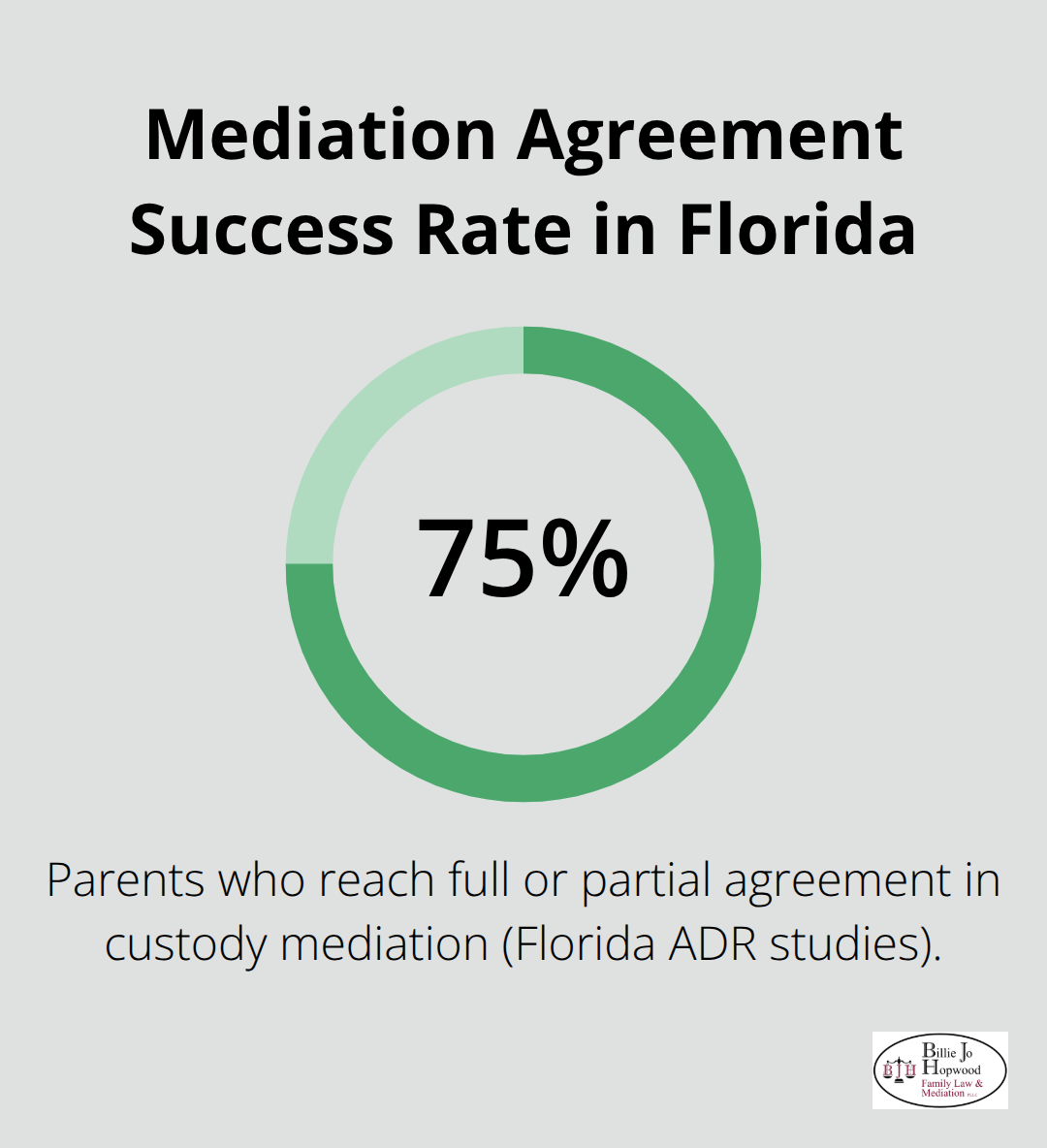
The mediator’s role differs fundamentally from a judge or attorney. This neutral third party doesn’t make decisions for you or provide legal advice; instead, they facilitate clear communication between parents and help identify common ground. A mediator explains your options, asks clarifying questions about your family’s unique circumstances, and points out practical concerns you might overlook. For example, if one parent proposes alternating weeks, the mediator explores whether that disrupts your child’s school routine, creates transportation headaches, or conflicts with either parent’s work schedule. Approximately 75 percent of parents who attend mediation reach full or partial agreement in custody matters, according to Florida ADR studies. This success rate reflects the mediator’s skill in helping parents move past emotional conflict toward solutions focused on the child’s stability and well-being.
The mediator balances empathy with problem-solving, ensuring both voices are heard while keeping discussions anchored to practical details.
Why Mediation Beats Litigation for Custody
Courtroom custody battles hand control to a judge who knows nothing about your family’s daily realities. The judge decides your child’s schedule, decision-making authority, and how disputes get resolved-outcomes that rarely satisfy either parent completely. Mediation inverts this power dynamic: you and the other parent retain control over every aspect of the agreement. You decide whether 50/50 shared custody works, whether one parent has primary custody with visitation rights, or whether a customized schedule better serves your child’s needs. You set communication protocols for routine updates and emergencies. You determine how major decisions about education, healthcare, and religion will be made. Mediation costs significantly less than litigation because it typically requires only two to four sessions rather than months of court appearances, discovery disputes, and attorney fees. The confidentiality of mediation protects sensitive family information from becoming public record, unlike courtroom proceedings. Parents who craft their own agreements through mediation maintain better post-divorce relationships and help children maintain closer bonds with both parents compared to families who litigate custody. The agreement you create in mediation becomes binding once a judge signs it, giving you the legal weight of a court order without the adversarial process that damages co-parenting relationships.
Moving Forward with Your Custody Plan
Once mediation produces an agreement, the next phase involves translating that agreement into a formal parenting plan that meets Florida’s statutory requirements. Your mediator helps you document all the details you’ve negotiated-time-sharing schedules, holiday arrangements, decision-making responsibilities, and communication methods-in language that courts recognize and enforce. This documentation step matters because vague agreements create confusion and conflict later. A clear, detailed plan prevents misunderstandings about pickup times, school event attendance, and how you’ll handle unexpected changes in circumstances. The plan you’ve crafted through mediation reflects your family’s actual needs rather than a judge’s generic template, which means both parents understand exactly what they’ve agreed to and why it works for your children.
Building a Custody Plan Around Your Child’s Real Life
Map Your Child’s Weekly Routine First
Your child’s daily routine dictates what custody arrangement actually works. Before mediation sessions begin, track your child’s typical week for two weeks: school start and end times, extracurricular activities, work schedules for both parents, and any special needs requiring consistency. This data becomes your foundation. If your child attends school from 8 a.m. to 3 p.m. and you work until 6 p.m., a Monday-through-Wednesday custody schedule with the other parent fails unless someone handles the gap between school dismissal and your arrival home. Many Brevard families discover during mediation that their initial custody ideas clash with practical logistics. One parent proposes alternating weeks, but the child’s soccer practice happens Tuesday and Thursday evenings with the other parent’s household. The mediator identifies this conflict immediately and helps you redesign the schedule around the child’s commitments rather than forcing the child to adapt to an inflexible arrangement. Florida law requires parenting plans to specify daily schedules and school-year arrangements, so documenting these details during mediation prevents court battles later when schedules inevitably shift. Work with your mediator to map out a typical school week first, then layer in summer and holiday variations once the foundation is solid.
Honor Holidays and Vacation Traditions
Holiday and vacation schedules demand equal attention during mediation because they create the most contentious disputes in custody arrangements. Florida courts expect parenting plans to address spring break, winter holidays, summer vacation, and significant dates like birthdays and Father’s Day or Mother’s Day. Rather than assuming a 50/50 split of every holiday, work backward from your child’s preferences and existing family traditions. Does your child spend Christmas with one grandparent every year? That matters. Does the other parent have a non-negotiable week in July for a family reunion? That deserves accommodation. Mediation allows you to preserve these meaningful traditions while creating fair access for both parents. Approximately 75 percent of parents reach agreement through mediation partly because mediators help shift focus from rigid equal division toward creative solutions that honor what actually matters to your family. One effective approach discussed during mediation is alternating major holidays year to year, so one parent hosts Christmas in odd years while the other hosts in even years, then switching for Thanksgiving. Summer vacation can split into two blocks, with each parent taking consecutive weeks when school ends, giving your child stability rather than constant transitions.
Handle Logistics with Clear Agreements
Transportation logistics also need explicit agreements: who picks up the child from school on transition days, who handles transportation to activities during the other parent’s time, and what happens if someone runs late. These specifics prevent daily friction and protect your child from becoming a messenger or feeling responsible for logistics failures. Clear language about pickup locations, time windows, and communication methods removes ambiguity that breeds conflict. Your mediator helps you document these details so both parents understand their responsibilities without room for misinterpretation.
Build Flexibility Into Your Plan
Life changes. One parent gets a job promotion requiring occasional travel. The other parent relocates within Brevard County for better housing. Your child joins a competitive sports team requiring weekend tournaments. A rigid custody schedule breaks under this weight, but an agreement built with flex points survives. During mediation, discuss how you’ll handle temporary schedule changes without returning to court. Can you swap weeks with 48-hours notice if circumstances demand it? Do you have a protocol for handling unexpected conflicts, or must every deviation become a formal modification?
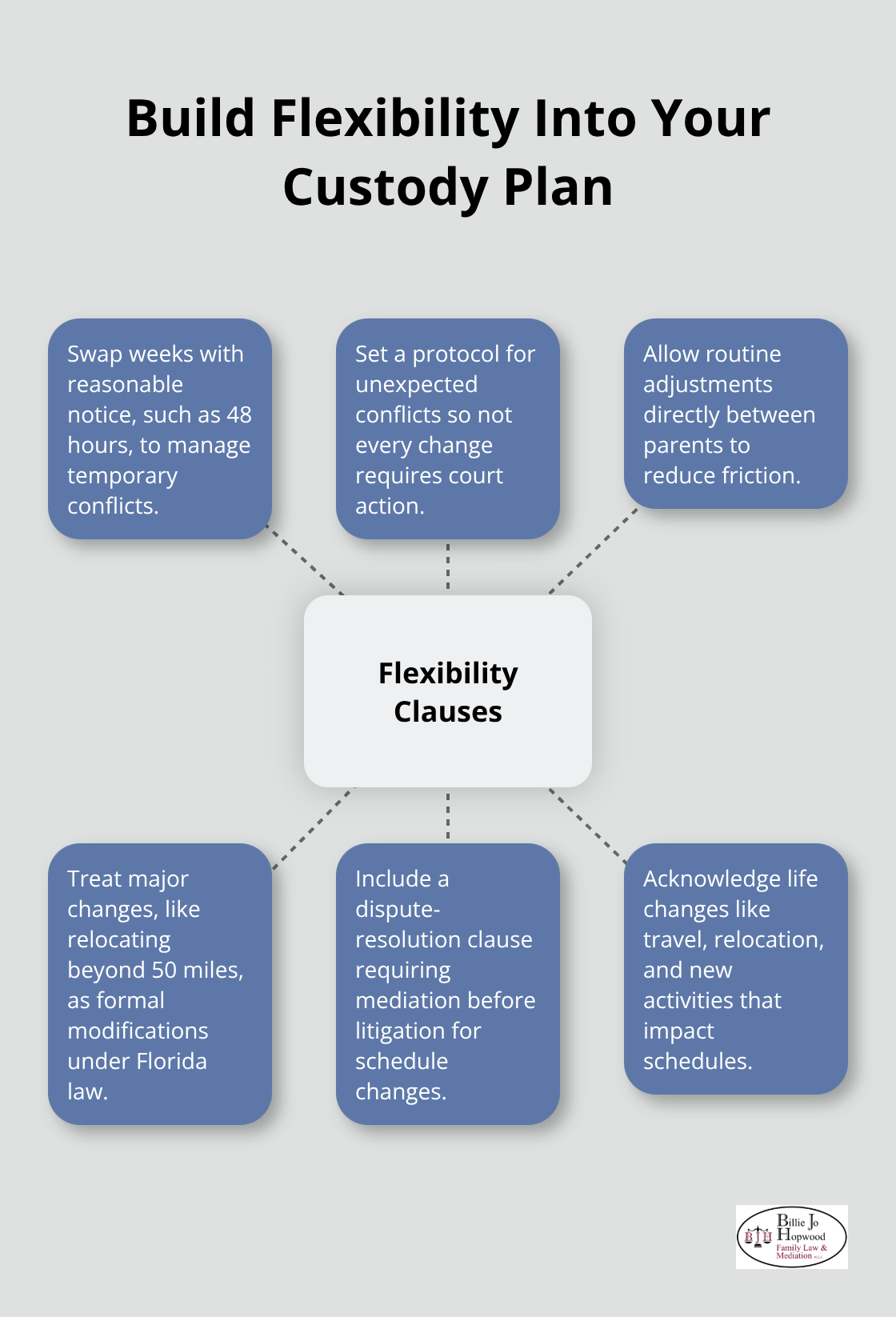
Some families agree that routine adjustments happen between parents directly, while major changes like relocating beyond 50 miles trigger the formal modification process Florida law requires. The mediator helps you draft language that gives both parents confidence in the plan’s stability while acknowledging that perfect adherence to a custody schedule is impossible. Including a dispute-resolution clause in your agreement means you commit to mediation again before litigation if disagreements arise about schedule changes. This approach costs far less than court modification proceedings and preserves the co-parenting relationship your child depends on.
Move From Planning to Implementation
Custody plans that survive post-divorce life include flexibility mechanisms from the start, but translating those plans into daily reality requires clear communication and realistic expectations. The next section explores the specific custody arrangements that work best for different family situations and how to evaluate which model fits your circumstances.
Common Custody Arrangements and What Works Best
Fifty-fifty shared custody sounds fair in theory, but it often fails in practice for Brevard families. When each parent has the child exactly half the time, transitions happen every three or four days, which disrupts school routines, extracurricular consistency, and the child’s sense of stability. A child bouncing between two households every few days spends disproportionate time packing and unpacking while adjusting to different rules and expectations. Research on Florida custody arrangements shows that 50/50 schedules work best only when both parents live within ten minutes of each other, work compatible schedules, and have genuinely aligned parenting values.
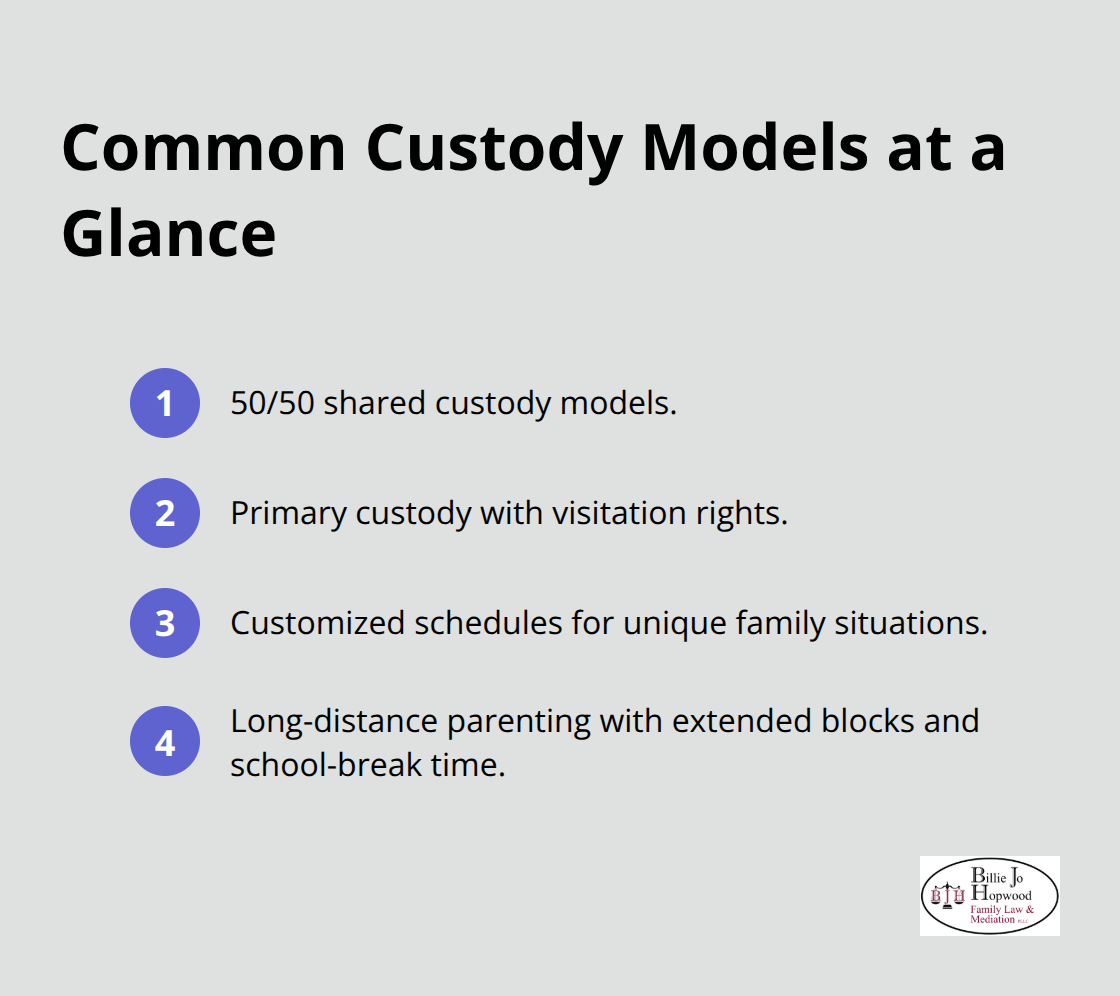
50/50 Shared Custody Models
If your child attends school in one parent’s neighborhood, that parent should have school-night custody because the child needs to arrive well-rested and prepared. During mediation, many parents abandon rigid 50/50 splits in favor of schedules that prioritize school stability. One effective variation involves one parent having school-week custody while the other has alternating weekends plus one mid-week overnight. This keeps your child in one home during the school week, strengthens homework routines, and reduces the logistical chaos of managing two households’ worth of supplies simultaneously. The child still maintains strong connection with the other parent through substantial weekend and mid-week time. Florida courts approve these arrangements readily because they demonstrably serve the child’s educational and emotional needs better than artificial equality.
Primary Custody with Visitation Rights
Primary custody with visitation rights works when one parent has been the child’s primary caregiver or when work schedules make shared custody impractical. The parent with primary custody makes day-to-day decisions, maintains the child’s primary residence, and handles school enrollment and medical care. The other parent typically receives every other weekend, one mid-week overnight, and shared holiday time. This model provides your child with consistency and a stable home base while guaranteeing the other parent meaningful ongoing contact. Many Brevard families structure visitation to include Thursday or Friday overnight stays so the child spends a full weekend day with that parent rather than arriving Saturday morning and leaving Sunday evening.
Customized Schedules for Unique Family Situations
When one parent works rotating shifts or travels frequently for work, mediation helps craft schedules that match actual availability. Rather than forcing a parent into a standard every-other-weekend arrangement they cannot sustain, mediators help design schedules reflecting real-world constraints. Some parents with unpredictable work schedules claim specific weeks during summer vacation or designate extended holiday periods they can reliably take.
If one parent works nights and sleeps days, custody during that parent’s sleeping hours makes no sense for the child. A schedule matching the parent’s sleep pattern and your child’s waking hours creates genuine parenting time rather than phantom custody. Families with significant age gaps between children sometimes use different custody schedules for each child, keeping teenagers with one parent while younger children split time differently. Blended families often negotiate schedules accommodating the other parent’s stepsiblings or the child’s step-parent’s work demands.
Long-distance parenting requires extended blocks rather than frequent transitions. If one parent lives more than 50 miles away, Florida law mandates specific procedures for relocation, but mediation helps you design a schedule that works practically. Rather than every-other-weekend visits requiring four-hour drives, extended summer blocks and school breaks provide deeper connection time. The mediation process reveals which custody model actually serves your child because it forces you to answer concrete questions about daily logistics, school needs, and work realities instead of assuming a standard arrangement will function.
Final Thoughts
The custody arrangements you craft through child custody mediation in Brevard stick because they reflect your family’s actual life rather than a judge’s assumptions. When both parents participate in designing the schedule, addressing logistics, and building flexibility into the agreement, they understand why each piece matters. This ownership transforms a custody plan from a court document into a working agreement you both commit to honoring.
Starting mediation in Brevard County begins with contacting a qualified family law mediator who understands Florida’s statutory requirements and your family’s specific circumstances. Bring documentation of your child’s current schedule, school information, and any existing custody arrangements to that first meeting. Come prepared to listen to the other parent’s perspective without defensiveness, knowing that the mediator’s role is to help both of you find common ground.
At Billie Jo Hopwood Family Law & Mediation, PLLC, we help families in Melbourne and throughout Brevard navigate custody mediation with compassion and practical guidance. Whether you need help designing a custody schedule, understanding Florida’s parenting plan requirements, or preparing for mediation sessions, contact us to guide you through the process. The custody plan you create through mediation becomes the foundation for your family’s post-separation life, so getting it right matters profoundly.