
Divorce mediation in Florida offers a faster, less adversarial path through separation than courtroom battles. Many couples find mediation reduces costs and preserves relationships, especially when children are involved.
At Billie Jo Hopwood Family Law & Mediation, PLLC, we guide you through each stage of the process so you know exactly what to expect.
What Divorce Mediation Actually Is
The Core Process
Divorce mediation in Florida is a structured negotiation process where a neutral third party facilitates discussions between you and your spouse to reach agreement on divorce-related issues. Unlike litigation, where a judge makes decisions for you, mediation puts control squarely in your hands. The mediator does not decide who is right or wrong, does not provide legal advice, and does not represent either party. Instead, the mediator keeps communication flowing, identifies common ground, and guides you toward workable solutions on property division, child custody, alimony, and child support.
Why Florida Courts Require It
Florida courts strongly encourage settlement through mediation before trial, and in Brevard County, the court requires every divorce case to be mediated before you can attend trial. This requirement exists because mediation works. Most divorces never reach trial because mediation resolves disputes efficiently and at a fraction of the cost of courtroom battles.
The Financial and Timeline Advantages
The financial difference is stark. Mediation typically costs less than half what litigation does because you avoid lengthy discovery, multiple court hearings, and attorney fees that accumulate through adversarial back-and-forth. You also control the timeline. Mediation sessions happen on your schedule, and Florida Family Law Rule 12.740(e) aims to wrap the entire process within 75 days of the first conference in most cases. You maintain privacy throughout because mediation is confidential; what is discussed cannot be used in court later.
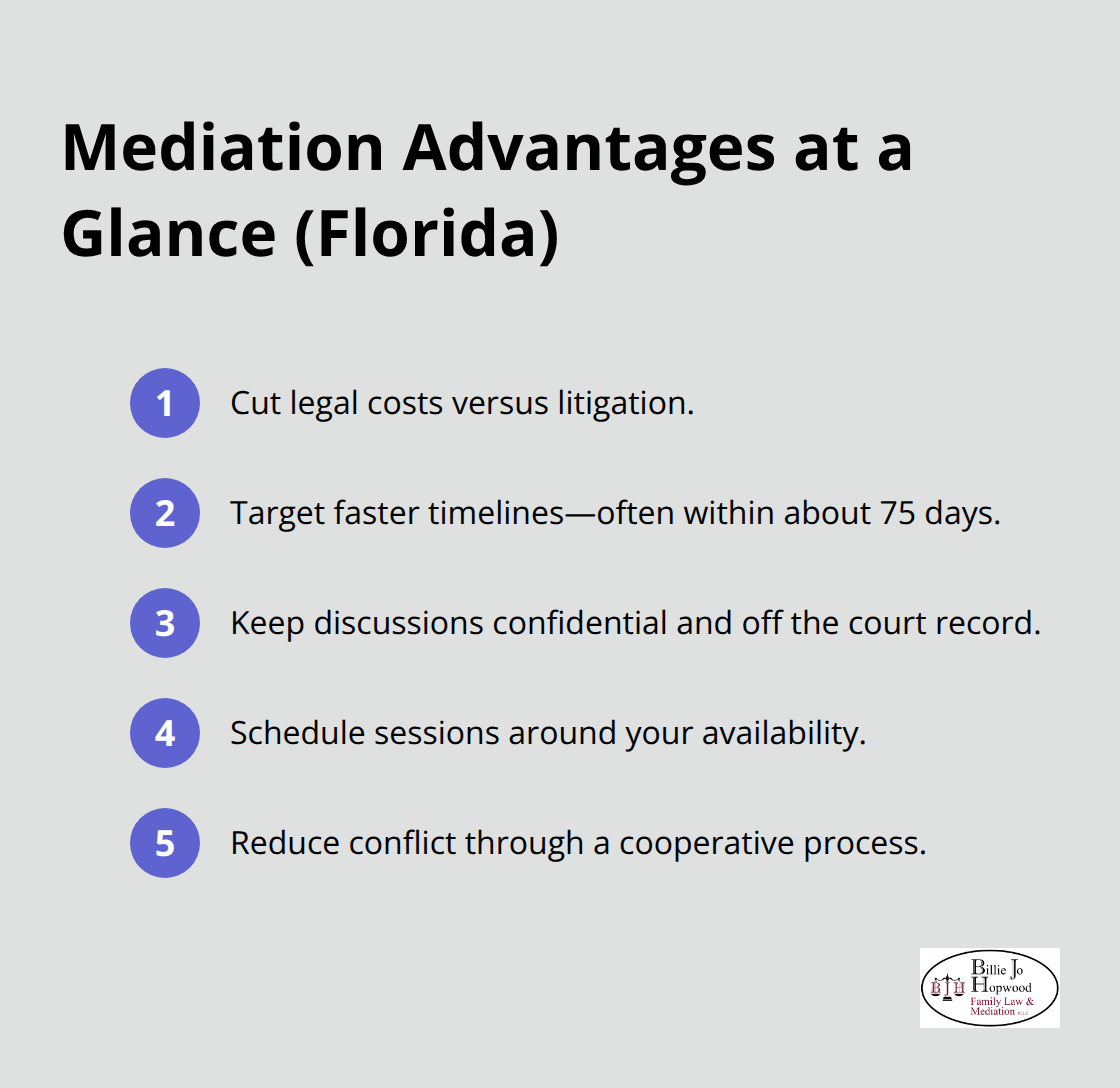
This confidentiality frees you to negotiate more openly without fear of harming your case.
Creating a Binding Agreement
Once you and your spouse reach agreement, you draft a Mediated Marital Settlement Agreement that becomes a court order once the judge approves it. Mediation is especially valuable when children are involved because it preserves the foundation for cooperative co-parenting after divorce. A judge’s ruling creates winners and losers; mediation creates a framework where both parents stay involved in their children’s lives.
The next step involves understanding how the mediation process actually unfolds-from your first meeting with the mediator through the sessions where you and your spouse address the specific issues that matter most to your family.
How Mediation Sessions Actually Work
Your First Meeting Sets the Foundation
Your first meeting with the mediator establishes the tone for everything that follows. The mediator will explain their role-they facilitate discussion but do not make decisions or provide legal advice-and establish ground rules for respectful communication. You and your spouse will each share your perspective on the divorce and your priorities. Bring your complete financial picture to this session: tax returns from the past two to three years, recent bank statements, a list of all assets including real estate, vehicles, investments, and personal property, and documentation of all debts such as mortgages, credit cards, and loans. The more thorough your financial disclosure, the faster negotiations move forward.
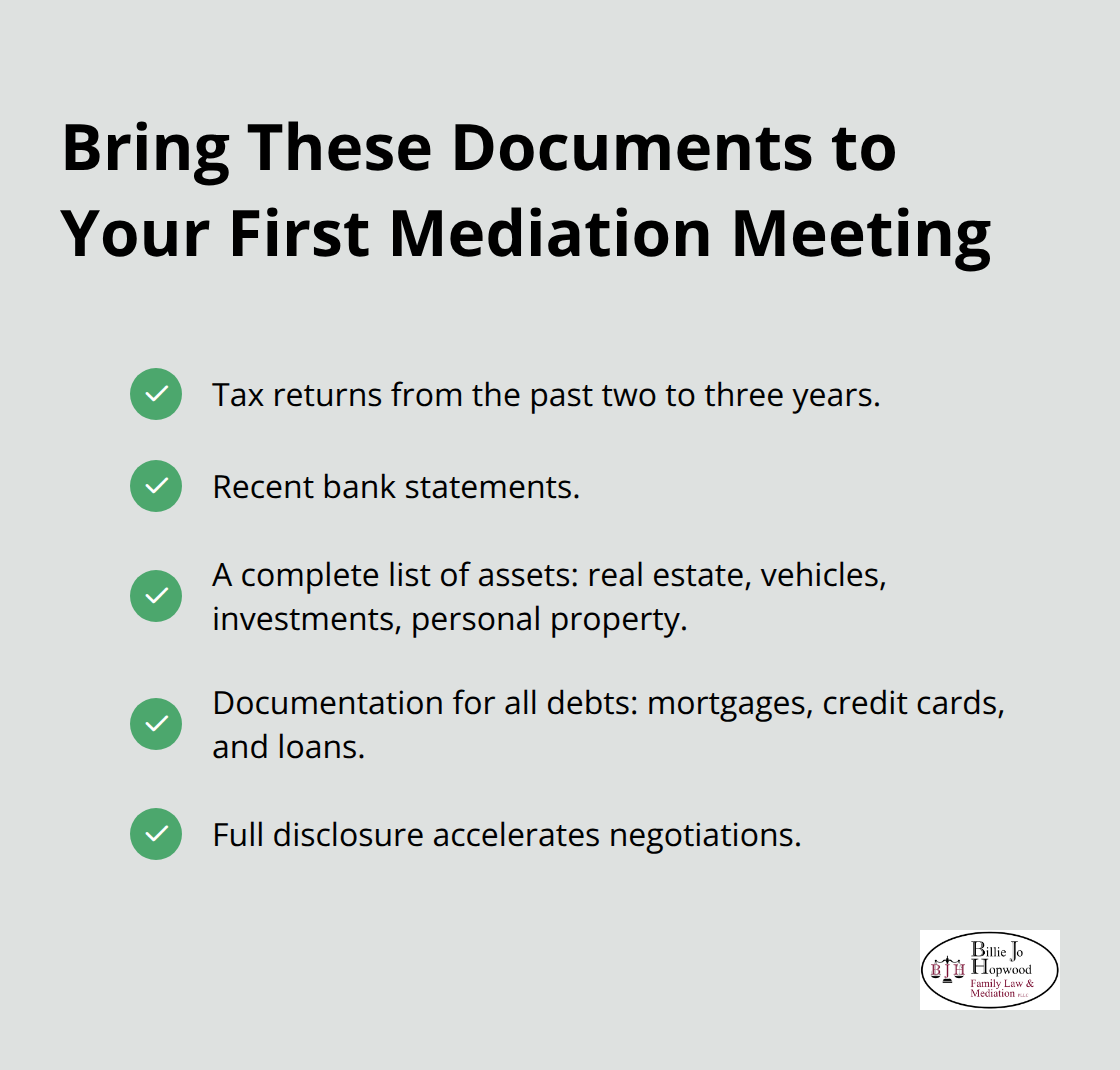
Many couples withhold information or provide incomplete documents, which stalls progress and adds costs. The mediator will also ask you to articulate your goals clearly-what matters most to you regarding custody, property division, and support arrangements. This initial meeting typically lasts two to three hours and costs between $300 and $500 per hour for the mediator’s time, though Florida courts offer court-connected mediation at reduced rates based on income in many circuits.
Separate Sessions Allow Candid Conversation
After the initial meeting, the mediator will conduct separate sessions called caucuses with you and your spouse in private rooms. This format allows you to speak candidly about your concerns, priorities, and bottom-line positions without your spouse present. The mediator then moves between rooms, relaying offers and counteroffers, identifying areas of agreement, and proposing solutions. This back-and-forth continues until you and your spouse reach consensus on the major issues: child custody and visitation schedules, child support amounts, alimony if applicable, and division of marital property and debts.
Negotiating Custody With Your Children’s Interests First
When you negotiate custody arrangements, focus on what serves your children’s best interests rather than winning concessions. Courts in Florida evaluate custody decisions based on the child’s welfare, and agreements that prioritize the child’s stability, education, healthcare needs, and relationship with both parents tend to hold up better long-term. Try to create parenting plans that address school decisions, activities, holiday schedules, and dispute-resolution procedures for future disagreements.
Understanding Property Division Before You Negotiate
Understand the difference between marital and non-marital property before you negotiate. Marital property acquired during the marriage is subject to equitable distribution; non-marital property you owned before marriage or received as a gift typically stays with you. This distinction affects retirement accounts, investment portfolios, and real estate holdings significantly.
Finalizing Your Agreement With Legal Review
Once you and your spouse agree on all issues, the mediator drafts a Mediated Marital Settlement Agreement that spells out custody arrangements, visitation schedules, child support, alimony, property division, and debt responsibility. Have an attorney review this agreement before you sign it. A mediator cannot warn you if a proposed settlement waives important rights or fails to protect retirement accounts and other assets adequately. Your attorney will identify risks, suggest modifications, and confirm the agreement aligns with Florida family law requirements. After your attorney completes their review, you will submit the agreement to the court for final approval, which transforms your mediated settlement into a binding court order.
What Stops Mediation in Its Tracks
Emotional Turbulence Derails Negotiations
Mediation fails when emotions hijack the negotiation room, and that happens far more often than most couples anticipate. Anger, fear, and resentment can derail even straightforward discussions about asset division or custody schedules. One spouse may make an unreasonable offer specifically to provoke the other, or a comment about past betrayals can escalate tensions so quickly that the mediator struggles to refocus the conversation. This emotional turbulence is real and predictable.
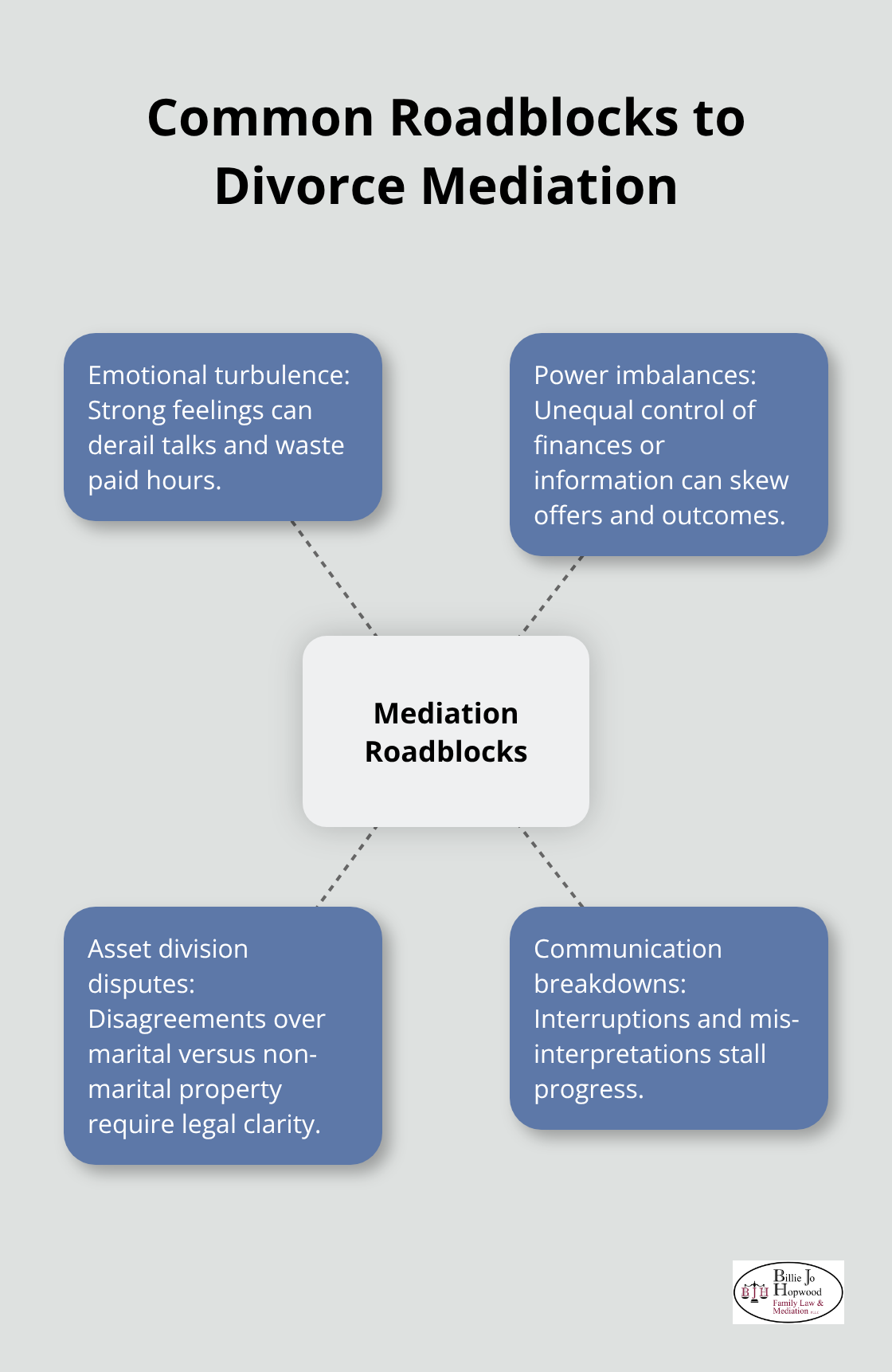
If you enter mediation without acknowledging your feelings or developing a strategy to manage them, you will pay for it in wasted session hours and delayed progress. Seek therapy or join a divorce support group before mediation starts so you arrive with emotional stability rather than raw wounds. The mediator’s job is to facilitate negotiation, not serve as your therapist, and blurring those lines consumes time you are paying for hourly.
Power Imbalances Distort Fair Negotiation
Power imbalances create another serious obstacle that many couples overlook until negotiations stall. If one spouse controlled finances during the marriage, hid assets, or made all major decisions while the other deferred, that dynamic does not vanish at the mediation table. The financially dominant spouse may anchor offers far below what is fair, knowing their partner lacks confidence in evaluating the numbers.
This is why having independent legal counsel at mediation is non-negotiable. Your attorney identifies when proposed settlements waive important rights, flags undervalued retirement accounts, or catches clauses that disadvantage you long-term. A mediator cannot provide this protection because they remain neutral and cannot advise either party. If you attend mediation without an attorney, you are gambling with your financial security. The mediator can monitor whether both parties negotiate in good faith, but they cannot compensate for unequal information or confidence.
Asset Division Disputes Require Legal Knowledge
Disagreements over asset division intensify when spouses cannot agree on what marital property actually is or how to value it. One spouse claims a retirement account accumulated before marriage is non-marital; the other argues contributions made during marriage are marital property subject to division. These disputes require understanding Florida family law rules about property classification, not just mediator skill.
Bring your attorney’s analysis of marital versus non-marital property before your mediation sessions so you know your actual negotiating position. If you walk into mediation unprepared on this distinction, you will either accept unfavorable terms or waste hours debating definitions the mediator cannot legally resolve.
Communication Breakdowns Prevent Progress
Communication breakdowns stall progress faster than almost any other factor. Spouses stop listening to each other, interrupt constantly, or interpret neutral statements as personal attacks. The mediator works to maintain respectful dialogue through separate caucuses and careful language, but they cannot force genuine communication if both parties refuse to participate.
Maintain clear, direct communication focused on current and future needs rather than past grievances. Avoid accusations or blame. If you find yourself rehashing old relationship issues, signal to the mediator that you need to refocus on the settlement terms in front of you. Unresolved relationship trauma will surface during mediation because divorce forces you to confront the breakdown of your marriage, but dwelling on those issues prevents progress toward closure. The mediator’s role is to move you forward, not heal the relationship.
Moving Forward After Divorce Mediation in Melbourne, Florida
After mediation concludes, your next step depends on whether you reached full agreement. If you and your spouse settled all issues, your attorney will review the Mediated Marital Settlement Agreement one final time to confirm it protects your interests and complies with Florida law. Once both parties sign, you submit the agreement to the court for judicial approval, and the judge typically approves it within two to four weeks.
If mediation stalled on specific issues, you still may have achieved partial agreement on some matters, which saves time and money compared to full litigation. Unresolved issues proceed to court hearings or trial, but you have already narrowed the disputes the judge must decide. Divorce mediation in Florida often produces partial resolutions that reduce your overall legal costs and emotional toll, even when complete agreement remains out of reach.
Post-mediation support matters because divorce creates financial, emotional, and logistical upheaval even when mediation succeeds. You should create a post-divorce budget to plan your income, expenses, and savings so you stabilize financially, and consider therapy to process the emotional weight of separation (especially if children are involved). Contact us in Melbourne, Florida to discuss how mediation fits your situation and what comes next.