
Custody decisions shape your child’s future and your family’s stability. At Billie Jo Hopwood Family Law & Mediation, PLLC, we help parents in Melbourne, Florida navigate these complex arrangements with clarity and confidence.
Whether you’re establishing a custody plan, modifying existing arrangements, or resolving disputes, this guide covers what you need to know. We’ll walk you through Florida’s custody laws and show you how mediation can protect your parental rights.
How Florida Custody Laws Actually Work
Florida’s Two-Part Custody Framework
Florida law treats custody differently than most states. The law no longer uses the term custody at all. Instead, Florida courts divide parental decisions into two categories: parental responsibility (who makes major decisions about the child) and time-sharing (the schedule determining where the child lives). This distinction matters because it changes how you approach custody negotiations and what outcomes are actually possible in your case.
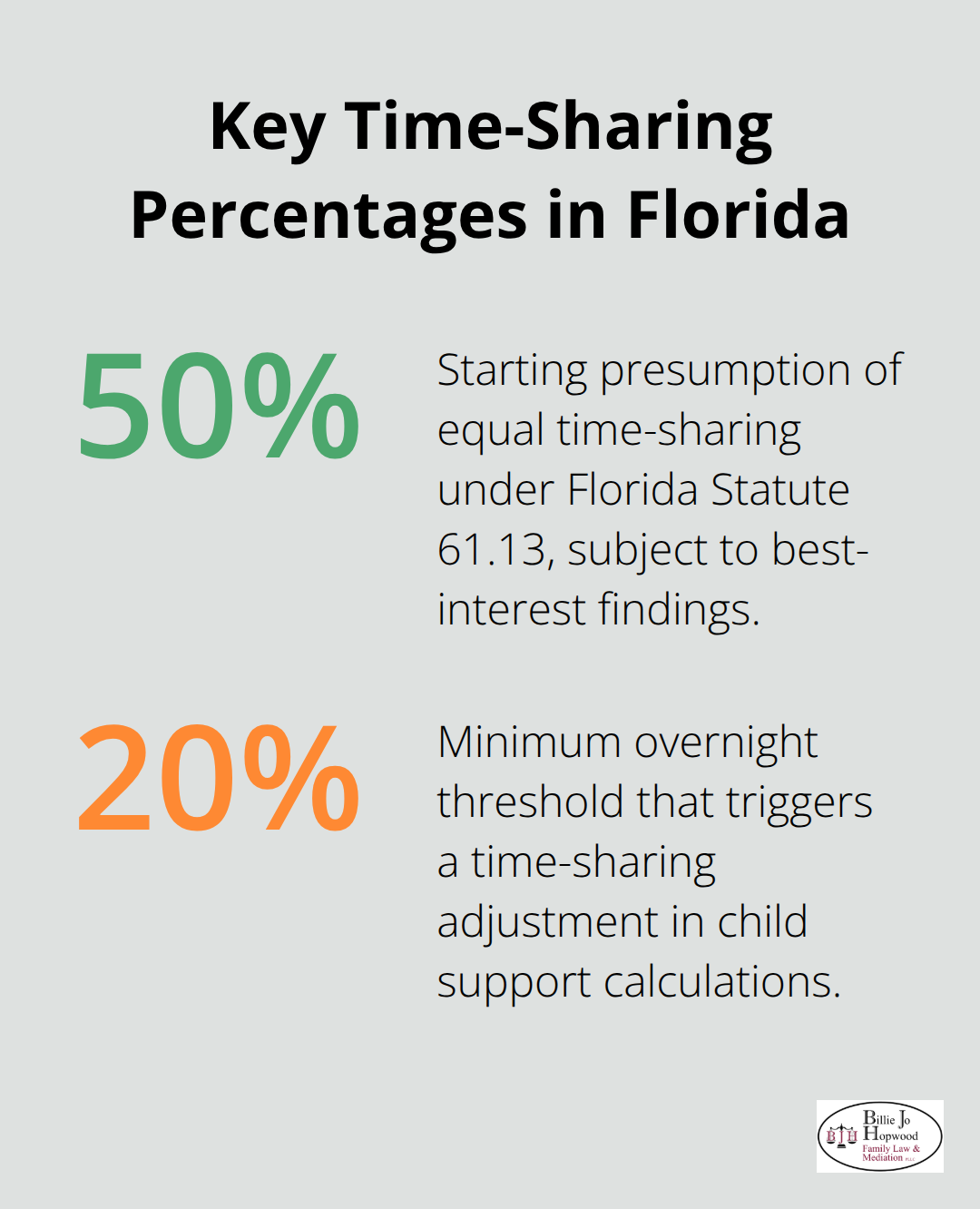
The state presumes that equal 50/50 time-sharing is the starting point for every case under Florida Statute 61.13, but this presumption can be overcome if the court finds it’s not in your child’s best interests. Courts in Brevard County apply twelve specific best-interest factors when deciding time-sharing and parental responsibility, and understanding these factors gives you a concrete roadmap for building your case.
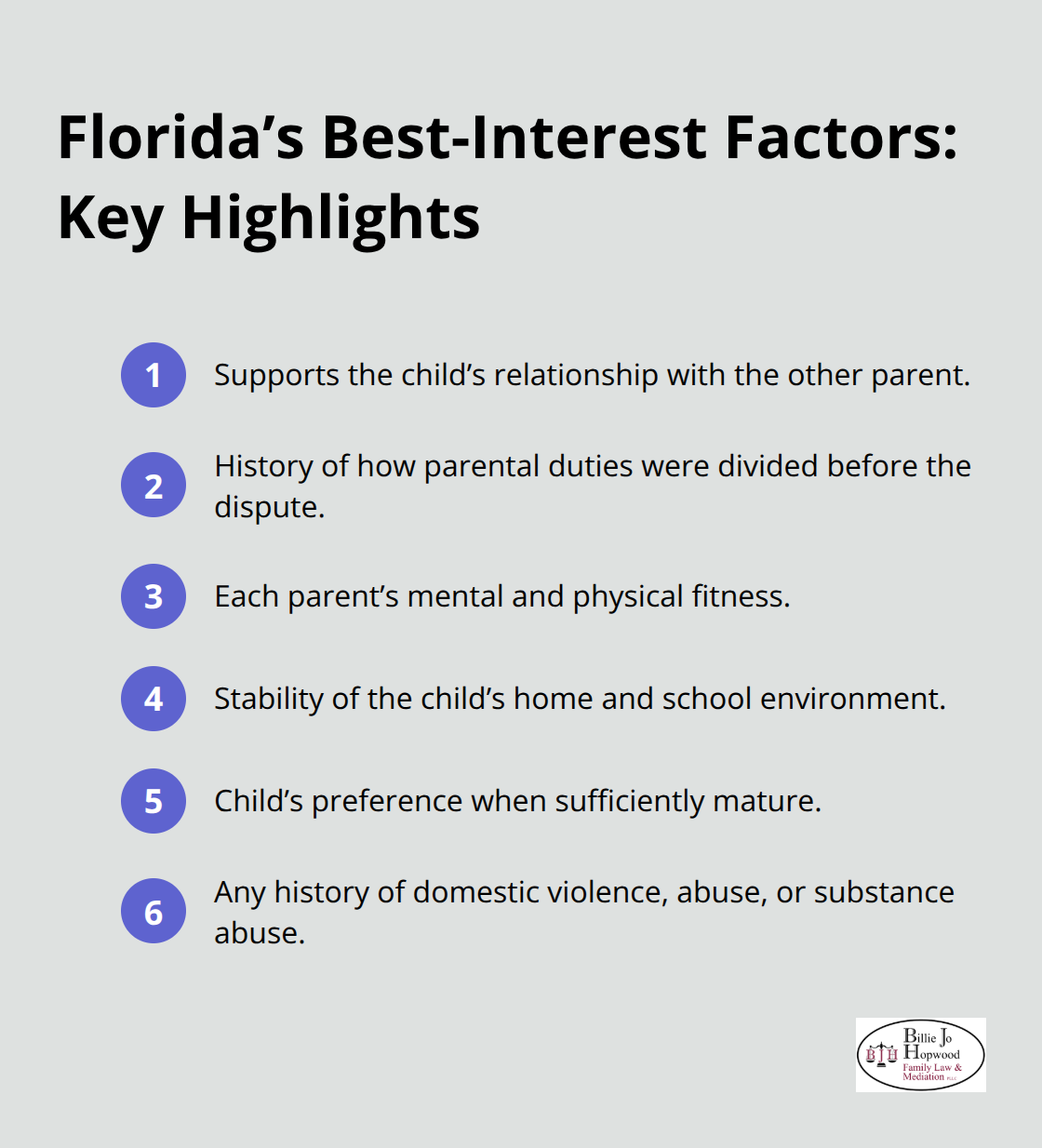
The Twelve Best-Interest Factors
The factors include each parent’s ability to support a relationship between the child and the other parent, the division of parental responsibilities before the custody dispute, the health and fitness of each parent, the stability of home and school, the child’s preference if they’re mature enough to express one, and any history of domestic violence, abuse, or substance abuse.
Shared parental responsibility is the norm in Melbourne and throughout Brevard County, meaning both parents make major decisions together about education, healthcare, and religious upbringing. Sole parental responsibility is reserved for situations where shared decisions would actually harm the child, such as cases involving documented abuse.
Time-Sharing Schedules and Child Support Calculations
Time-sharing schedules vary widely depending on your circumstances. Some parents use the standard arrangement of one parent having primary custody with the other parent receiving every other weekend and two weekday visits. Others arrange equal 50/50 splits where the child alternates weeks or uses a 5-2-2-5 schedule.
The key is that your time-sharing arrangement directly affects child support calculations under Florida’s Income Shares Model. If you have at least 20 percent of overnight stays (roughly 73 nights per year), the court applies a time-sharing adjustment that can significantly reduce or modify the baseline child support amount. This creates a financial incentive to negotiate for more parenting time if that serves your child’s best interests.
Stability and Relocation Restrictions
Courts in Melbourne prioritize stability above almost everything else. They want to minimize disruption to your child’s routine, including school attendance, extracurricular activities, and social connections. If your child has been in the same school for years and has established friendships, the court will weigh heavily whether a custody arrangement maintains that stability.
The relocation statute in Florida restricts moves over 50 miles for at least 60 days without written agreement or court approval, and violating this rule can result in serious consequences including loss of custody time. When courts assess each parent’s capacity and involvement, they look at mental and physical health, financial stability, and the ability to foster a positive relationship with the other parent.
Building Your Parenting Plan and Moving Forward
A parenting plan is mandatory in every Florida custody case involving minor children, and this document details your time-sharing schedule, daily responsibilities, decision-making authority, communication methods, and holiday arrangements. If you and the other parent reach an agreement on your parenting plan, a judge can approve it without a trial.
Mediation is often required before contested hearings in Brevard County, and it has a high success rate for reaching full or partial agreements. The filing fee for a custody petition in Brevard County is 409 dollars as of 2023, with fee waivers available for eligible individuals. Contested custody cases can take longer due to court backlog, but agreed cases often resolve within a few months. If the court orders a custody evaluation by a mental health professional, expect costs ranging from 1,500 to 6,000 dollars and a timeline of several weeks.
Now that you understand how Florida courts approach custody decisions, the next step is creating a parenting plan that actually works for your family’s unique situation.
Building a Parenting Plan That Actually Works
Specificity Determines Success
Your parenting plan is not a theoretical document. It’s the operational manual for how your family functions after separation, and the specificity you include determines whether it works or falls apart within months. Courts in Brevard County require every custody case to include a detailed parenting plan, but most parents treat it as a checkbox rather than a practical tool. The 409-dollar filing fee for a custody petition in Brevard County is the smallest cost you’ll face if your plan lacks detail-the real expense comes from returning to court repeatedly to modify vague arrangements.
Your plan must specify exact pickup and drop-off times, locations, and who handles transportation costs. If your child attends school in Melbourne, state which parent handles school events, teacher conferences, and sick days. Address healthcare explicitly: who selects the pediatrician, who pays for orthodontics, who makes decisions during medical emergencies.
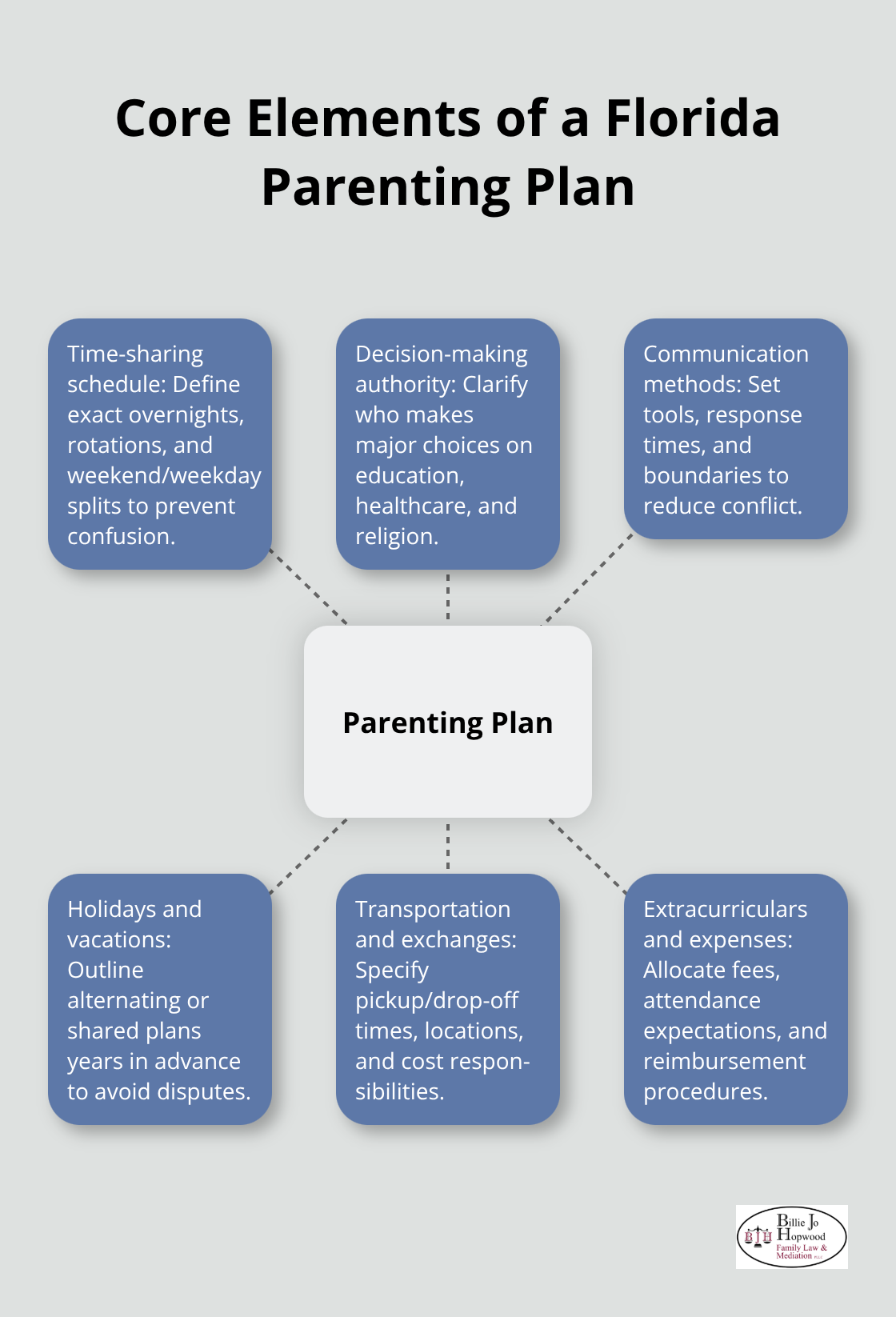
Include holiday schedules for Christmas, Thanksgiving, spring break, and summer vacation at least two years in advance. Specify how expenses for extracurricular activities get divided-if your child plays soccer, who pays registration fees and who attends games.
Communication and Decision-Making Authority
Communication methods matter more than parents realize. Establish whether you’ll use a co-parenting app like OurFamilyWizard or text directly, and set boundaries around response times. Define what constitutes a major decision requiring both parents’ input versus day-to-day decisions one parent can make independently. Courts apply the twelve best-interest factors from Florida Statute 61.13 when reviewing your plan, and judges favor arrangements demonstrating that both parents actively support the child’s relationship with the other parent.
Modification: When Circumstances Change
Modifying your plan requires proving substantial, material, and unanticipated changes in circumstances since the last order-a high legal bar that most parents struggle to meet. Job loss, relocation, or a parent’s health crisis typically qualifies for modification, but wanting more parenting time without changed circumstances does not. If your circumstances shift, document the change thoroughly with written evidence: job termination letters, medical records, or relocation offers. The court won’t modify arrangements based on your word alone.
When modification becomes necessary, you have two paths: reach an agreement with the other parent and submit it to the judge, or file a petition and go through litigation. Agreed modifications resolve far faster than contested ones and cost significantly less. If the other parent refuses negotiation, mediation before filing saves time and money compared to immediate court involvement.
Tailoring Your Plan to Reality
Parents often underestimate how their work schedules, commute times, and financial situations affect what arrangements actually work long-term. A 50/50 split sounds fair on paper but creates logistical chaos if one parent works nights or lives forty minutes from the child’s school. Try tailoring your plan to reality: your actual work schedule, your child’s school hours, distance between homes, and whether you can realistically handle the proposed arrangement without constantly asking for adjustments.
Co-Parenting That Lasts
Co-parenting successfully hinges on separating your feelings about your ex from your commitment to your child’s stability. Parents who maintain consistent routines, speak respectfully about the other parent to the child, and handle disagreements away from the child report significantly better outcomes. Research from the American Psychological Association shows that children adjust better to separation when both parents remain actively involved and cooperative, regardless of custody arrangement.
This means honoring the parenting plan even when you’re frustrated, following the communication method you agreed upon rather than undermining it, and never using the child as a messenger or spy. If conflicts arise, address them through mediation or your attorney rather than at pickup time. The child’s schedule should remain consistent across both homes regarding bedtime, screen time rules, and homework expectations. Inconsistency creates stress and gives the child ammunition to play one parent against the other.
When disputes over your parenting plan emerge-and they often do-mediation services provide structured conflict resolution that prevents years of courtroom battles over minor modifications.
When Custody Agreements Fall Apart
Parenting Time Disputes Escalate Without Structure
The parenting plan you crafted six months ago looked solid on paper, but now one parent wants to move the child’s school, the other claims the financial split isn’t fair, and neither parent agrees on summer vacation timing. This is where most families discover that written agreements fail without a structured resolution process. Mediation in Melbourne, Florida addresses these disputes directly because it forces both parents to negotiate within a framework designed specifically for custody conflicts rather than letting resentment build until you’re sitting in a courtroom spending thousands in legal fees.
Parenting time disputes happen constantly once families separate. One parent consistently picks up the child late, causing the other parent to miss work. The child’s extracurricular costs skyrocket, and neither parent agreed to pay the increase. School performance drops, and both parents blame the custody arrangement. These situations escalate quickly without intervention because parents operate from emotional positions rather than legal ones.
Mediation cuts through this by having a neutral third party walk both parents through what the parenting plan actually says, what has changed since it was written, and what modifications serve the child’s actual needs. In Brevard County, mediation is often required before contested hearings, and courts recognize that parents who reach agreements through mediation follow those agreements far more consistently than parents who receive court-ordered arrangements. This matters because compliance directly affects your child’s stability.
Financial Disputes Over Child Support and Expenses
Financial disputes over child support and custody expenses create the most contentious custody conflicts in Melbourne. One parent claims they’re paying too much child support while the other insists they’re covering costs the plan never addressed. Orthodontics, tutoring, summer camps, and therapy bills appear without warning, and the parenting plan only addressed baseline healthcare costs.
Florida’s Income Shares Model calculates child support based on net income and parenting time, but that calculation only covers basic expenses. When substantial parenting time exists (at least 20 percent of overnight stays, roughly 73 nights per year), the court applies a time-sharing adjustment that modifies the baseline amount. Many parents don’t understand how their current schedule affects their obligation. Agreements that account for these scenarios withstand real-world changes rather than falling apart when circumstances shift, which is why revisiting the income figures and recalculating support through mediation matters when circumstances genuinely change.
Relocation Conflicts and Court Intervention
Relocation disputes represent the third major custody conflict that mediation resolves effectively. Florida’s relocation statute restricts moves over 50 miles for at least 60 days without written agreement or court approval, yet parents frequently attempt relocation without the other parent’s consent. One parent gets a job offer in another state, believes it serves the family financially, and moves the child without a court order.
The other parent files an emergency motion, the child gets caught between parents fighting in court, and what could have been resolved through mediation becomes a custody modification case that costs both parents tens of thousands in legal fees. Mediation prevents this by having both parents discuss the relocation openly before either parent acts. If relocation serves the child’s best interests and the parents can agree on modified time-sharing, mediation documents that agreement and prevents court intervention. If parents cannot agree, mediation clarifies what each parent’s legal position actually is before either parent spends money on litigation.
How Mediation Saves Time and Money
The mediation process in Brevard County typically costs less than a single day of court hearings, yet resolves disputes that would otherwise require months of litigation and multiple court appearances. Parents who choose mediation avoid the expense of expert witnesses, discovery costs, and repeated attorney fees for court motions. The structured environment of mediation also protects your child from the emotional toll of prolonged parental conflict in the courtroom.
Final Thoughts
Your custody decisions today determine your child’s stability for years to come, and navigating Florida’s two-part framework requires more than general knowledge. A Space Coast custody attorney who understands Brevard County courts protects your parental rights by ensuring your parenting plan addresses real-world scenarios rather than theoretical ones. Professional guidance also means understanding how your time-sharing arrangement affects child support calculations, how the twelve best-interest factors apply to your specific situation, and what modifications actually qualify under Florida law.
If you’re establishing custody for the first time, start by documenting your current involvement with your child and gathering financial records including pay stubs and tax returns. If you’re modifying an existing arrangement, identify what has genuinely changed since the last order and whether the other parent might agree to modifications without litigation. If disputes have already emerged over parenting time, finances, or relocation, mediation prevents months of courtroom battles and protects your child from prolonged conflict.
Contact us at 321-725-3425 to schedule a consultation where we discuss your goals, potential outcomes, and next steps. We at Billie Jo Hopwood Family Law & Mediation, PLLC serve the Space Coast including Melbourne, Palm Bay, Rockledge, and surrounding Brevard County communities, and we offer services in English and Portuguese to support your family through this process.