
A mediated parenting plan gives you and your co-parent the chance to build an agreement that actually works for your family, rather than accepting what a judge decides.
We at Billie Jo Hopwood Family Law & Mediation, PLLC help Melbourne, Florida families create parenting plans that reduce conflict and give children the stability they need. This guide walks you through what goes into a solid plan and how mediation makes the process smoother.
Why Parenting Plans Matter in Melbourne, Florida
Florida’s Legal Requirement for Parenting Plans
Florida law requires parents to establish a parenting plan whenever custody or timesharing is at issue, whether through divorce, paternity cases, or modifications. This isn’t just paperwork-it’s a legally binding document that controls how you and your co-parent share responsibility for your children. Without a clear, written plan, you face constant negotiation over schedules, decision-making, and logistics. The plan specifies exactly when your child stays with each parent, who makes medical and educational decisions, how you’ll handle holidays, and what happens during transitions between homes. Florida courts won’t finalize any custody arrangement without an approved parenting plan in place, making this the foundation of your post-separation family life.
How Clear Plans Eliminate Ambiguity and Conflict
A detailed parenting plan directly reduces conflict because it removes ambiguity. When both parents know exactly what to expect-down to pickup times, communication methods, and how major decisions get made-there’s far less room for disagreement and resentment.
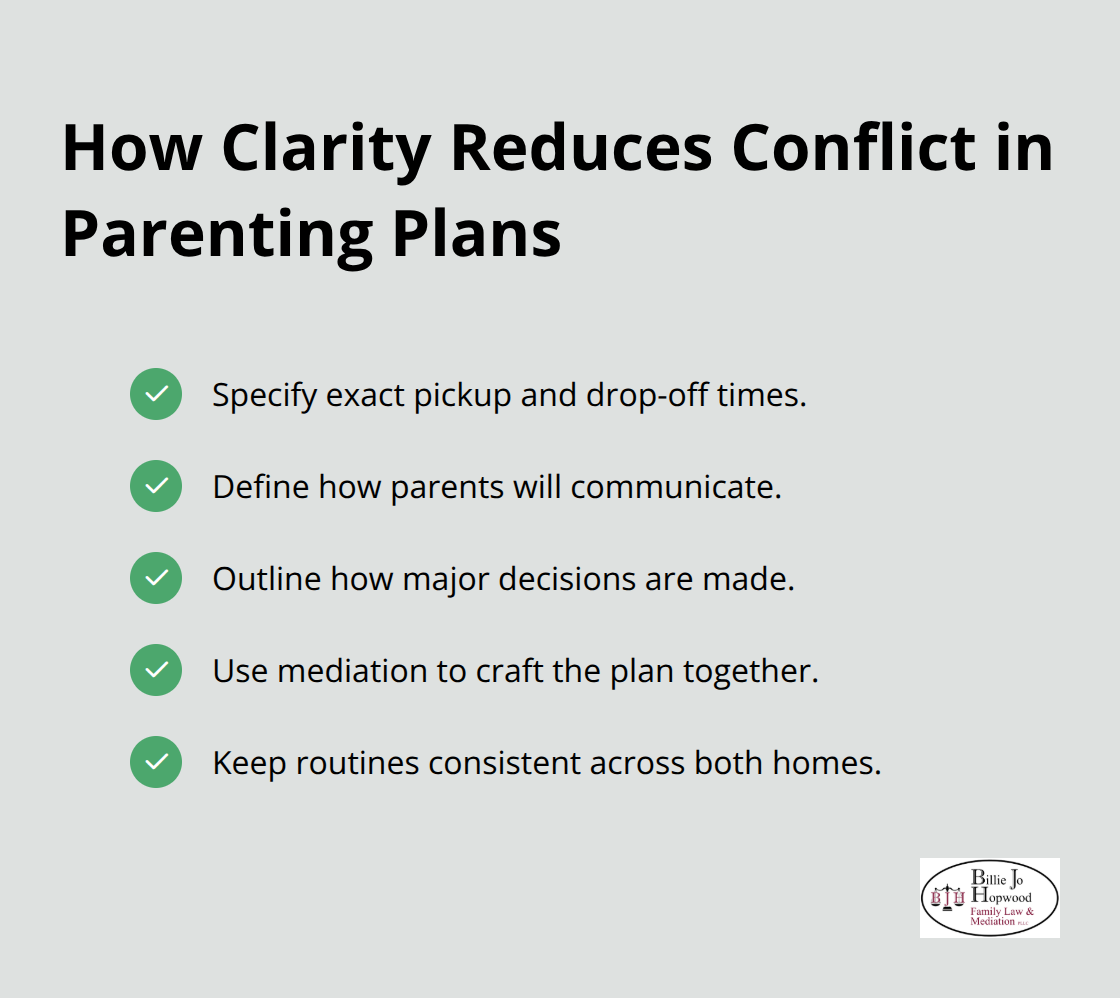
Research shows that parents who use mediation to develop their parenting plans report significantly better co-parenting relationships afterward compared to those who let a judge impose one. Children thrive when they have clear, consistent routines across two homes and know their parents can cooperate on their behalf.
Building Stability for Your Children
A plan that addresses specific details (school schedules, extracurricular activities, overnight exchanges) and how parents will communicate about urgent matters creates the stability children need to feel secure. When you craft this plan together through mediation rather than fighting in court, you’re not just solving today’s custody issue-you’re building the framework for years of functional co-parenting. Both parents demonstrate to your children that you prioritize their wellbeing over conflict, and this foundation matters far more than any single schedule change.
The next step involves understanding what actually goes into a parenting plan and how mediation helps you create one that fits your family’s real life.
Building Your Plan With a Mediator
How a Mediator Guides Your Decisions
A mediator does not decide for you-they help you and your co-parent communicate clearly enough to decide together. During mediation, you and your co-parent sit down and identify what matters most: custody schedules, who handles medical decisions, how school choices get made, holiday timing, and communication methods. The mediator keeps the conversation focused and moving forward without judgment. You control the outcome. This differs fundamentally from court, where a judge reviews your case file, hears arguments, and imposes a plan based on what they think is best. Court decisions often feel disconnected from your actual family’s rhythm. A mediator instead asks you both what works for your children’s school schedule, your work demands, and your relationship with your kids.
Why Mediation Produces Better Long-Term Outcomes
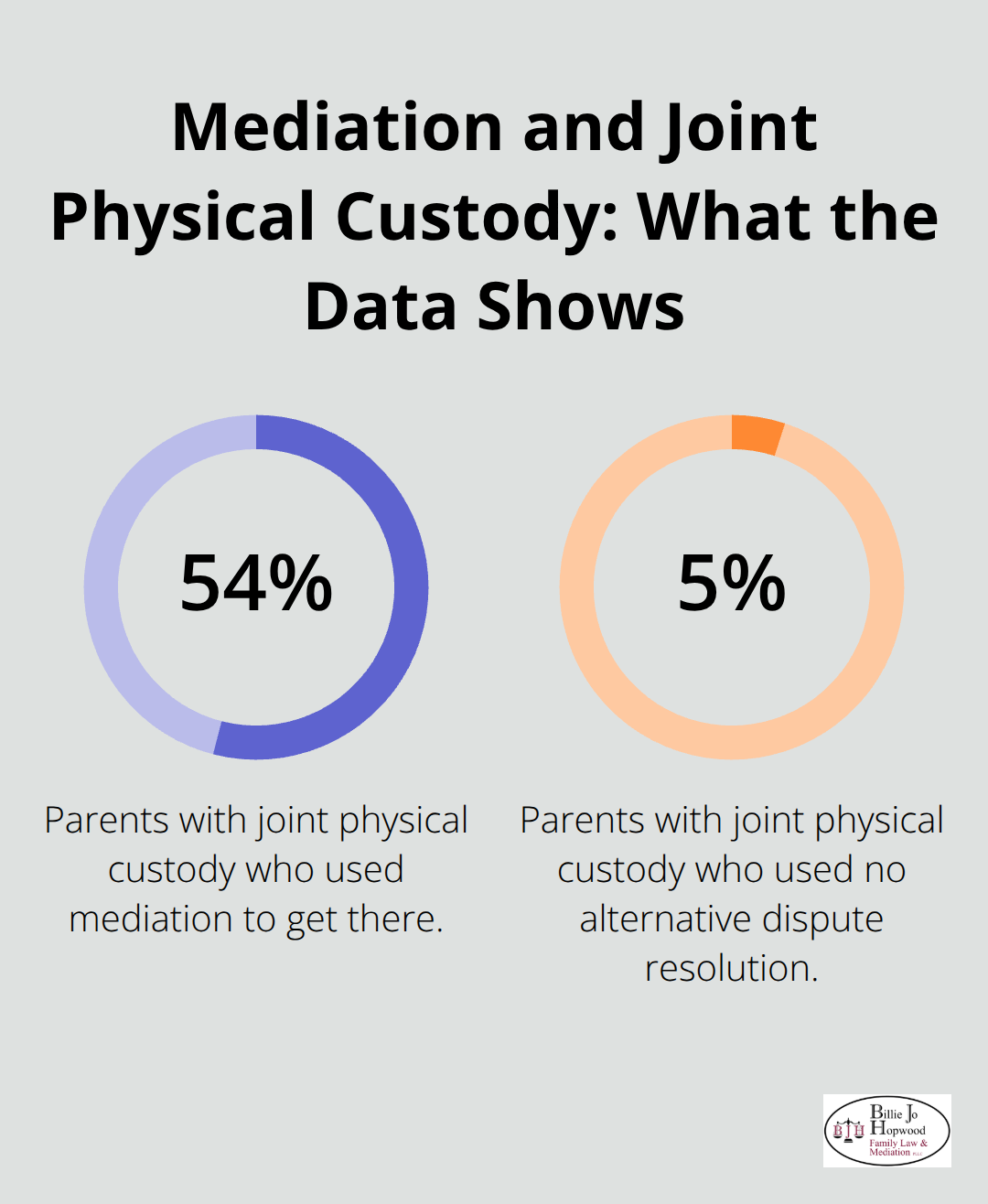
Research on mediation outcomes shows that 54% of parents with joint physical custody used mediation to get there, compared to only 5% who used no alternative dispute resolution at all. Parents who mediate report substantially better co-parenting relationships afterward. When you craft the agreement yourself, you become invested in making it work because you built it. The process transforms how you and your co-parent interact for years to come.
Preparing for Your First Mediation Session
Start mediation by listing your non-negotiables before the first session. What matters most to you-consistent overnight time, decision-making authority on education, control over extracurriculars? Write these down and bring them to your mediator. The mediator will help you understand what your co-parent actually needs, which often differs from what you assumed. Many parents discover that their co-parent isn’t fighting for the same things you thought. Once you identify common ground, the mediator helps you draft language covering daily schedules, transitions between homes, and communication protocols (text, email, phone calls for what situations).
Translating Agreements Into Specific Language
Include specific details in your plan: if your child switches homes on Friday at 5 p.m., state that. If one parent handles all medical appointments but the other receives copies of records, write that down. Your parenting plan becomes a reference guide you both use for years. When children’s needs change-a school move, a sports commitment, a schedule shift-you already have a framework for discussing modifications without returning to court. The agreement you build through mediation becomes the foundation for functional co-parenting and sets the stage for handling the specific provisions that will govern your daily life.
What Your Parenting Plan Must Cover
Holiday and Vacation Schedules That Actually Work
Your parenting plan needs specific language, not vague intentions. Holiday schedules cause more conflict than any other provision because parents interpret general language differently. Instead of writing “Christmas alternates yearly,” specify exactly when the handoff occurs: one parent has the child from December 20 at 6 p.m. through December 25 at noon in even years, with the other parent taking December 25 at noon through January 1 at 6 p.m. Include Thanksgiving, spring break, summer vacation, and every school holiday. Florida families often overlook that children have multiple school breaks beyond the major holidays-teacher planning days, fall break, and winter break all need specifics. Summer vacation splits matter enormously because one parent cannot claim the entire summer without court involvement. Mediation forces you to nail these details down before signing, which prevents the constant renegotiation that poisons co-parenting relationships.
Decision-Making Authority for Medical, Educational, and Religious Matters
Decision-making authority separates functional parenting plans from worthless ones. You need to specify who decides medical treatment, school enrollment, religious upbringing, extracurricular activities, and mental health care. Many parents split authority: one parent handles routine medical decisions while the other controls school choices. This works only if you define what counts as routine.
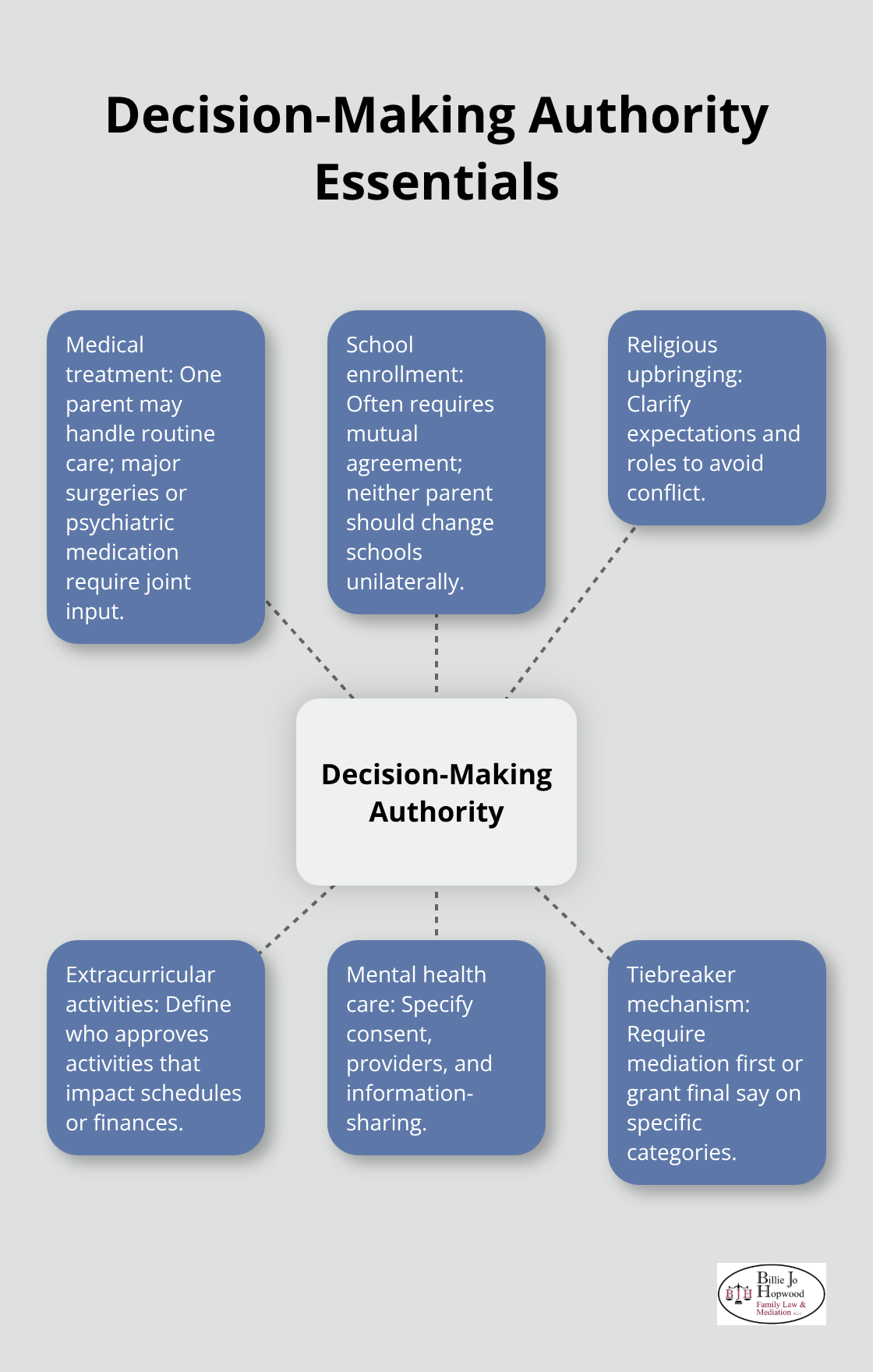
A standard approach gives one parent authority over non-emergency medical decisions, with both parents consulted on major surgeries or psychiatric medication. School decisions often require mutual agreement, meaning neither parent can unilaterally change schools without the other’s consent. When parents cannot agree on major decisions, your plan should specify a tiebreaker mechanism, such as mediation before court involvement or one parent having final say on specific categories. Florida courts increasingly expect parenting plans to address whether parents must consult before enrolling children in new activities that significantly impact the other parent’s schedule or finances.
Building in Modification Pathways for Changing Needs
Children’s needs shift constantly, and your plan must account for that reality. A schedule that worked perfectly when your child was seven breaks down at thirteen when they want to spend time with friends and develop independence. Your mediated agreement should include a process for modifications without court involvement. Many plans specify that either parent can request mediation if circumstances change significantly (such as a job relocation, school transfer, or the child’s expressed preference to adjust schedules). Some parents build in automatic review points, such as reassessing the plan every two years or whenever a child transitions to middle school or high school. The key is creating a pathway to adjust without fighting, because children’s lives change faster than court dockets move.
Final Thoughts
Your mediated parenting plan becomes real the moment you both sign it. Implementation starts with treating the agreement as your operational manual, not a suggestion. Both parents need copies, and many families benefit from sharing the plan with teachers, coaches, and childcare providers so everyone understands the schedule and decision-making structure. When transitions happen on time and communication follows the protocols you established, your children see consistency and reliability.
Life changes faster than court orders, and your mediated parenting plan should adapt when significant circumstances shift such as a job change affecting your schedule, your child’s school transition, or your child expressing a genuine preference to adjust time with each parent. Rather than fighting in court over modifications, your agreement can include a process for requesting mediation when changes become necessary. Many families find that scheduling a brief check-in every two years prevents small frustrations from becoming major conflicts.
Melbourne, Florida families have access to resources that support ongoing co-parenting success, and we at Billie Jo Hopwood Family Law & Mediation, PLLC help families navigate mediation and ensure your parenting plan reflects your family’s actual needs. Co-parenting apps track schedules and expenses, reducing miscommunication, while local family counselors help children adjust to two-home living. Your mediated parenting plan serves as the framework that allows you and your co-parent to raise your children effectively across two homes.