Blog

Solutions-Based Family Law: A Modern Approach

At Billie Jo Hopwood Family Law & Mediation, PLLC, we believe in a modern approach to family law that puts solutions first. Solutions-based family law focuses on collaborative problem-solving and long-term family well-being.

This approach differs significantly from traditional adversarial methods, offering numerous benefits for families navigating legal challenges. In this post, we’ll explore how solutions-based family law works in Melbourne, Florida, and why it might be the right choice for your family.

What Is Solutions-Based Family Law?

A Collaborative Approach to Family Legal Matters

Solutions-based family law represents a modern, forward-thinking approach to resolving family legal issues. This method prioritizes collaborative problem-solving and focuses on the long-term well-being of families. In Melbourne, Florida, this approach has gained popularity as more families seek alternatives to traditional adversarial methods.

The Core: Working Together, Not Against Each Other

At the heart of solutions-based family law lies the principle of collaboration. This approach encourages parties to work together to find mutually beneficial solutions. For instance, in a child custody case, parents might collaborate with a mediator to create a parenting plan that suits both parties and (most importantly) benefits the child.

Shifting Away from Courtroom Battles

Solutions-based family law aims to keep families out of the courtroom whenever possible. This shift can result in significant time and cost savings. A study by the American Bar Association found that mediation can reduce legal costs by up to 60% compared to litigation. This approach not only saves money but also helps preserve family relationships.
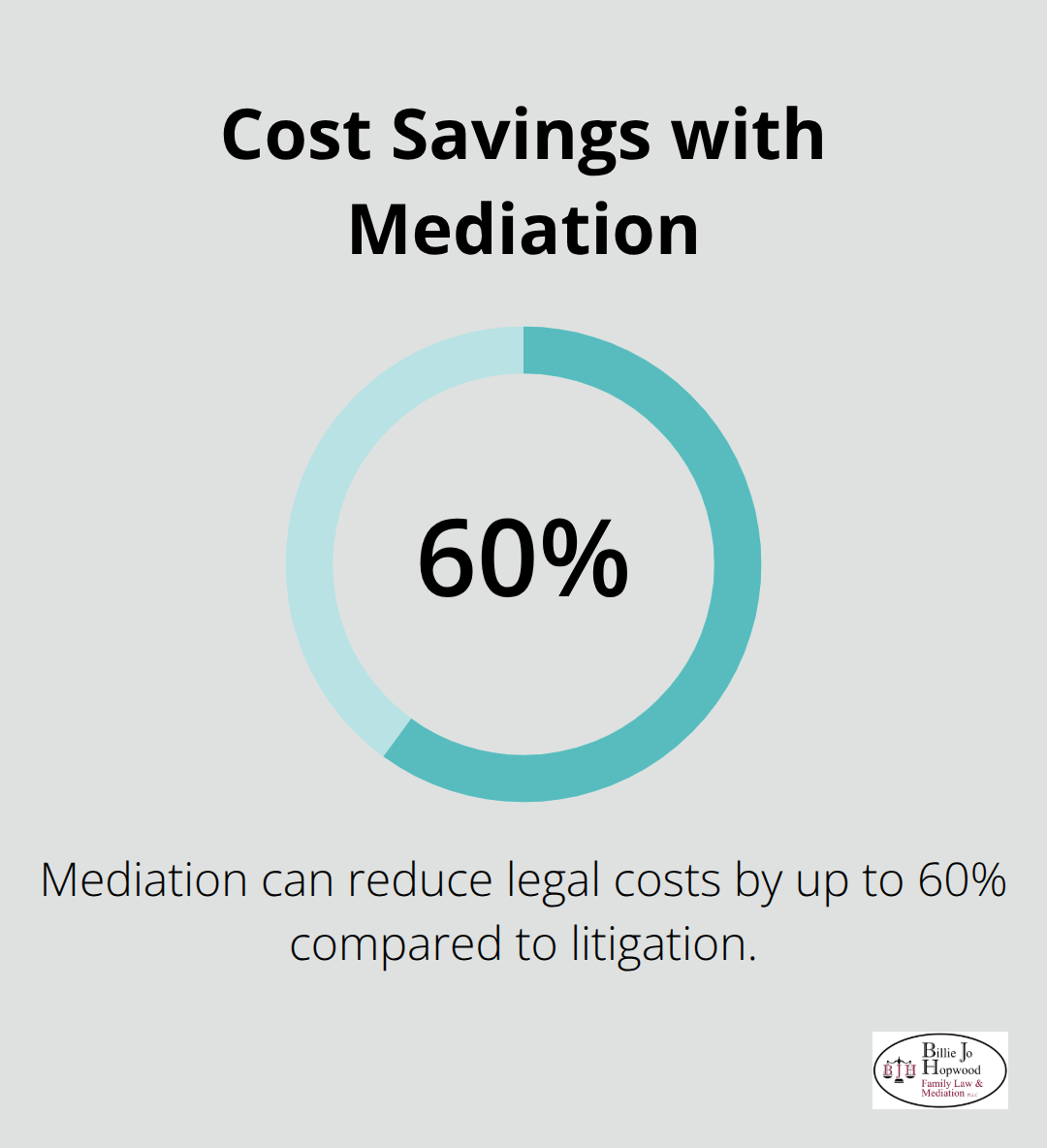
A chart showing that mediation can reduce legal costs by up to 60% compared to litigation

Positive Outcomes for Families

The benefits of solutions-based family law extend far beyond immediate legal resolutions. Families who choose this method often report improved post-divorce relationships and better co-parenting dynamics. These positive outcomes align well with Melbourne, Florida’s community values, which emphasize strong family ties.

Available Services in Melbourne, Florida

Families in Melbourne, Florida have access to various solutions-based family law services. These include:

  1. Mediation
  2. Collaborative divorce
  3. Negotiation-focused legal representation

These methods allow families to navigate legal challenges while preserving relationships and focusing on future well-being. As we explore the key components of solutions-based family law in the next section, you’ll gain a deeper understanding of how this approach can benefit your family during challenging times.

How Solutions-Based Family Law Works in Melbourne, Florida

Solutions-based family law in Melbourne, Florida centers on three key elements: problem-solving, communication, and future-focused planning. This approach transforms family disputes from adversarial battles into collaborative efforts.

Collaborative Problem-Solving Takes Center Stage

In solutions-based family law, problem-solving becomes the primary focus. This method encourages families to work together to find mutually beneficial solutions. For example, in a property division case, both parties might work with a financial advisor to create a fair distribution plan that considers each person’s long-term financial stability.

A study by the Florida Dispute Resolution Center revealed that 70% of family law cases using collaborative methods reached full agreement (compared to only 30% of traditional litigation cases). This significant difference underscores the effectiveness of collaborative problem-solving in family law matters.
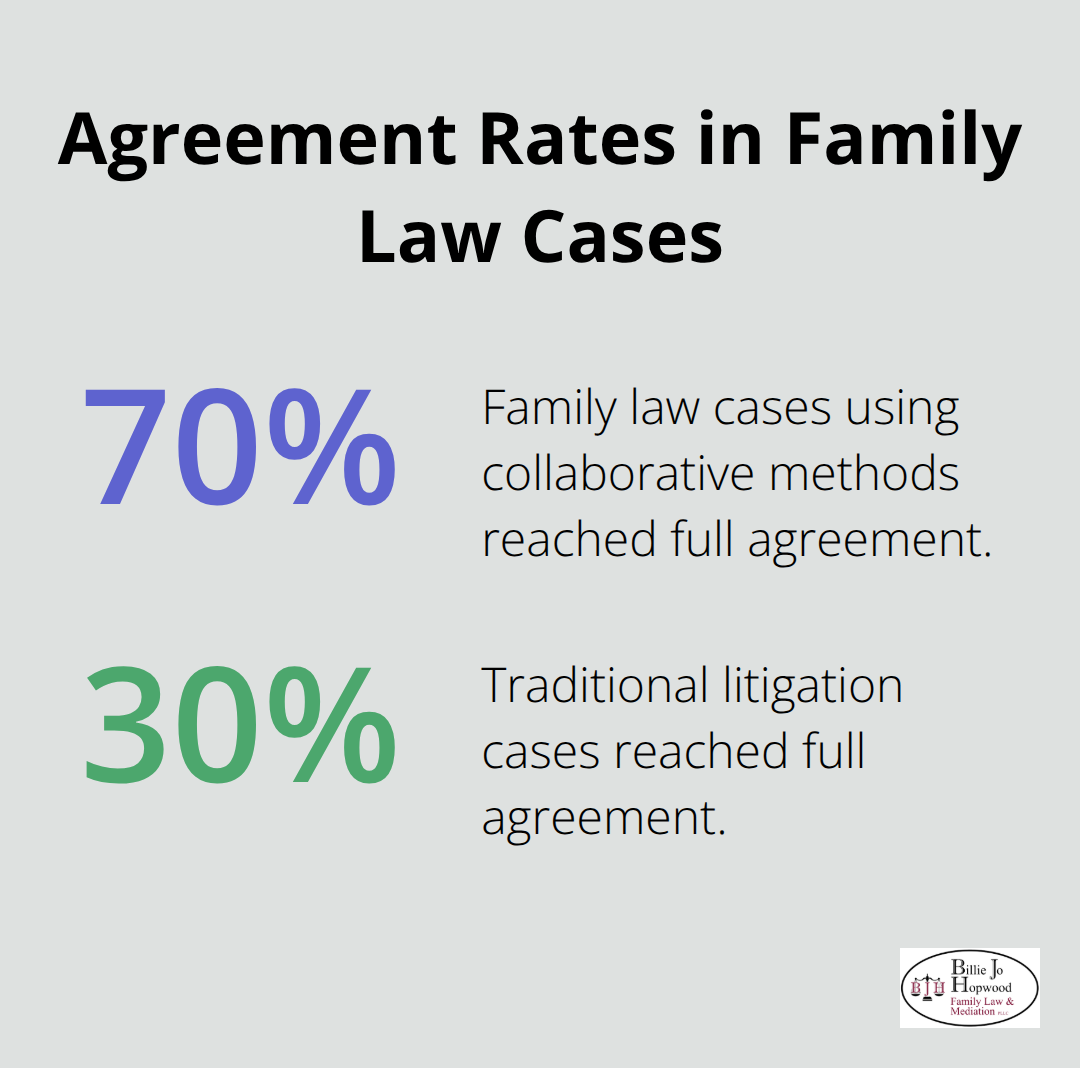
A chart comparing agreement rates: 70% for collaborative methods vs. 30% for traditional litigation - solutions based family law

Effective Communication Strategies Foster Understanding

Communication forms the backbone of solutions-based family law. Family law professionals in Melbourne, Florida often employ specific techniques to facilitate productive discussions. These may include:

  1. Active listening exercises
  2. Neutral language training
  3. Emotion management techniques

These strategies help parties express their needs clearly and understand each other’s perspectives, which leads to more constructive negotiations. In a child custody case, parents might use these communication tools to create a detailed parenting plan that addresses both parties’ concerns and prioritizes the child’s well-being.

Long-Term Family Well-Being Takes Priority

Solutions-based family law in Melbourne, Florida places a strong emphasis on long-term outcomes. This approach considers the future implications of decisions made during the legal process, rather than focusing solely on immediate resolutions.

When addressing alimony, for instance, a solutions-based approach might involve creating a plan that not only meets immediate financial needs but also includes provisions for future career development or retraining. This forward-thinking strategy helps ensure that both parties can maintain financial stability long after the legal proceedings conclude.

The focus on long-term well-being often leads to more satisfying and sustainable outcomes for families in Melbourne, Florida. By addressing not just the legal aspects but also the emotional and practical considerations of family law matters, families can build a stronger foundation for their future.

As we move forward, let’s explore how these principles translate into practical applications in various family law scenarios.

Putting Solutions-Based Family Law into Action in Melbourne, Florida

Mediation: A Powerful Tool for Resolution

Mediation stands at the forefront of solutions-based family law in Melbourne, Florida. Many families find success through this process, where a neutral third party facilitates discussions between the involved parties. This approach often leads to faster, less expensive, and more satisfying outcomes compared to traditional litigation.

A recent example in Melbourne showcases the effectiveness of mediation. A divorcing couple resolved their property division issues in just three sessions, saving thousands in potential legal fees. The Florida Court System reports that mediated agreements have a compliance rate of over 80% (significantly higher than court-imposed decisions).
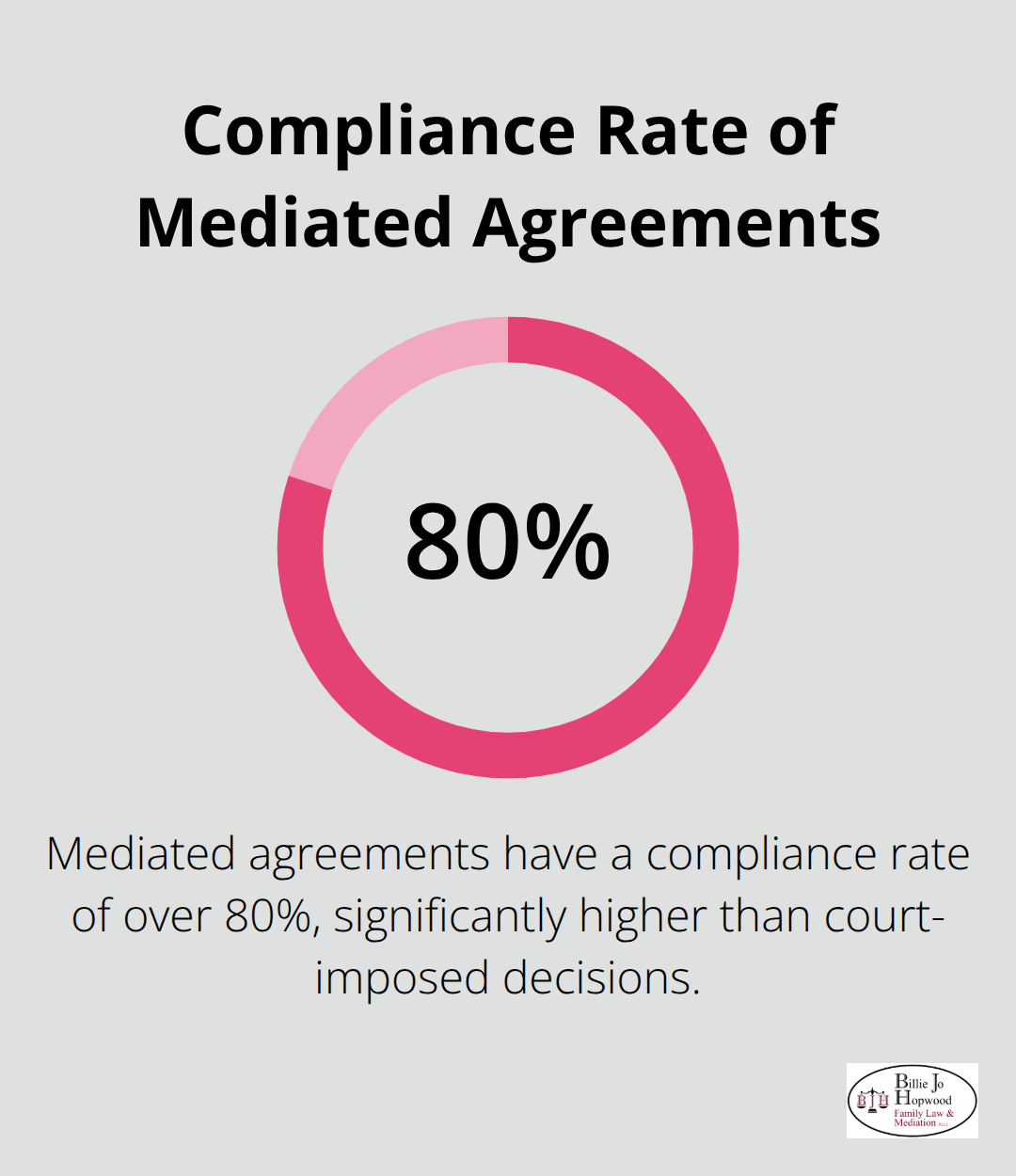
A chart showing that mediated agreements have a compliance rate of over 80% - solutions based family law

Tailoring Parenting Plans for Family Success

Solutions-based family law excels in creating customized parenting plans. Melbourne, Florida has witnessed a shift towards more flexible and child-centered arrangements. These plans address the unique needs of each family, going beyond basic custody schedules.

A recent case illustrates this approach. Parents with varying work schedules developed a plan that accommodated their shifts while ensuring quality time for their child with both parents. This creative solution reduced conflict and resulted in a happier child.

Innovative Financial Solutions in Divorce

Financial settlements in divorce cases benefit greatly from solutions-based approaches. Melbourne, Florida sees more creative and equitable financial arrangements that consider long-term stability for both parties.

One innovative solution involves the use of a Qualified Domestic Relations Order (QDRO) to divide retirement assets. This method allows for a tax-free transfer of funds (potentially saving thousands in taxes). Another approach gaining traction is the use of a divorce financial analyst to create comprehensive financial plans that account for future needs and goals.

Collaborative Law: A Team Approach

Collaborative law represents another key aspect of solutions-based family law in Melbourne. This method involves a team of professionals working together to resolve family law issues outside of court. The team typically includes attorneys, financial advisors, and mental health professionals.

In a recent Melbourne case, a collaborative approach helped a high-conflict couple reach an agreement on complex property division and custody issues. The involvement of a neutral financial expert and a child specialist provided valuable insights that led to a mutually beneficial solution.

Alternative Dispute Resolution Techniques

Solutions-based family law in Melbourne also incorporates various alternative dispute resolution techniques. These methods aim to resolve conflicts without resorting to litigation. Examples include:

  1. Early neutral evaluation
  2. Parenting coordination
  3. Arbitration

These techniques provide families with options tailored to their specific needs and circumstances. They often result in faster resolutions and help preserve family relationships.

Final Thoughts

Solutions-based family law provides a modern approach to resolve legal matters in Melbourne, Florida. This method prioritizes collaboration, communication, and long-term family well-being, which leads to more satisfying outcomes for all parties involved. Families can navigate challenging legal situations while preserving relationships and reducing emotional stress through this problem-solving focused approach.

The benefits of solutions-based family law include significant cost savings and higher compliance rates with agreements. Mediation, collaborative law, and customized parenting plans have helped Melbourne families find positive resolutions to complex issues. Families in Melbourne can find paths to resolution that align with their unique needs and circumstances through these flexible and creative methods.

Billie Jo Hopwood Family Law & Mediation, PLLC understands the importance of solutions-based family law. Our team guides families through challenging legal situations with care (and expertise). We encourage Melbourne residents to consider this modern approach when addressing family law matters, as it often results in more sustainable outcomes for all involved.
Family Law Register of Actions: What Is It?

At Billie Jo Hopwood Family Law & Mediation, PLLC, we often encounter clients who are unfamiliar with the Family Law Register of Actions. This essential document plays a significant role in family law cases in Melbourne, Florida.

The Register of Actions serves as a comprehensive record of all events and filings in a legal case. Understanding this document can help you stay informed about your case’s progress and important deadlines.

What Is the Family Law Register of Actions in Melbourne, Florida?

The Family Law Register of Actions stands as a cornerstone document in Melbourne, Florida’s legal system. This comprehensive record tracks every event and filing in a family law case, serving as an official timeline from the initial filing to the final resolution.

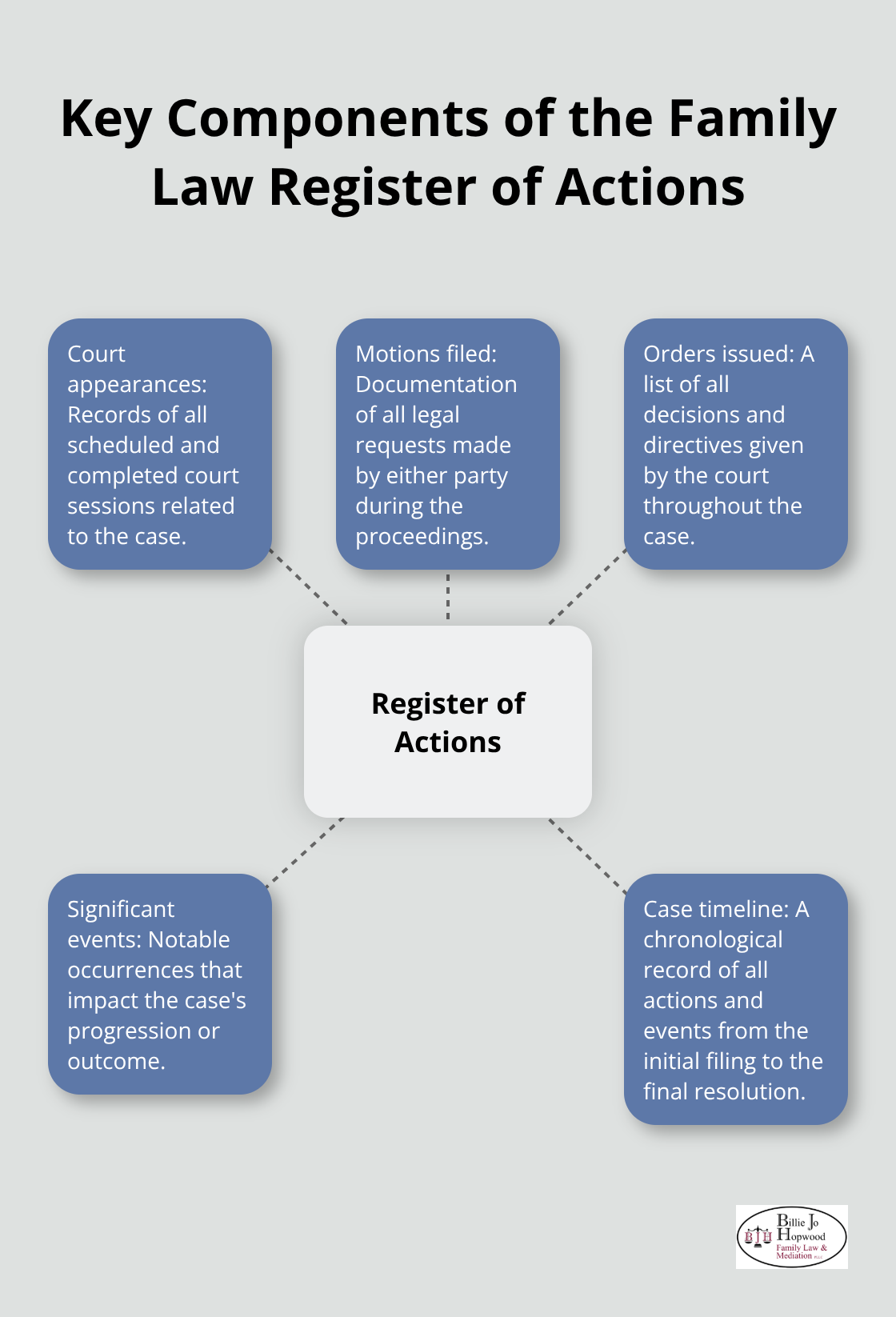
Key Components of the Register

The register includes several essential elements:

  1. Court appearances
  2. Motions filed
  3. Orders issued
  4. Other significant events

Each entry typically contains the date, a brief description of the action, and the party responsible for the action. For example, it might show when a party filed a petition for divorce, when the other party submitted responses, or when the court scheduled a hearing.

A hub and spoke chart showing the key components of the Family Law Register of Actions: court appearances, motions filed, orders issued, significant events, and case timeline.

Practical Applications

The Register of Actions proves invaluable for quickly assessing a case’s status. It’s particularly useful when:

  1. An attorney takes over a case from another lawyer
  2. A client needs a rapid update on their case progress
  3. Identifying missed deadlines or upcoming court dates

This tool ensures all parties stay informed about case developments (a critical aspect of effective legal representation).

Distinctions from Other Legal Documents

Unlike other legal documents, the Register of Actions doesn’t contain detailed information about the case’s substance. It doesn’t serve as a repository for legal arguments or evidence. Instead, it functions more like a table of contents for the case file.

This distinction holds importance because while the register provides a quick overview, it doesn’t replace the need to review actual court filings and orders for their full content. Attorneys and clients alike must understand this limitation to avoid misinterpretation of the case’s progress or details.

Accessing the Register

In Melbourne, Florida, parties can typically access the Register of Actions through the county clerk’s office or online court portals (depending on the specific court system). Some jurisdictions may require a small fee or registration to access these records electronically.

Understanding the Family Law Register of Actions proves essential for anyone involved in a family law case in Melbourne, Florida. As we move forward, let’s explore the significance of this document in family law proceedings and how it impacts case management and strategy.

Why the Register of Actions Matters in Family Law

A Chronological Roadmap for Cases

The Register of Actions serves as a detailed timeline of all events in a family law case. This chronological record allows attorneys and parties to understand the progression of legal proceedings quickly. In a divorce case, for example, the register might show the date of initial filing, responses from the other party, and subsequent motions or hearings. This timeline enables quick comprehension of the case’s history without the need to sift through voluminous files.

Effective Deadline Tracking

One of the most practical applications of the Register of Actions is its role in deadline management. Family law cases often involve numerous time-sensitive filings and court appearances. The register acts as a reliable reference point for upcoming due dates, which helps prevent costly oversights. Missing a deadline can significantly affect the outcome of a case, making this feature of the register particularly valuable.

Strategic Tool for Case Preparation

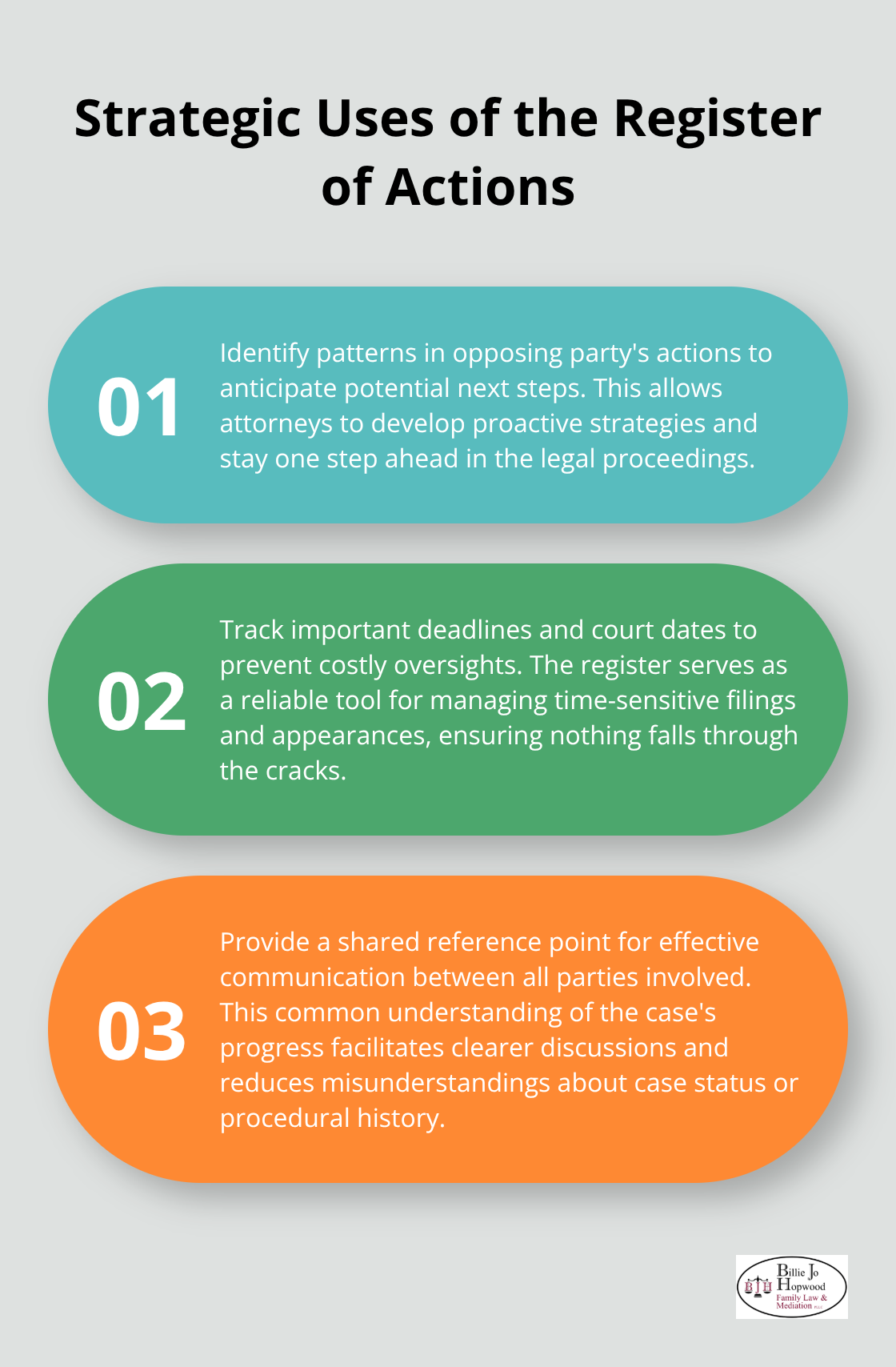
Attorneys use the Register of Actions as a strategic tool for case preparation. By reviewing the register, lawyers can:

  1. Identify patterns in the opposing party’s actions
  2. Anticipate potential next steps
  3. Plan their strategy accordingly

For instance, if the register shows multiple requests for continuances from the other party, it might indicate a delay tactic that needs to be addressed. This insight allows for more informed decision-making and proactive case management.

An ordered list chart showing three strategic uses of the Register of Actions: identifying patterns, tracking deadlines, and providing a shared reference point.

Legal Reference and Communication Aid

The Register of Actions also serves as a common reference point for all parties involved in a case. It provides a shared understanding of the case’s progress, which can facilitate more effective communication between attorneys, clients, and the court. This shared knowledge base can streamline discussions and reduce misunderstandings about case status or procedural history.

The Register of Actions transcends its role as a mere record. It functions as a dynamic tool that supports effective case management and informed decision-making in family law matters. Its contents and implications can significantly impact the course of legal proceedings in Melbourne, Florida’s family courts. As we move forward, we’ll explore how to access and interpret this vital document effectively.

Navigating the Register of Actions in Melbourne

Accessing the Register

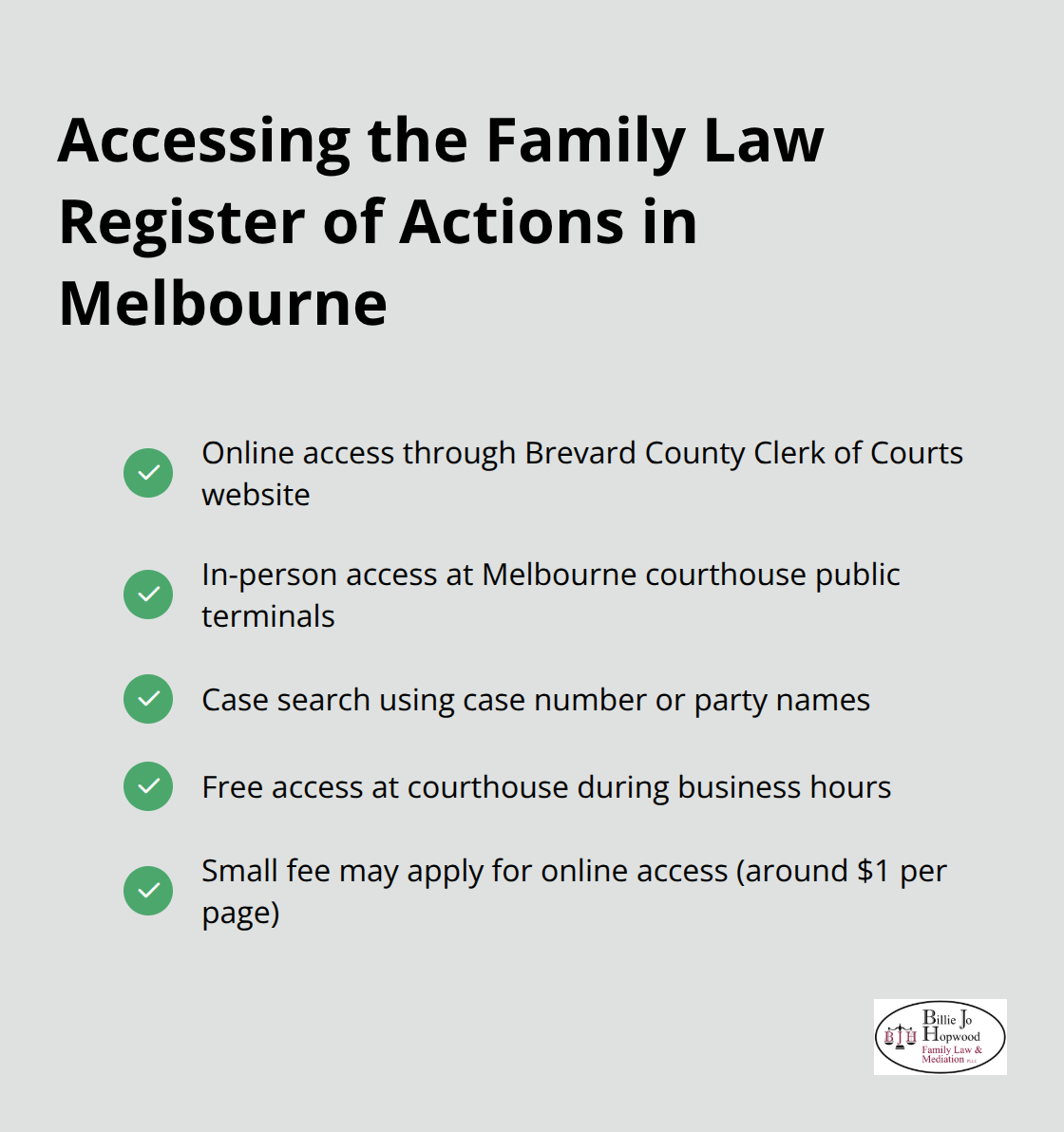
The Family Law Register of Actions in Melbourne, Florida is maintained by the Brevard County Clerk of Courts. You can access these records through multiple channels:

  1. Online: Visit the Brevard County Clerk of Courts website. Select “Court Records” and then “Case Search.” You’ll need to provide basic case information (such as the case number or party names). Some records may require a small fee for access (typically around $1 per page).
  2. In-person: The Melbourne courthouse offers public access terminals during regular business hours. These terminals provide free access to case records, including the Register of Actions.
A checkmark list chart showing five ways to access the Family Law Register of Actions in Melbourne, including online access, in-person access, case search methods, free access at the courthouse, and potential fees for online access.

Understanding the Information

The Register of Actions presents information in a chronological format. Each entry represents a specific event or filing in your case. Key elements to focus on include:

  1. Date: When the action occurred
  2. Description: A brief explanation of the action (e.g., “Motion for Temporary Relief Filed”)
  3. Filed By: The party responsible for the action
  4. Judge: The presiding judge for the action (if applicable)

Pay close attention to entries marked as “Order” or “Judgment,” as these often indicate significant decisions in your case. Also, look for upcoming hearing dates or deadlines for submitting documents.

Decoding Common Abbreviations

Family law registers often use abbreviations to save space. Here are some frequently encountered terms:

  • PET: Petitioner
  • RESP: Respondent
  • MTN: Motion
  • CONT: Continued (hearing rescheduled)
  • MSJ: Motion for Summary Judgment
  • OSC: Order to Show Cause

Understanding these abbreviations will help you quickly grasp the nature of each entry in the register.

Utilizing the Register Effectively

To make the most of the Register of Actions:

  1. Review it regularly to stay informed about your case progress
  2. Use it to prepare for upcoming events in your case
  3. Consult with your attorney about any entries you don’t understand

The Register of Actions serves as a valuable tool for tracking the progress of your family law case in Melbourne, Florida. It provides a clear timeline of events and can help you stay organized throughout the legal process.

Final Thoughts

The Family Law Register of Actions serves as a vital tool for navigating family law cases in Melbourne, Florida. This comprehensive document provides a clear, chronological record of all events and filings, which enables efficient tracking of important deadlines and court dates. Regular review of the register allows parties to stay informed about their case’s status and prepares them for upcoming events.

Understanding how to access and interpret the Family Law Register of Actions empowers individuals to take a more active role in their cases. It provides a shared reference point for all parties involved, which facilitates clearer communication and reduces potential misunderstandings about case status or procedural history. This knowledge can lead to more informed decision-making in family law matters.

At Billie Jo Hopwood Family Law & Mediation, PLLC, we recognize the importance of keeping our clients well-informed throughout their legal journey. Our team guides you through every aspect of your family law case, including helping you understand and utilize resources like the Family Law Register of Actions. We provide the support and representation you need during challenging legal situations in Melbourne, Florida.

How to Choose a Divorce Mediator in Melbourne Florida

Choosing a divorce mediator in Melbourne, Florida is a critical step in navigating the complexities of ending a marriage. The right mediator can make a significant difference in the outcome and overall experience of the divorce process.

At Billie Jo Hopwood Family Law & Mediation, PLLC, we understand the importance of finding a skilled and trustworthy professional to guide you through this challenging time. This guide will help you identify key factors to consider when selecting a divorce mediator in Melbourne, Florida.

What Qualifications Should a Divorce Mediator Have?

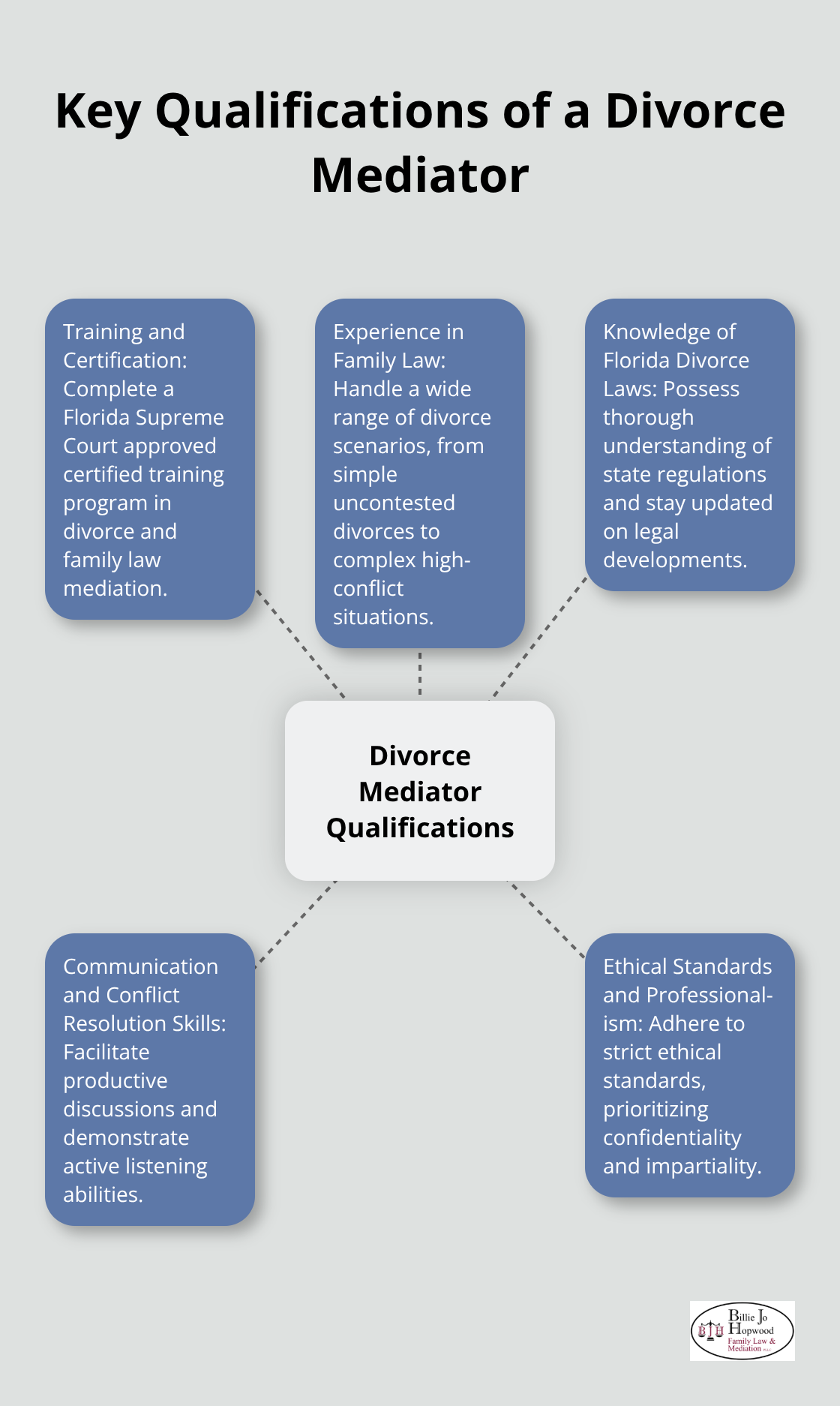
Hub and spoke chart showing five key qualifications of a divorce mediator: Training and Certification, Experience in Family Law, Knowledge of Florida Divorce Laws, Communication and Conflict Resolution Skills, and Ethical Standards and Professionalism. - choosing a divorce mediator in melbourne florida

When selecting a divorce mediator in Melbourne, Florida, you must consider specific qualifications that ensure they can handle your case effectively.

Training and Certification

Florida law requires mediators to complete a certified training program approved by the Florida Supreme Court. This specialized training equips mediators with the necessary skills to navigate complex family dynamics and legal issues. Ask potential mediators about their certification and any additional training they’ve completed in divorce and family law mediation.

Experience in Family Law

A mediator’s experience in handling diverse family law cases is invaluable. Look for professionals who have dealt with a wide range of divorce scenarios (from simple uncontested divorces to complex cases involving high-conflict situations or substantial assets). The Florida Chapter of the Association of Family and Conciliation Courts reports that mediators with extensive experience often achieve better outcomes for families.

Knowledge of Florida Divorce Laws

Your mediator should possess a thorough understanding of Florida’s divorce laws and procedures. This knowledge is essential for guiding you through the legal aspects of your divorce and ensuring that any agreements comply with state regulations. Ask potential mediators about their familiarity with recent changes in Florida family law and how they stay updated on legal developments.

Communication and Conflict Resolution Skills

Effective communication forms the foundation of successful mediation. A skilled mediator should facilitate productive discussions, even in high-tension situations. They should demonstrate active listening skills and the ability to reframe issues constructively. The American Bar Association notes that mediators with strong conflict resolution skills can significantly reduce the time and emotional strain associated with divorce proceedings.

Ethical Standards and Professionalism

A reputable divorce mediator adheres to strict ethical standards and maintains a high level of professionalism. They should prioritize confidentiality, impartiality, and the best interests of all parties involved. Ask about their code of ethics and how they handle potential conflicts of interest.

As you consider these qualifications, it’s important to also evaluate how comfortable you feel with the mediator. The next section will explore the significance of compatibility and trust in choosing the right divorce mediator for your situation.

Why Trust Matters in Divorce Mediation

Evaluating Mediator Approach

Every mediator has a unique style. Some take a more directive approach, while others facilitate discussions. Understanding a mediator’s methods is essential for your comfort during the process. Ask potential mediators to describe their techniques and how they handle disagreements. This insight will help you determine whether their methods align with your needs.

Ensuring Neutrality and Fairness

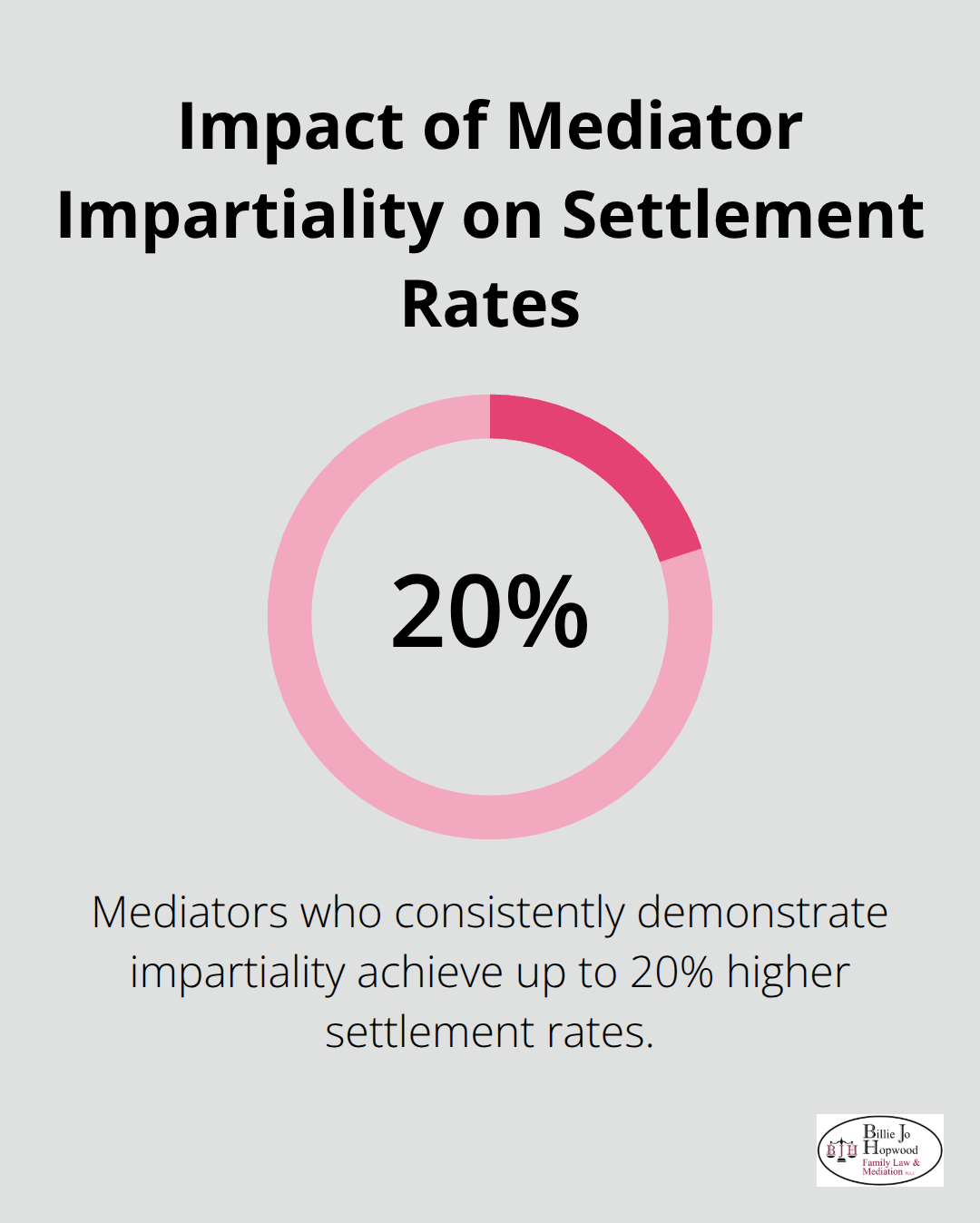
A cornerstone of effective mediation is the mediator’s ability to remain neutral and impartial. During initial consultations, observe how the mediator interacts with you. Do they show bias? Do they pay attention to both parties’ concerns? A study by the Florida Dispute Resolution Center found that mediators who consistently demonstrate impartiality achieve higher settlement rates (up to 20% more than those who don’t).

Percentage chart showing that mediators who consistently demonstrate impartiality achieve 20% higher settlement rates. - choosing a divorce mediator in melbourne florida

Assessing Personal Compatibility

Your comfort level with the mediator can significantly impact the mediation’s success. Pay attention to how you feel during your initial meeting. Are you at ease discussing personal matters? Does the mediator create an environment where you feel heard and respected? These factors can influence your willingness to engage openly in the process.

Verifying Reputation

Don’t hesitate to ask for references or seek out client testimonials. While confidentiality prevents mediators from sharing specific case details, they can often provide general feedback from past clients. Online reviews and local bar association recommendations can also offer valuable insights into a mediator’s reputation and effectiveness.

Building a Foundation of Trust

Trust forms the bedrock of successful mediation. A mediator you trust can guide you through complex negotiations, help you navigate emotional hurdles, and facilitate productive conversations (even in high-conflict situations). This trust becomes particularly important when discussing sensitive topics like finances or child custody arrangements. Mediation offers a platform for spouses to discuss important topics in a more cooperative setting.

As you consider these factors, you’ll want to prepare a list of questions to ask potential mediators. The next section will outline key inquiries that can help you make an informed decision about your divorce mediator in Melbourne, Florida.

Essential Questions for Potential Divorce Mediators

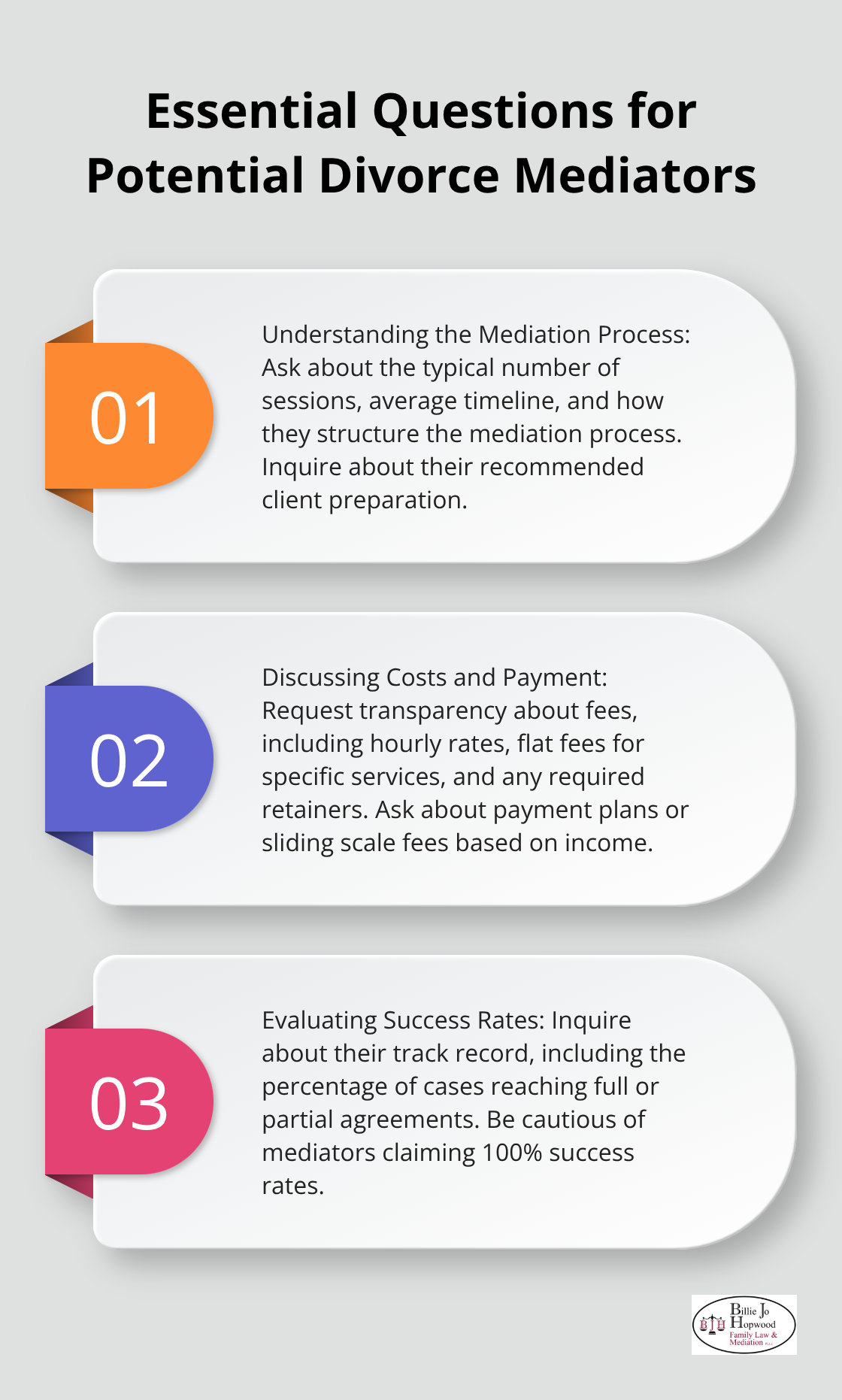
Ordered list chart showing three essential questions to ask potential divorce mediators: Understanding the Mediation Process, Discussing Costs and Payment, and Evaluating Success Rates.

Understanding the Mediation Process

Ask about the mediator’s specific process. How many sessions do they typically conduct? What’s the average timeline from start to finish? A study by the Florida Dispute Resolution Center found that mediations lasting between 3 to 5 sessions had the highest success rates (75% reaching full agreements). Ask how they structure these sessions and what preparation they recommend for clients.

Discussing Costs and Payment

Transparency about fees is essential. Ask about their hourly rate, any flat fees for specific services, and if they require a retainer. A recent survey by the Florida Bar revealed that the average cost of divorce mediation in Melbourne ranges from $200 to $400 per hour. Inquire if they offer payment plans or sliding scale fees based on income. Understanding the full financial picture upfront will prevent surprises later.

Evaluating Success Rates

While past performance doesn’t guarantee future results, it’s worth asking about their track record. What percentage of their cases reach full agreements? How many partial agreements? The American Bar Association reports that skilled mediators achieve full agreements in 70-80% of cases. However, be cautious of mediators claiming 100% success rates, as this may indicate a pressure to settle rather than truly addressing all issues.

Collaboration with Other Professionals

Ask about their policy on involving other professionals. Do they work with financial advisors or child psychologists when needed? A comprehensive approach can lead to more sustainable agreements. Mediators who collaborate with financial planners report a 30% increase in client satisfaction with property division outcomes.

Handling High-Conflict Situations

Inquire about their experience and strategies for managing high-conflict divorces. How do they maintain neutrality and ensure both parties feel heard? What techniques do they use to de-escalate tense situations? Their answers will provide insight into their ability to handle complex emotional dynamics.

Final Thoughts

Choosing a divorce mediator in Melbourne, Florida can shape the outcome of your divorce proceedings. The right mediator will guide you through this challenging process with empathy, professionalism, and skill. You should prioritize qualifications, experience, and a strong understanding of Florida divorce laws when making your selection.

A mediator who fosters trust, maintains neutrality, and aligns with your communication style will prove invaluable. Research potential mediators thoroughly, ask probing questions about their process, and evaluate their track record. This investment in finding the right mediator can lead to more satisfactory outcomes and reduced stress.

Billie Jo Hopwood Family Law & Mediation, PLLC understands the complexities of divorce and the importance of skilled mediation. Our team provides guidance through challenging legal situations (including divorce, child custody, and support matters). We encourage you to approach the selection of a divorce mediator with careful consideration to ensure you make the best choice for your unique situation.

The Divorce Mediation Process in Melbourne Florida Step-by-Step

At Billie Jo Hopwood Family Law & Mediation, PLLC, we understand that divorce can be a challenging process.

The divorce mediation process in Melbourne, Florida offers a more amicable and cost-effective alternative to traditional litigation.

This step-by-step guide will walk you through the key stages of divorce mediation, from initial consultation to final agreement.

What Is Divorce Mediation in Melbourne Florida?

Definition and Process

Divorce mediation in Melbourne, Florida is a voluntary process where a neutral third party, called a mediator, assists couples in navigating the complexities of ending their marriage. This approach promotes open communication and collaboration between spouses, which leads to mutually agreeable solutions.

Advantages of Mediation

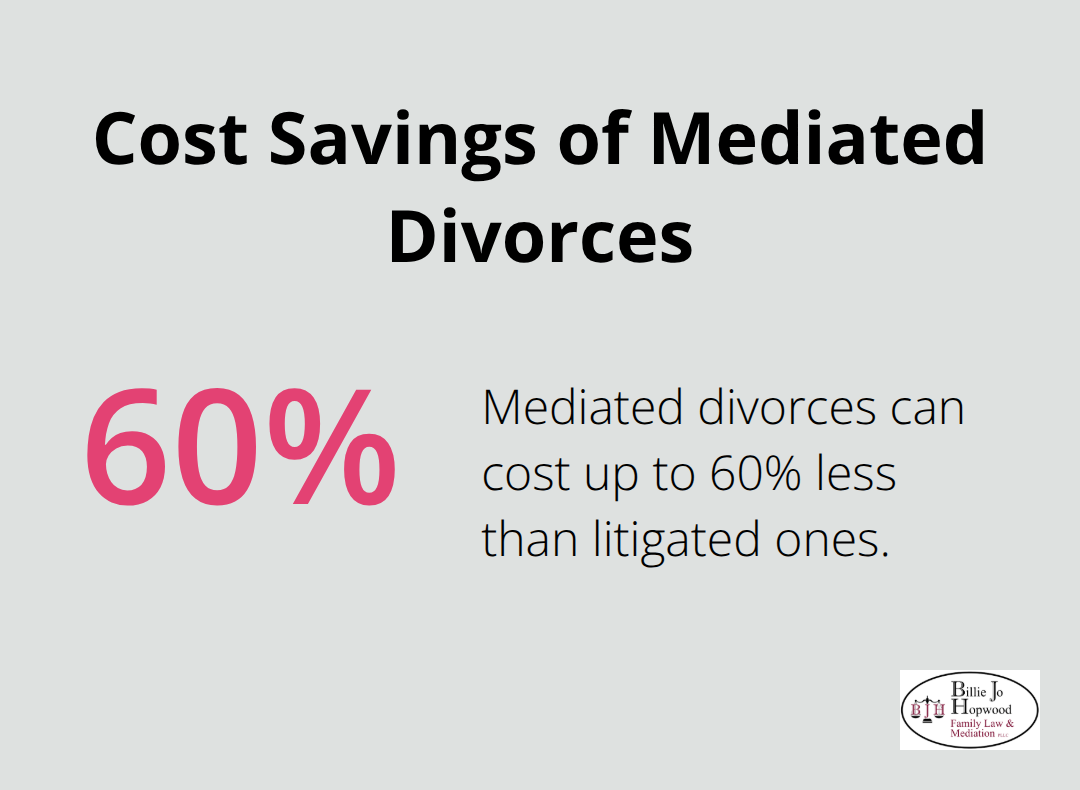
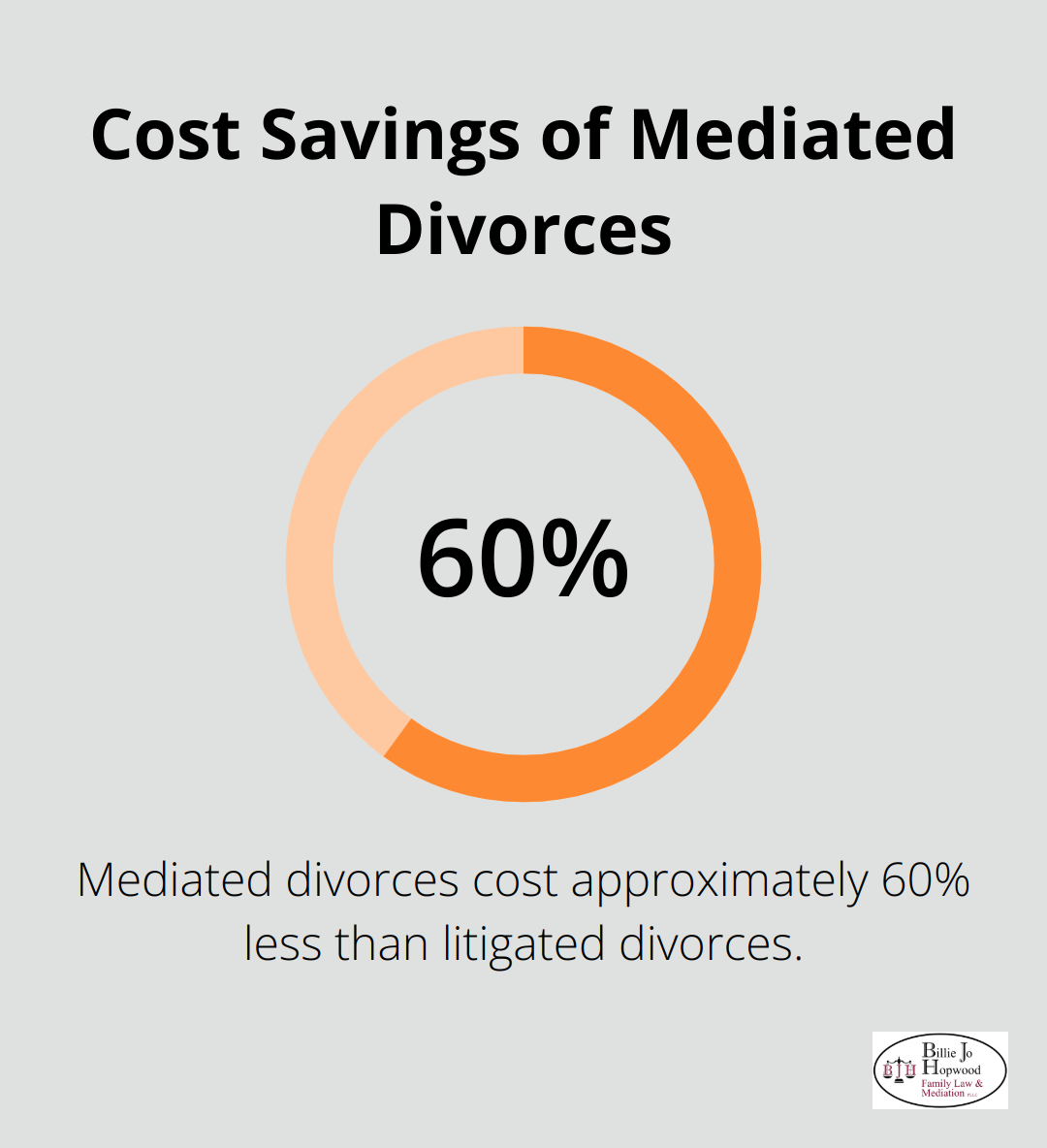
Mediation offers several benefits over traditional litigation. It’s typically more cost-effective; a study by the Florida Dispute Resolution Center found that mediated divorces can cost up to 60% less than litigated ones. Time is another factor; while court battles can extend for months (or even years), mediation often resolves issues in a matter of weeks.

Bar chart showing that mediated divorces can cost up to 60% less than litigated divorces - the divorce mediation process in melbourne florida

The Mediator’s Role

A skilled mediator acts as a facilitator, not a decision-maker. They guide discussions, ensure both parties are heard, and help identify common ground. In Melbourne, mediators must complete a Florida Supreme Court certified training program, which ensures they’re well-equipped to handle various scenarios.

Confidentiality and Control

One of the key advantages of mediation is confidentiality. Unlike court proceedings (which are public record), mediation discussions remain private. This can be particularly beneficial when dealing with sensitive family matters or financial information.

Moreover, mediation puts control in the hands of the divorcing couple. Rather than having a judge make decisions about their future, spouses work together to craft solutions that best fit their unique circumstances. This collaborative approach often results in more satisfactory outcomes and better compliance with agreements post-divorce.

Suitability and Effectiveness

While mediation proves effective for many couples, it’s not suitable for every situation. Cases involving domestic violence or severe power imbalances may require alternative approaches. However, for many couples in Melbourne, Florida, mediation serves as an effective tool to transform the divorce process from an adversarial battle into a constructive dialogue.

As we move forward, let’s explore the key steps involved in the divorce mediation process, starting with the initial consultation and preparation phase.

How Does the Divorce Mediation Process Work in Melbourne, Florida?

Preparation: The Foundation of Successful Mediation

The divorce mediation process in Melbourne, Florida begins with thorough preparation. Each spouse must gather relevant financial documents (tax returns, bank statements, property valuations). The Florida Family Law Rules of Procedure mandate full financial disclosure, which sets the stage for productive negotiations.

We recommend that you create a list of priorities and concerns before the first session. Couples who enter mediation with clear goals often reach more satisfactory agreements.

Mediation Sessions: Structured Dialogue

Mediation sessions typically last 2-4 hours. Most cases in Melbourne resolve within 3-5 meetings. During these sessions, the mediator facilitates discussions on key issues such as asset division, parenting plans, and support arrangements.

Skilled mediators employ various techniques to maintain productive conversations. They might use caucusing (meeting with each spouse separately) to address concerns privately. This approach can help overcome impasses and encourage compromise.

Ordered list chart showing three key steps in the divorce mediation process: Preparation, Mediation Sessions, and Agreement Crafting - the divorce mediation process in melbourne florida

Crafting the Agreement: Documenting Decisions

As you reach agreements on various issues, the mediator will draft a Memorandum of Understanding. This document outlines the terms you’ve agreed upon. Review this carefully, as it forms the basis of your final settlement agreement.

In Florida, parenting plans must include specific details. They should address time-sharing schedules, decision-making responsibilities, and communication protocols. The more specific these plans are, the less likely conflicts will arise in the future.

Legal Review and Finalization: Ensuring Compliance

Once a comprehensive agreement exists, each spouse should have it reviewed by their own attorney. This step protects your rights and ensures that the agreement complies with Florida law.

After any necessary revisions, submit the final agreement to the court for approval. In Brevard County (where Melbourne is located), this process typically takes 2-4 weeks. Once approved by a judge, the agreement becomes a binding court order.

Flexibility and Customization

The divorce mediation process, while structured, remains flexible enough to accommodate the unique needs of each couple. Many couples in Melbourne find that they can navigate their divorce with less stress and conflict through this collaborative approach.

As we move forward, let’s explore how mediation addresses common issues in divorce, such as property division and child custody arrangements.

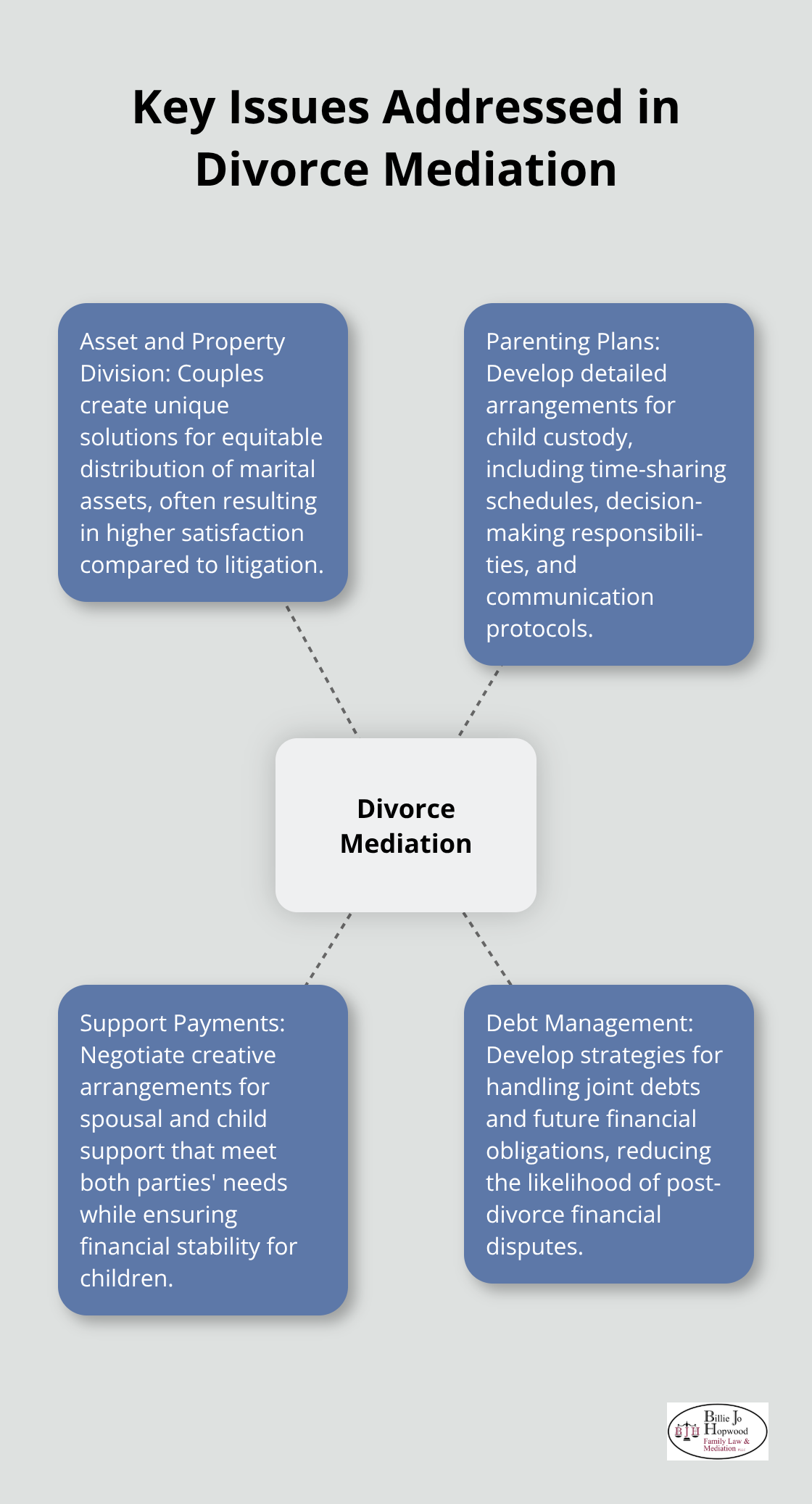
How Does Mediation Address Key Divorce Issues in Melbourne, Florida?

Divorce mediation in Melbourne, Florida tackles several critical areas that often cause conflict between separating couples. This process provides a platform for couples to reach fair and lasting agreements on various aspects of their divorce.

Hub and spoke chart showing four main issues addressed in divorce mediation: Asset and Property Division, Parenting Plans, Support Payments, and Debt Management

Asset and Property Division

Florida law mandates an equitable distribution of marital assets. This doesn’t always translate to a 50/50 split. Mediation allows couples to create unique solutions that fit their specific situation. For example, one spouse might retain the family home in exchange for a larger portion of retirement accounts.

A 2022 Florida Bar study revealed that couples who mediated property division reported 30% higher satisfaction with the outcome compared to those who litigated. This statistic underscores the value of collaborative decision-making in asset allocation.

Effective Parenting Plans

Child custody arrangements often become the most emotionally charged aspect of divorce. Mediation offers parents an opportunity to develop detailed parenting plans that prioritize their children’s well-being. These plans typically include:

  • Time-sharing schedules
  • Decision-making responsibilities
  • Communication protocols
  • Holiday and vacation arrangements

Research from the University of Florida indicates that children whose parents mediated custody arrangements experienced reduced stress and improved long-term outcomes compared to those whose parents engaged in court battles.

Support Payment Determination

While Florida follows specific guidelines for spousal and child support calculations, mediation allows for some flexibility. Couples can negotiate creative support arrangements that meet both parties’ needs while ensuring financial stability for children.

For instance, some couples opt for a lump sum payment or asset transfer instead of traditional monthly alimony payments. This approach can provide a clean break and minimize ongoing financial entanglements.

Debt and Financial Responsibility Management

Debt division (often overlooked in divorce proceedings) plays a crucial role in the mediation process. Couples can develop strategies for handling joint debts and future financial obligations. This might involve agreements on specific credit card payments or underwater mortgage management.

A recent American Academy of Matrimonial Lawyers survey found that couples who addressed debt division in mediation were 40% less likely to face post-divorce financial disputes.

Final Thoughts

The divorce mediation process in Melbourne, Florida provides a less adversarial and more cost-effective alternative to traditional litigation. It empowers couples to craft tailored solutions for their unique circumstances through open communication and collaboration. A skilled mediator guides discussions, defuses tensions, and identifies creative solutions to complex issues.

Mediation transforms a potentially bitter process into a constructive dialogue, allowing greater control over the outcome and preserving privacy. It often leads to agreements that both parties honor long-term and sets a positive tone for future interactions (particularly beneficial when children are involved). Selecting the right mediator significantly impacts the outcome of your divorce.

Billie Jo Hopwood Family Law & Mediation, PLLC supports families through challenging legal situations with compassion. Our team understands the nuances of divorce mediation in Melbourne, Florida and stands ready to guide you through each step. Choosing mediation invests in a more amicable future for you and your family.

Uncontested Divorce Mediation in Melbourne Florida

Uncontested divorce mediation in Melbourne, Florida offers a smoother path to ending a marriage. This approach allows couples to resolve their differences amicably, without the need for courtroom battles.

At Billie Jo Hopwood Family Law & Mediation, PLLC, we’ve seen firsthand how mediation can save time, money, and emotional stress. Let’s explore how this process works and why it might be the right choice for your divorce.

What Is Uncontested Divorce Mediation?

The Essence of Uncontested Divorce

Uncontested divorce mediation offers a cooperative approach for couples to end their marriage in Melbourne, Florida. This process allows spouses to reach agreements on all major issues without court intervention. The Florida Courts report that uncontested divorces can conclude in 4 to 8 weeks after filing all required forms, which highlights the efficiency of this method.

Mediation’s Role in Uncontested Divorces

A neutral third party (the mediator) facilitates discussions between divorcing couples in uncontested divorces. This professional helps spouses navigate complex issues and arrive at mutually beneficial agreements. The American Bar Association notes that mediation often yields higher satisfaction rates among divorcing couples compared to traditional litigation.

Contrasting Mediation with Traditional Divorce

Mediation in Melbourne provides a more collaborative environment than traditional divorce proceedings. Couples maintain direct control over the outcome, rather than leaving decisions to a judge. This approach often results in more personalized solutions that address each family’s unique needs.

Cost and Privacy Benefits

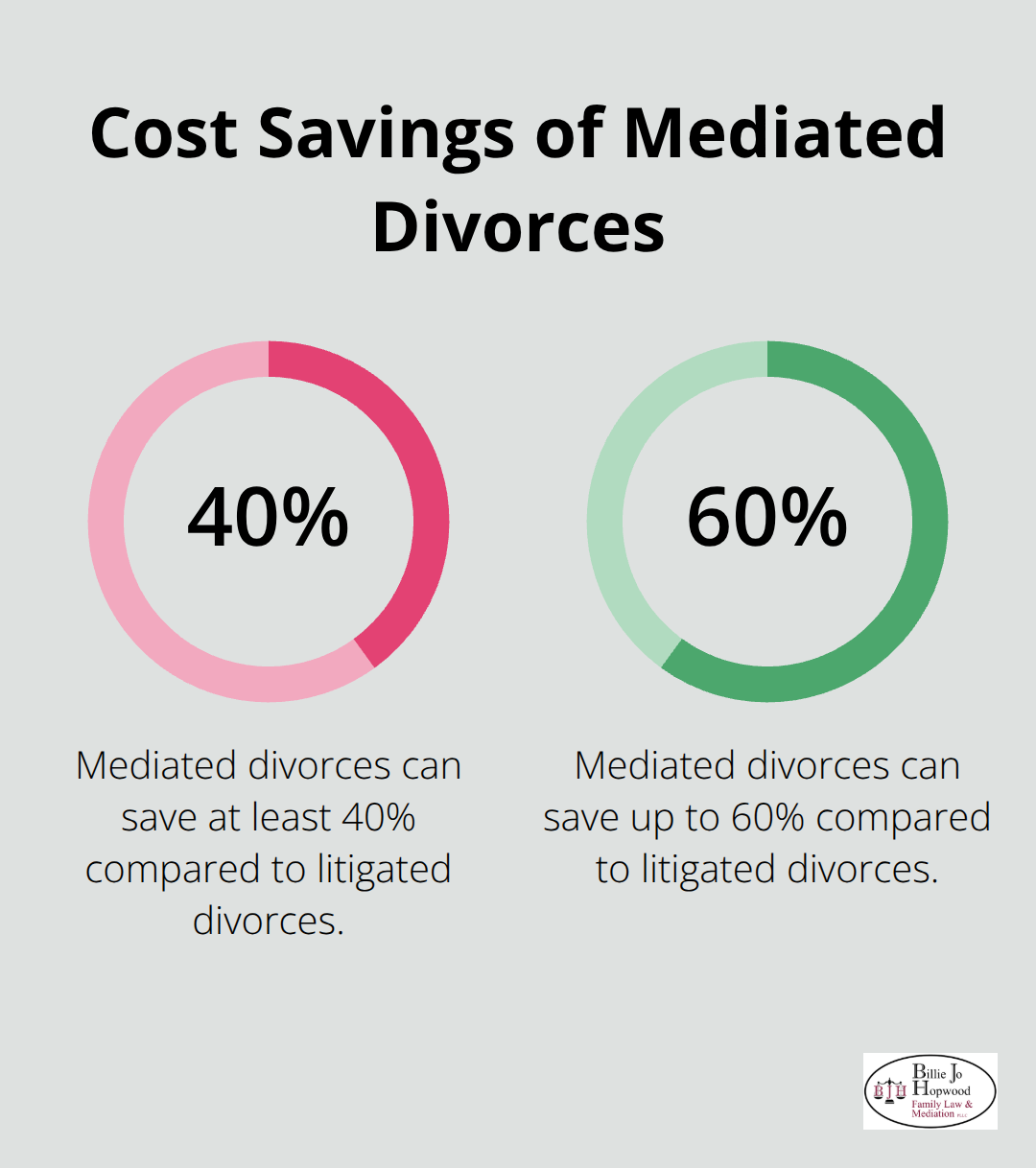
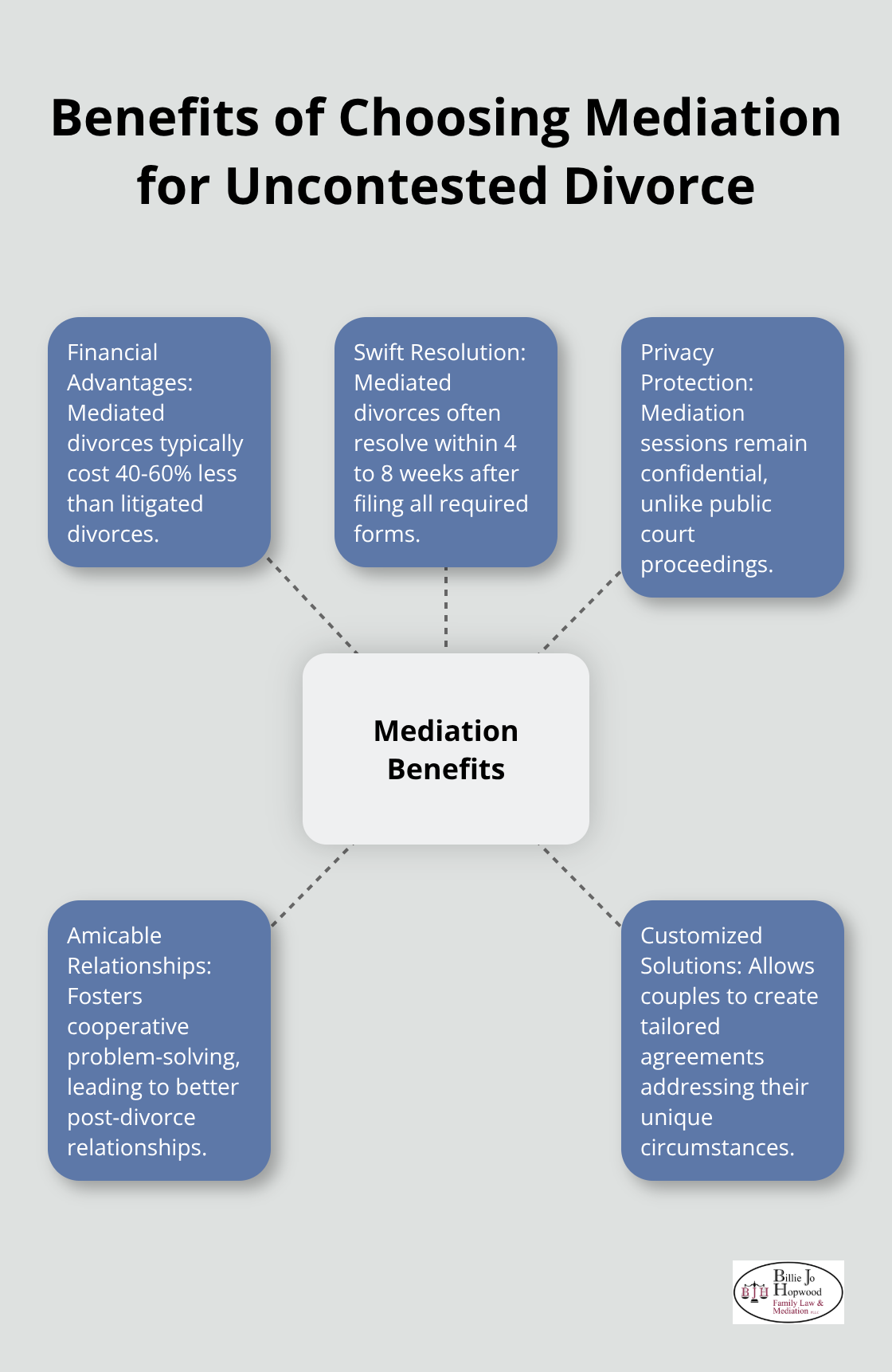
Mediated divorces typically cost 40-60% less than litigated divorces. This substantial cost reduction allows couples to preserve more of their assets for their post-divorce lives. Additionally, the confidential nature of mediation protects privacy, unlike court proceedings which become public record. This aspect proves particularly valuable for those who wish to keep their personal matters out of the public eye.

Infographic showing that mediated divorces typically cost 40-60% less than litigated divorces - uncontested divorce mediation melbourne florida

Impact on Children and Family Dynamics

Choosing uncontested divorce mediation in Melbourne, Florida can pave the way for more amicable separations. This approach sets the stage for better post-divorce relationships, especially when children are involved. The Florida Chapter of the Association of Family and Conciliation Courts indicates that children of parents who mediate their divorce often experience less stress and adapt better to family changes.

As we move forward, let’s explore the specific steps involved in the uncontested divorce mediation process in Melbourne, and how it can benefit couples seeking a smoother transition to their new lives.

How Uncontested Divorce Mediation Works in Melbourne

Initial Consultation and Assessment

Uncontested divorce mediation in Melbourne starts with a comprehensive initial consultation. During this meeting, a mediator assesses the couple’s situation, explains the process, and determines if uncontested divorce suits their case. This foundational step sets the stage for a successful mediation.

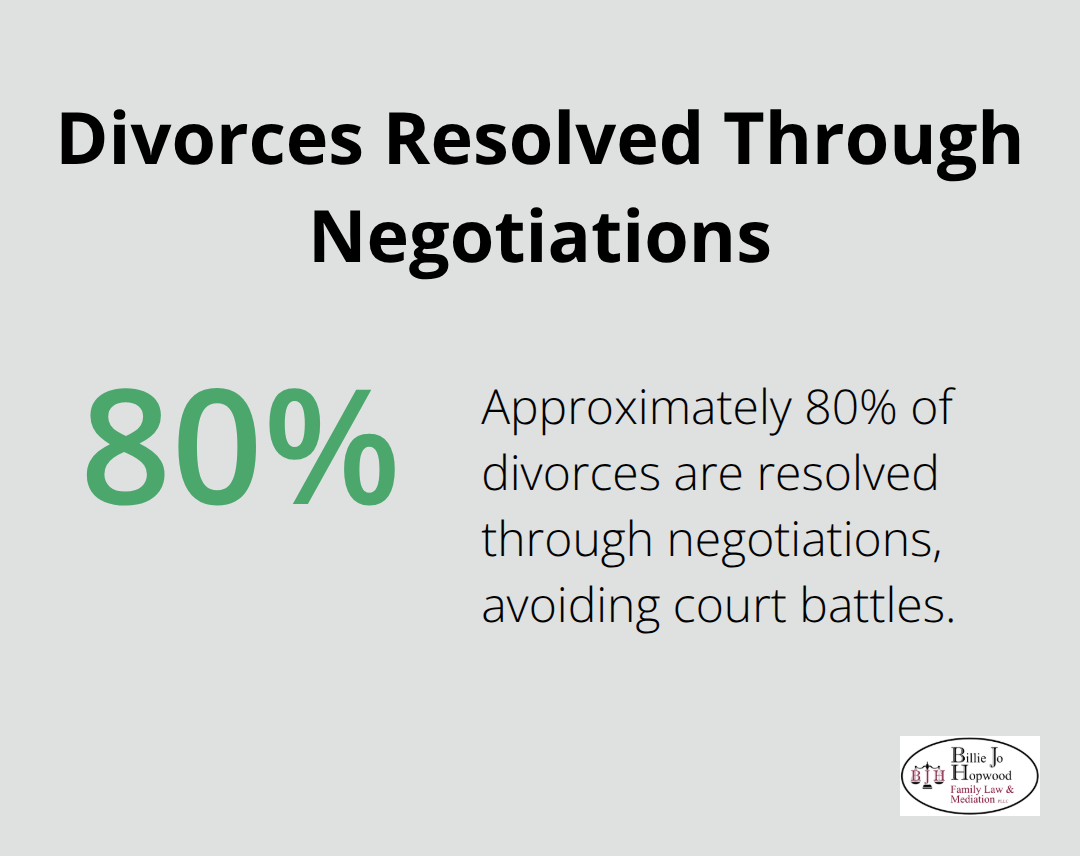
The Florida Courts report that approximately 80% of divorces resolve through negotiations rather than court battles. This statistic highlights the effectiveness of mediation in resolving marital disputes.

Infographic showing that approximately 80% of divorces resolve through negotiations rather than court battles - uncontested divorce mediation melbourne florida

Identifying and Discussing Key Issues

Once mediation begins, couples identify and discuss key issues. These typically include property division, child custody, child support, and alimony. A skilled mediator facilitates these discussions, ensuring both parties have equal opportunities to express their concerns and desires.

In Melbourne (and throughout Florida), mediators must meet certification requirements established by the Florida Supreme Court. This certification ensures that mediators possess the necessary skills to handle complex family law matters effectively.

Negotiating and Drafting Agreements

The next phase involves negotiation and agreement drafting. This is where the mediator’s expertise shines, as they help couples find common ground and develop solutions that work for both parties. The goal is to create a comprehensive marital settlement agreement that addresses all aspects of the divorce.

A study by the American Bar Association found that mediated divorces often result in higher compliance rates with agreements (likely due to the collaborative nature of the process, where both parties actively participate in decision-making).

Filing Paperwork with the Court

The final step involves filing the necessary paperwork with the court. In Melbourne, this includes submitting the marital settlement agreement, financial affidavits, and other required documents. Once filed, an uncontested divorce can finalize in approximately 4 to 8 weeks, significantly faster than contested divorces.

It’s worth noting that in Brevard County (which includes Melbourne), only the petitioner must attend the final hearing for an uncontested divorce. This streamlined process further reduces stress and time commitments for divorcing couples.

As we explore the advantages of choosing mediation for uncontested divorce, you’ll see how this process can save time, money, and emotional energy compared to traditional litigation methods.

Why Choose Mediation for Your Uncontested Divorce?

Hub and spoke chart illustrating the key benefits of choosing mediation for uncontested divorce

Financial Advantages

Uncontested divorce mediation in Melbourne, Florida offers substantial cost savings. Mediated divorces typically cost 40-60% less than litigated divorces. The Florida Bar reports that a mediated divorce in Melbourne might cost $3,000 to $8,000, compared to $15,000 to $30,000 for a litigated divorce. These figures demonstrate the financial wisdom of choosing mediation, allowing couples to retain more of their assets for their post-divorce lives.

Swift Resolution

Mediation concludes faster than court proceedings. While litigated divorces can extend for months or years, mediated divorces in Melbourne often resolve within 4 to 8 weeks after filing all required forms. This quick resolution allows couples to move forward with their lives, reducing stress and uncertainty.

Privacy Protection

Mediation sessions in Melbourne remain confidential, unlike court proceedings which become public record. The Florida Mediation Confidentiality and Privilege Act ensures that discussions during mediation stay private (with few exceptions such as child abuse reporting). This confidentiality proves invaluable for couples who wish to keep their personal matters out of the public eye.

Promoting Amicable Relationships

Mediation fosters cooperative problem-solving, which can lead to more amicable post-divorce relationships. This benefit becomes particularly important for couples with children. The Florida Chapter of the Association of Family and Conciliation Courts reports that children of parents who mediate their divorce often experience less stress and adapt better to family changes.

Customized Solutions

Mediation allows couples to create tailored solutions that address their unique circumstances. Unlike court-imposed decisions, mediated agreements can incorporate creative solutions that work best for both parties. This flexibility often results in more satisfactory outcomes and increases the likelihood of compliance with the agreement terms.

Final Thoughts

Uncontested divorce mediation in Melbourne, Florida provides a faster, more cost-effective, and less stressful alternative to traditional litigation. This approach empowers couples to make decisions about their future, instead of relying on a judge’s ruling. Mediation saves money, protects privacy, and maintains better relationships post-divorce (especially important when children are involved).

Mediation sets the stage for more effective communication and problem-solving in the future. The customized solutions that emerge from mediation often lead to higher satisfaction and compliance rates. Selecting an experienced mediator in Melbourne is key to a successful uncontested divorce.

Billie Jo Hopwood Family Law & Mediation, PLLC offers guidance through the mediation process, helping families transition to their new chapter. We encourage those considering divorce in Melbourne to explore mediation as an option. This process allows both parties to move forward with confidence and peace of mind.

Preparing for Divorce Mediation in Melbourne Florida

Divorce mediation offers a collaborative approach to ending a marriage in Melbourne, Florida. At Billie Jo Hopwood Family Law & Mediation, PLLC, we’ve seen firsthand how proper preparation can lead to smoother negotiations and better outcomes.

This guide will walk you through how to prepare for divorce mediation in Melbourne, Florida, covering essential steps and strategies. By following these tips, you’ll be better equipped to navigate the mediation process and work towards a fair resolution.

What Is Divorce Mediation in Melbourne Florida?

Definition and Purpose

Divorce mediation in Melbourne, Florida involves a neutral third party who assists couples in resolving their disagreements to reach a mutually acceptable divorce settlement. This process aims to reduce conflict and promote cooperation between spouses, often leading to more satisfactory outcomes for all parties involved.

Mediation vs. Traditional Litigation

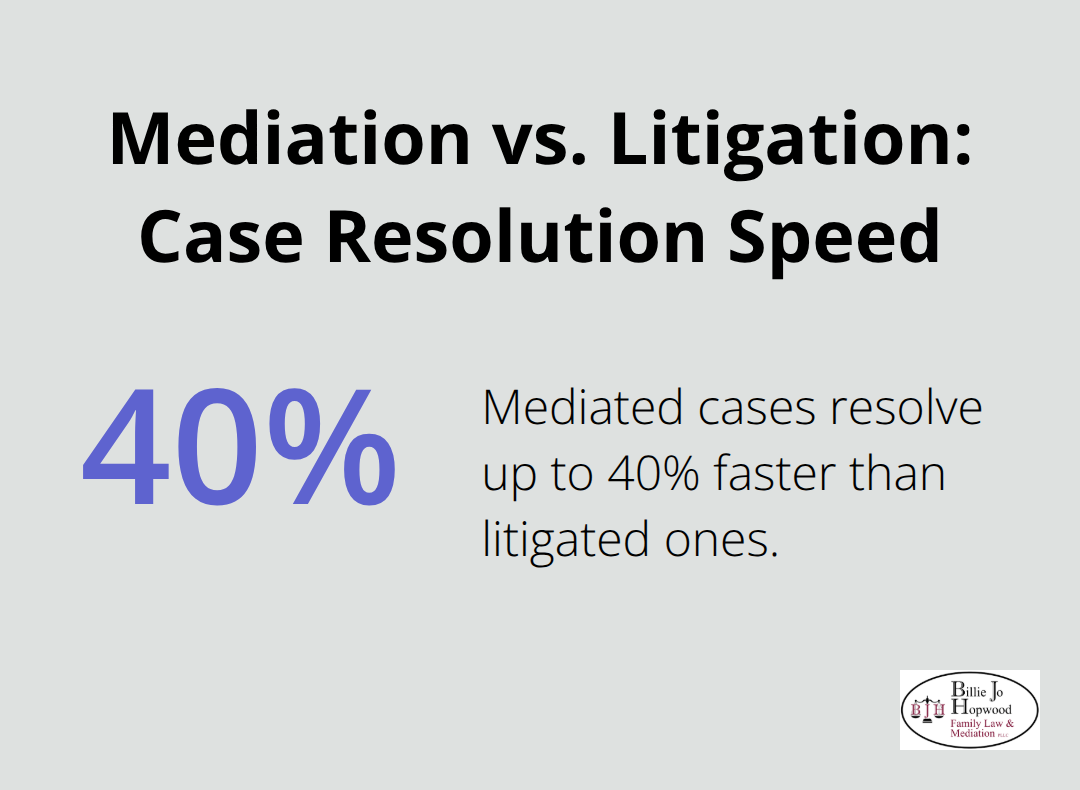
Mediation differs significantly from courtroom battles. In Melbourne, this approach puts control in the hands of the divorcing couple, not a judge. This often results in faster resolutions and substantial cost savings. The Florida Dispute Resolution Center reports that mediated cases resolve up to 40% faster than litigated ones.

Chart showing that mediated cases resolve up to 40% faster than litigated ones - how to prepare for divorce mediation in melbourne florida

The Melbourne Mediation Process

The mediation process in Melbourne typically starts with an initial meeting to establish ground rules. Subsequent sessions focus on specific issues such as property division or child custody. According to the Brevard County Clerk of Courts, most divorce mediations in Melbourne conclude within three to four sessions.

Advantages of Mediation

Choosing mediation in Melbourne offers several benefits:

  1. Cost-Effective: Mediation generally costs less than going to trial (average costs range from $3,000 to $8,000, compared to $15,000 to $30,000 for litigation).
  2. Higher Compliance: The Florida Bar reports that mediated settlements have a compliance rate exceeding 80%, significantly higher than court-imposed judgments.
  3. Better Post-Divorce Relationships: Couples who choose mediation often maintain improved relationships after divorce (particularly beneficial for co-parenting).
  4. Tailored Solutions: Mediation allows for more creative solutions customized to your family’s unique needs, which isn’t always possible in the rigid structure of a courtroom.

Preparing for Your First Mediation Session

As you prepare for your first mediation session, consider gathering relevant financial documents, identifying your priorities, and reflecting on potential compromises. These steps will help you enter the mediation process with clarity and confidence, setting the stage for productive negotiations and a fair resolution.

How to Prepare for Divorce Mediation

Proper preparation sets the foundation for successful divorce mediation in Melbourne, Florida. We recommend the following steps to ensure you’re ready for your mediation sessions.

Organize Your Financial Information

Start by collecting all relevant financial documents. This includes:

  • Tax returns for the past three years
  • Recent pay stubs
  • Bank statements
  • Credit card statements
  • Mortgage documents
  • Retirement account statements
  • List of assets and debts

The Florida Courts report that a complete financial picture can accelerate the mediation process by up to 30%. Create a detailed spreadsheet of your assets and liabilities to provide a clear overview of your financial situation.

Identify Your Priorities

Take time to reflect on what matters most to you in the divorce settlement. Is it keeping the family home? Maintaining a specific custody arrangement? Or securing a certain level of financial support? The American Bar Association indicates that clients who clearly define their priorities are 40% more likely to reach a satisfactory agreement in mediation.

Create a Parenting Plan Draft

If you have children, develop a preliminary parenting plan. Include details such as:

  • Custody arrangements
  • Visitation schedules
  • Holiday and vacation time
  • Decision-making responsibilities for education, healthcare, and religious upbringing

The Florida Department of Children and Families notes that couples who arrive at mediation with a draft parenting plan resolve custody issues 25% faster than those who don’t.

Understand Florida Divorce Laws

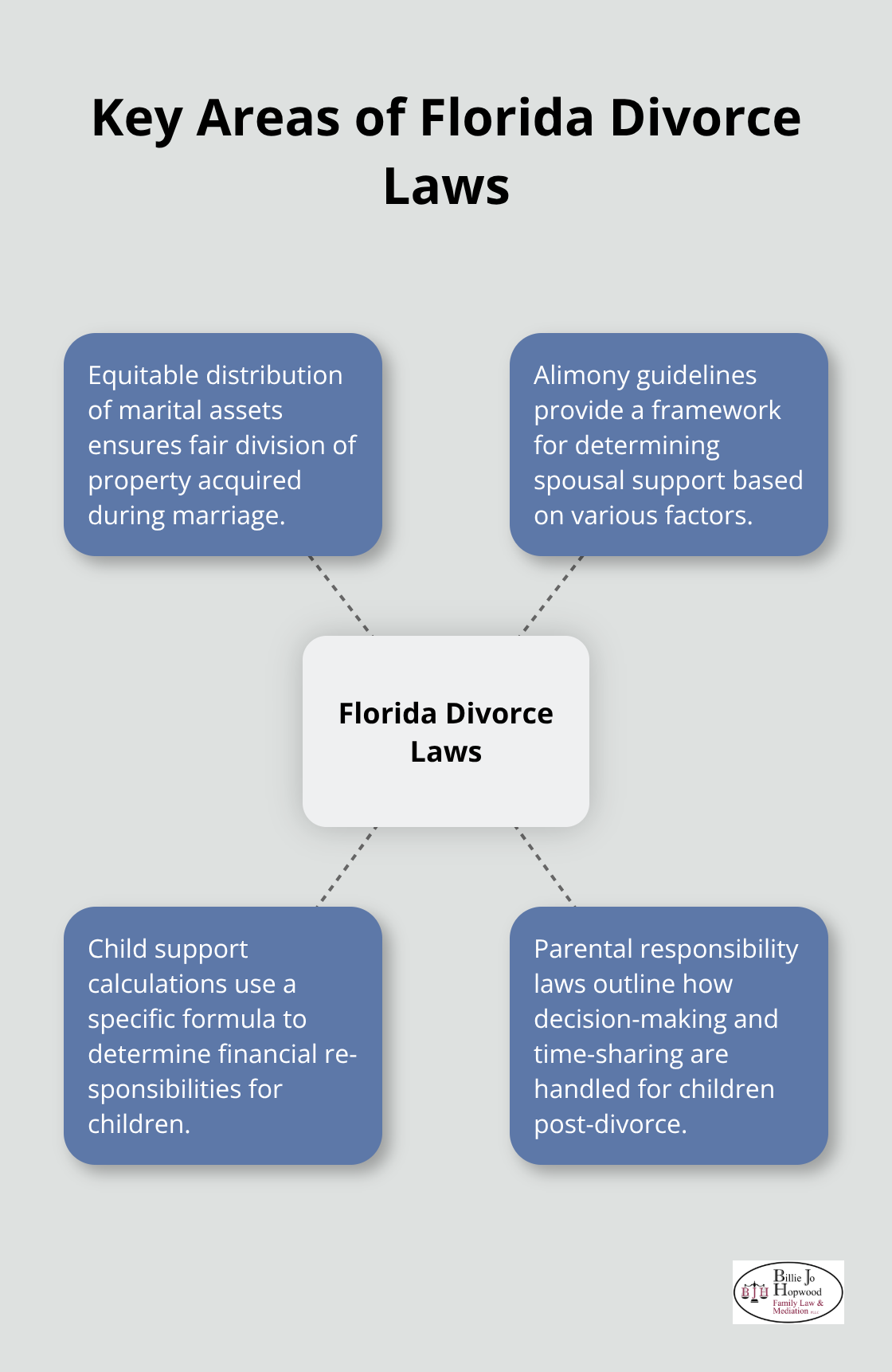
Familiarize yourself with Florida’s divorce laws. Key areas to research include:

  • Equitable distribution of marital assets
  • Alimony guidelines
  • Child support calculations
  • Parental responsibility laws

The Florida Bar offers free online resources that explain these laws in detail. A few hours spent reviewing this information can significantly enhance your ability to negotiate effectively during mediation.

Hub and spoke chart illustrating four key areas of Florida divorce laws: equitable distribution, alimony guidelines, child support calculations, and parental responsibility laws - how to prepare for divorce mediation in melbourne florida

Prepare Emotionally

Emotional preparation is just as important as financial and legal preparation. Try to:

  • Practice stress-management techniques (such as deep breathing or meditation)
  • Seek support from friends, family, or a therapist
  • Focus on long-term goals rather than short-term emotions

Emotional readiness can make a substantial difference in your ability to negotiate calmly and rationally during mediation sessions.

As you complete these preparation steps, you’ll find yourself well-equipped to navigate the mediation process. The next section will explore strategies to employ during your actual mediation sessions for the best possible outcomes.

How to Navigate Mediation Sessions Successfully

Practice Active Listening and Clear Communication

Effective communication forms the foundation of successful mediation. Focus on your spouse’s statements without interruption. Paraphrase their points to confirm understanding. When expressing your views, use “I” statements to avoid blame and promote collaboration. For example, replace “You never consider my needs” with “I feel overlooked when my needs aren’t addressed.”

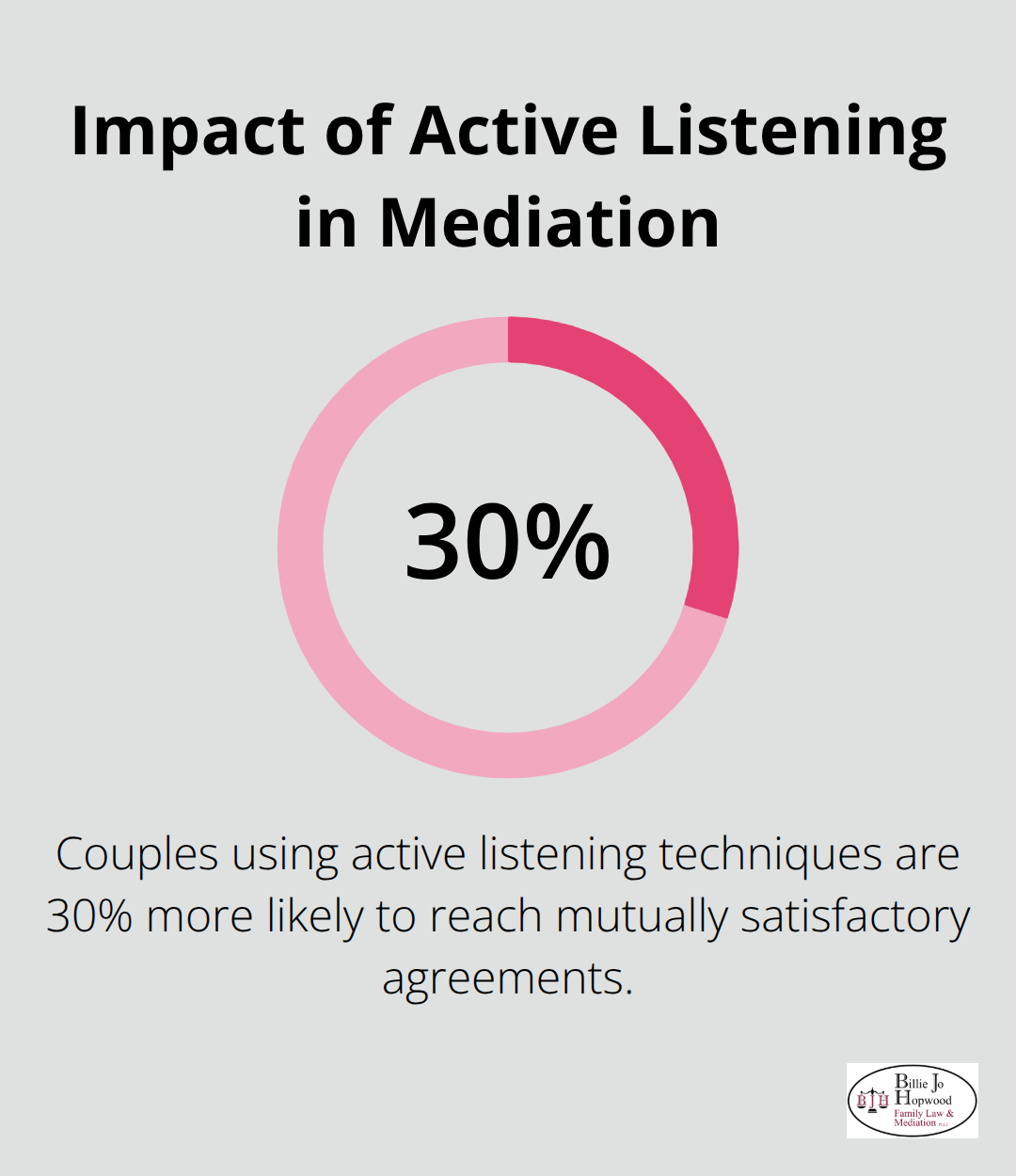
The Harvard Negotiation Project found that couples who used active listening techniques were 30% more likely to reach mutually satisfactory agreements in mediation. This approach improves understanding and reduces tension in the room.

Chart showing that couples using active listening techniques are 30% more likely to reach mutually satisfactory agreements in mediation

Adopt a Problem-Solving Mindset

Approach mediation with a problem-solving attitude rather than a win-lose mentality. Find solutions that address both parties’ interests. The American Arbitration Association reports that mediation participants who prioritized problem-solving were 40% more likely to reach full agreements compared to those who approached sessions competitively.

To implement this strategy, create a list of your top three priorities before each session. During discussions, refer to this list to ensure you address what truly matters. Prepare multiple solutions for each issue to increase the likelihood of finding common ground.

Manage Your Emotions Effectively

Divorce mediation can trigger strong emotions. Use stress-management techniques to maintain composure. Practice deep breathing exercises or brief meditation before each session. The Mayo Clinic suggests that even a 5-minute meditation can significantly reduce stress levels.

If you feel overwhelmed during sessions, request a short break. Use this time to regain composure and refocus on your objectives. A calm demeanor enhances your ability to make rational decisions and communicate effectively.

Work Collaboratively with Your Mediator

Your mediator serves as a neutral third party to facilitate discussions and help you reach an agreement. Provide them with all necessary information and be open to their suggestions. A study by the Mediation Quarterly found that parties who actively engaged with their mediator resolved disputes 25% faster than those who didn’t.

Try to view your mediator as a valuable resource (rather than an adversary). Their experience and impartiality can help you navigate complex issues and find creative solutions.

Stay Focused on Long-Term Goals

During mediation, it’s easy to get caught up in short-term emotions. However, maintaining a focus on your long-term goals leads to better outcomes. The Journal of Family Psychology reports that couples who prioritized long-term objectives were 35% more likely to report satisfaction with their mediation results one year post-divorce.

Create a list of your long-term goals (e.g., financial stability, positive co-parenting relationship) and review it before each session. This practice will help you make decisions aligned with your future well-being.

Final Thoughts

Proper preparation for divorce mediation in Melbourne, Florida sets the stage for productive negotiations and fair resolutions. Effective communication, a problem-solving mindset, and emotional management contribute to successful mediation sessions. The benefits of mediation extend beyond immediate resolution, fostering better post-divorce relationships and reducing financial strain.

Billie Jo Hopwood Family Law & Mediation, PLLC guides families through challenging legal situations with compassion. Our team has observed how thorough preparation and a cooperative approach transform the divorce process. We support clients as they navigate this difficult transition.

Knowing how to prepare for divorce mediation in Melbourne, Florida empowers individuals to approach the process with confidence. Mediation offers a path to a more positive future for families in Melbourne. Our firm stands ready to assist you in achieving the best possible outcome for your unique situation.

Benefits of Family Law Mediation in Melbourne Florida

Family law disputes can be emotionally and financially draining. At Billie Jo Hopwood Family Law & Mediation, PLLC, we’ve seen firsthand how mediation can transform these challenging situations.

The benefits of family law mediation in Melbourne, Florida are numerous, offering a more peaceful and cost-effective approach to resolving conflicts. This alternative method empowers families to find mutually agreeable solutions outside the courtroom, preserving relationships and reducing stress.

What Is Family Law Mediation?

Family law mediation in Melbourne, Florida offers a peaceful alternative to court battles. This process allows families to resolve legal disputes without the need for a judge’s intervention. Let’s explore the key aspects of mediation and why it’s becoming a popular choice for many families.

The Mediation Process Explained

A trained mediator guides discussions between family members during mediation sessions. These professionals don’t make decisions but facilitate effective communication and help parties explore various options. The process often results in more satisfactory outcomes compared to traditional litigation.

In Melbourne, Florida, mediation sessions typically last about three hours. Participants discuss their concerns, explore potential solutions, and work towards a mutually agreeable resolution. The mediator keeps conversations productive and focused on problem-solving.

Mediation vs. Litigation: A Clear Advantage

Mediation presents several benefits over traditional court proceedings:

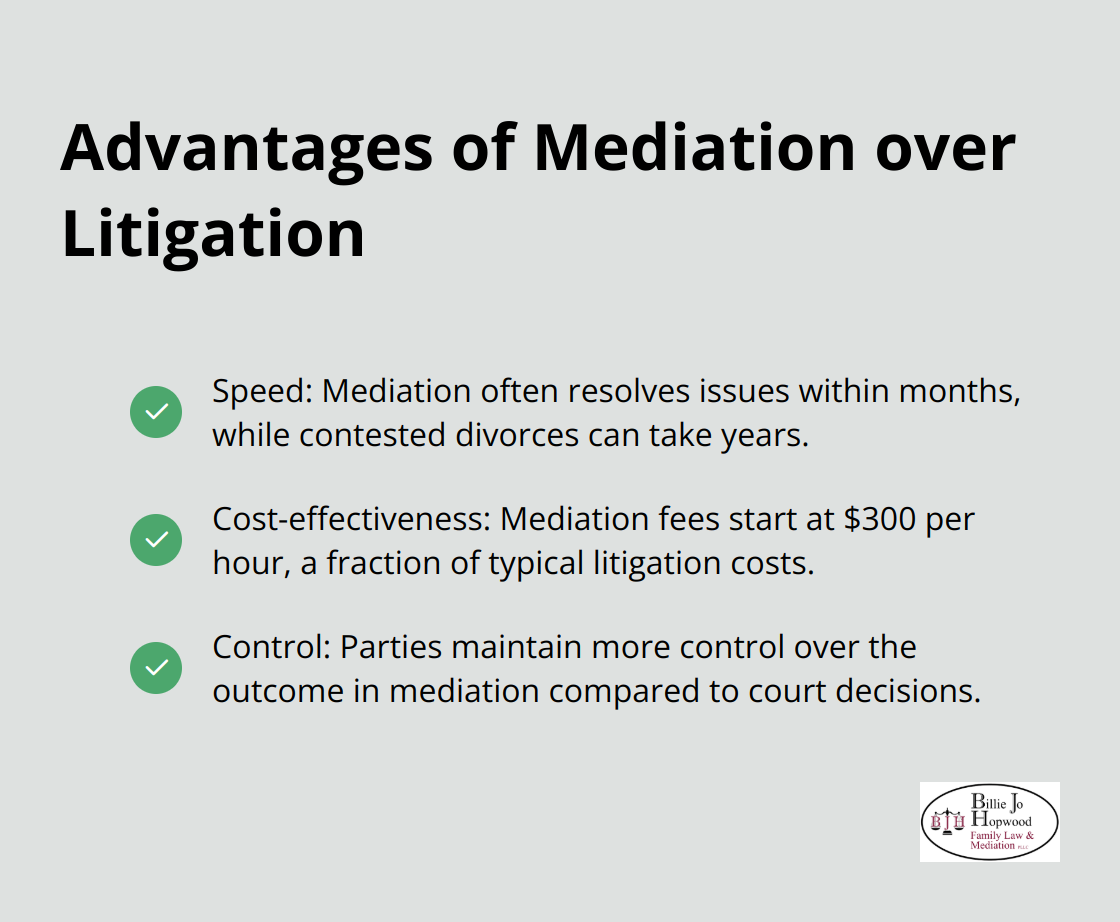
  1. Speed: While contested divorces in court can drag on for years, mediation often resolves issues within months.
  2. Cost-effectiveness: Court battles quickly drain financial resources. In contrast, mediation fees in Florida start at around $300 per hour for non-represented parties (a fraction of typical litigation costs).
  3. Control: Parties maintain more control over the outcome in mediation, rather than leaving decisions to a judge.
Checklist showing speed, cost-effectiveness, and control as advantages of mediation over litigation in family law disputes. - benefits of family law mediation in melbourne florida

Family Law Issues Suitable for Mediation

Mediation addresses a wide range of family law matters, including:

It’s particularly effective for parents who need to maintain a cooperative relationship for co-parenting. However, cases involving domestic violence or severe power imbalances might require court intervention.

Choosing the Right Approach

Each family’s situation is unique, and what works for one may not work for another. Professional guidance can help determine whether mediation is the best path forward. Firms like Billie Jo Hopwood Family Law & Mediation, PLLC assess each case individually to recommend the most appropriate approach.

As we move forward, let’s examine the specific benefits that make family law mediation an attractive option for many in Melbourne, Florida.

Why Choose Family Law Mediation in Melbourne, Florida

Financial Advantages of Mediation

Family law mediation in Melbourne, Florida offers substantial cost savings compared to traditional court proceedings. While litigation can drain tens of thousands of dollars from family resources, mediation fees in Florida typically start at $300 per hour. This cost-effective approach allows families to allocate funds more wisely (perhaps for children’s education or future needs).

Rapid Resolution of Family Disputes

Time matters, especially in family issues. Mediation in Melbourne, Florida often resolves disputes within months, as opposed to years of litigation. This quick turnaround enables families to move forward sooner, which reduces emotional strain and uncertainty.

Customized Solutions for Families

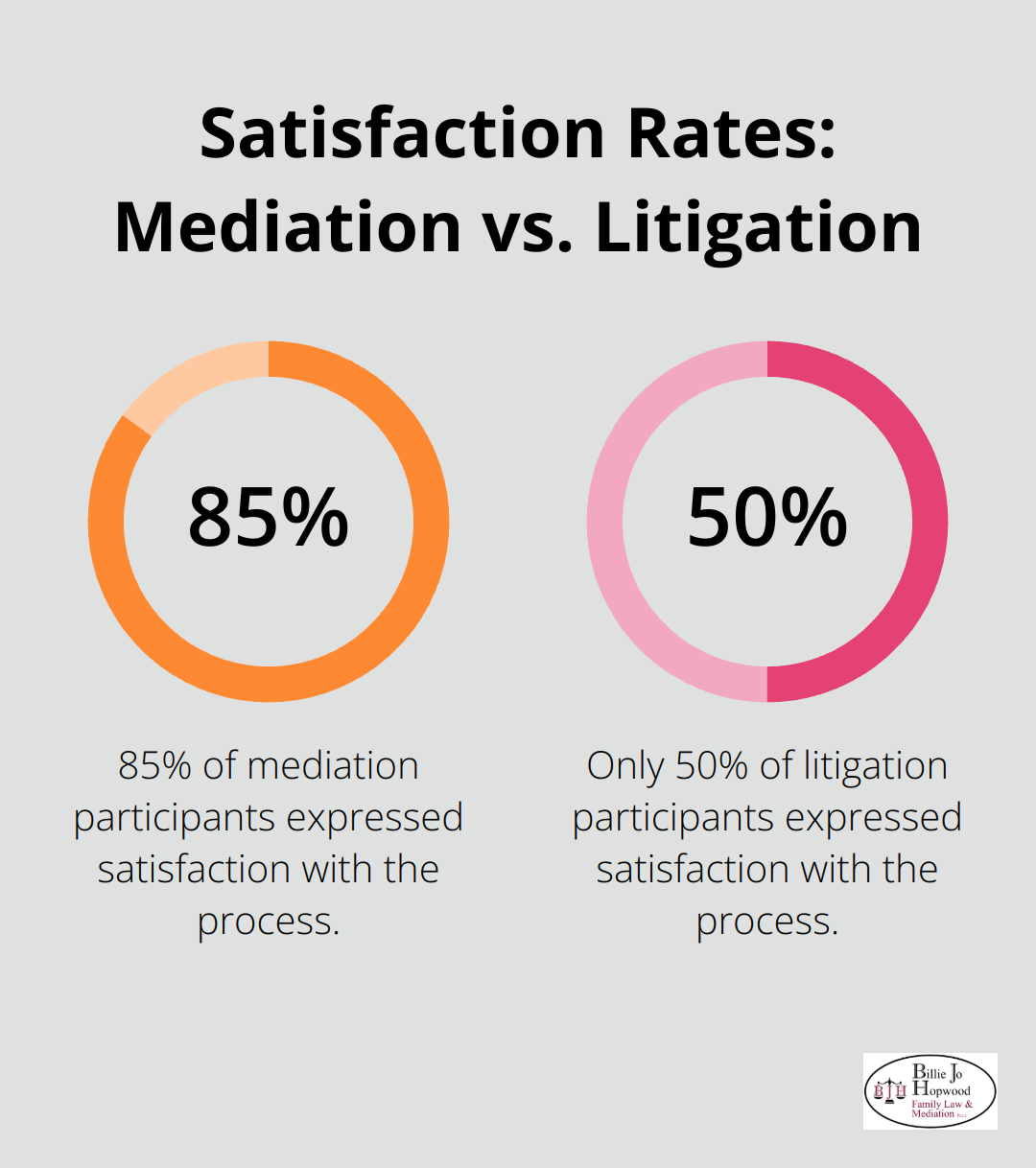
Unlike court-imposed decisions, mediation empowers families to create personalized agreements. This flexibility often results in more satisfactory outcomes. A study by the Florida Dispute Resolution Center found that 85% of mediation participants expressed satisfaction with the process (compared to only 50% satisfaction in litigation).

Comparison of satisfaction rates between mediation (85%) and litigation (50%) in family law disputes.

Preservation of Family Relationships

Mediation fosters a collaborative environment that can help maintain family bonds. The process encourages open communication and mutual understanding, which can lead to more amicable post-dispute relationships. This aspect proves particularly beneficial for co-parents who must continue to work together for their children’s well-being.

Confidentiality and Privacy

Court proceedings are public record, but mediation offers privacy. Discussions during mediation sessions remain confidential (with few exceptions), allowing families to address sensitive issues without fear of public exposure. This confidentiality can protect reputations and prevent unnecessary stress.

As we explore the mediation process in Melbourne, Florida, you’ll see how these benefits translate into practical advantages for families seeking resolution.

How Family Law Mediation Works in Melbourne

Selecting a Qualified Mediator

The mediation process starts with choosing the right mediator. In Florida, family law mediators must obtain certification from the Supreme Court. This requirement ensures they possess the necessary training and skills. When you select a mediator, consider their experience, reputation, and mediation style. We recommend you interview potential mediators to find one who aligns with your specific needs and communication preferences.

Effective Preparation for Mediation

Proper preparation leads to productive mediation sessions. Collect all relevant documents, including financial records, property information, and any existing agreements. Create a list of your goals and priorities, but maintain flexibility for compromise. Many mediators in Melbourne offer pre-mediation consultations (which can help you understand expectations and prepare effectively).

The Mediation Session Unfolds

A typical mediation session in Melbourne lasts about three hours. The mediator begins by explaining the process and establishing ground rules. Each party then presents their perspective and concerns. The mediator facilitates discussion, identifies areas of agreement, and explores potential solutions. This process may involve separate meetings with each party (known as caucuses) to address sensitive issues or overcome impasses.

Role of Legal Representation

While not mandatory, having an attorney present during mediation can prove beneficial. Attorneys provide legal advice, protect your rights, and help you understand the long-term implications of potential agreements. Choose an attorney who supports the mediation process and avoids escalating conflict.

Finalizing the Agreement

If the parties reach an agreement, the mediator drafts a memorandum of understanding. This document outlines the terms agreed upon during mediation. Review this document carefully (preferably with your attorney) before signing. Once signed, this agreement becomes legally binding and can be filed with the court for enforcement.

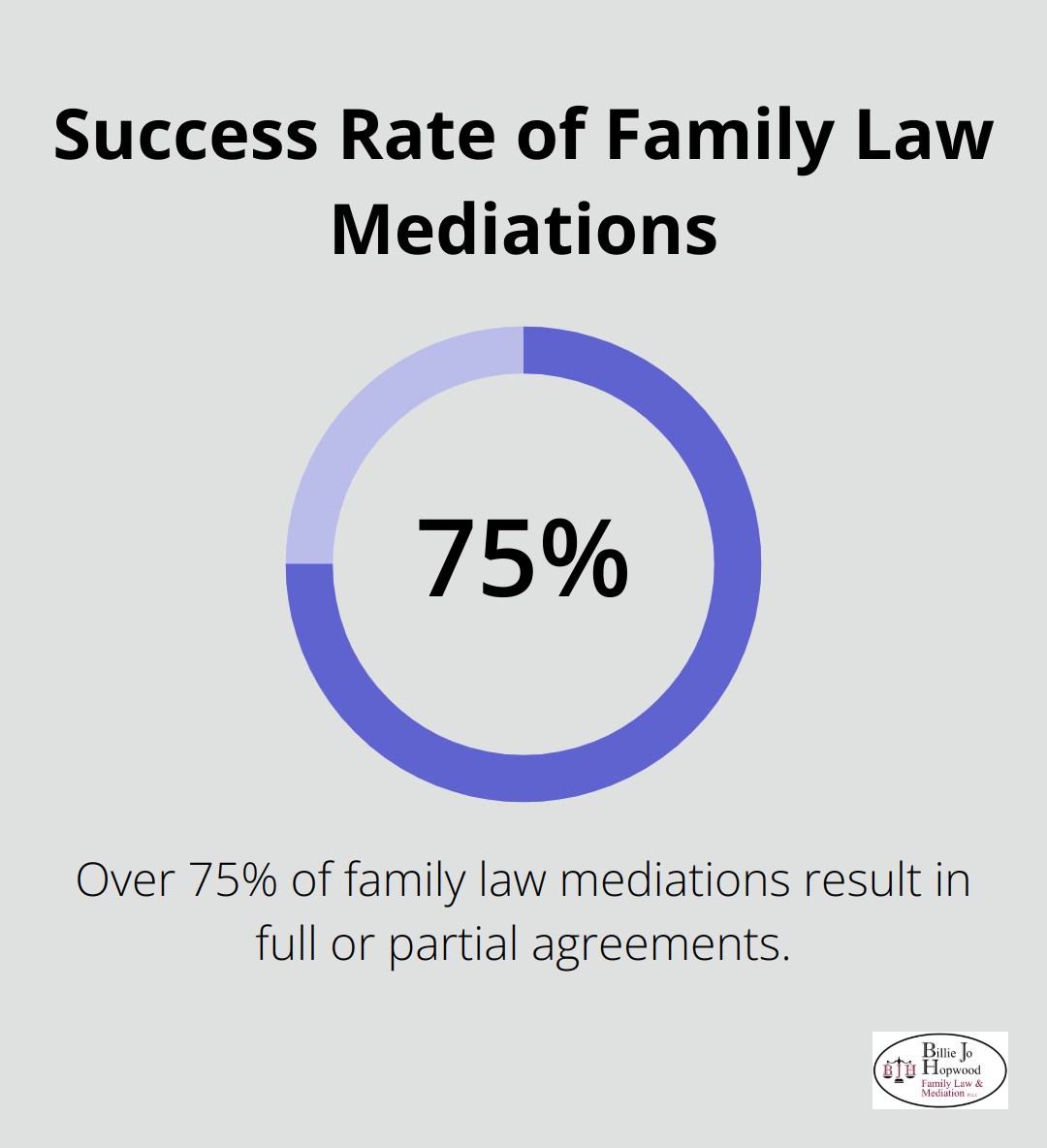
The Florida Dispute Resolution Center reports that over 75% of family law mediations result in full or partial agreements. This high success rate demonstrates the effectiveness of mediation in resolving family disputes in Melbourne and throughout Florida.

Pie chart showing that over 75% of family law mediations result in full or partial agreements. - benefits of family law mediation in melbourne florida

Final Thoughts

Family law mediation in Melbourne, Florida provides a powerful alternative to traditional litigation. This approach offers cost savings, faster resolutions, and greater control over outcomes. The confidential nature of mediation protects privacy, while its collaborative spirit helps preserve important family relationships.

Mediation equips families with valuable communication skills and problem-solving techniques for future interactions. It fosters mutual understanding and encourages compromise, which often leads to more satisfactory and sustainable agreements. The benefits of family law mediation in Melbourne, Florida extend beyond resolving immediate disputes (it can significantly reduce the emotional and financial toll associated with courtroom battles).

For those facing family law challenges in Melbourne, Florida, professional guidance is essential. Billie Jo Hopwood Family Law & Mediation, PLLC offers compassionate support and experienced representation in family law matters. Our team helps families navigate difficult legal situations with empathy and skill.

The Cost of Divorce Mediation in Melbourne Florida

Divorce can be a costly process, but mediation offers a more affordable alternative. At Billie Jo Hopwood Family Law & Mediation, PLLC, we understand the financial concerns that come with ending a marriage.

This post will explore the cost of divorce mediation in Melbourne, Florida, and how it compares to traditional litigation. We’ll also provide insights on potential expenses and strategies to keep costs down during the mediation process.

How Much Does Divorce Mediation Cost in Melbourne?

Average Cost Range for Divorce Mediation

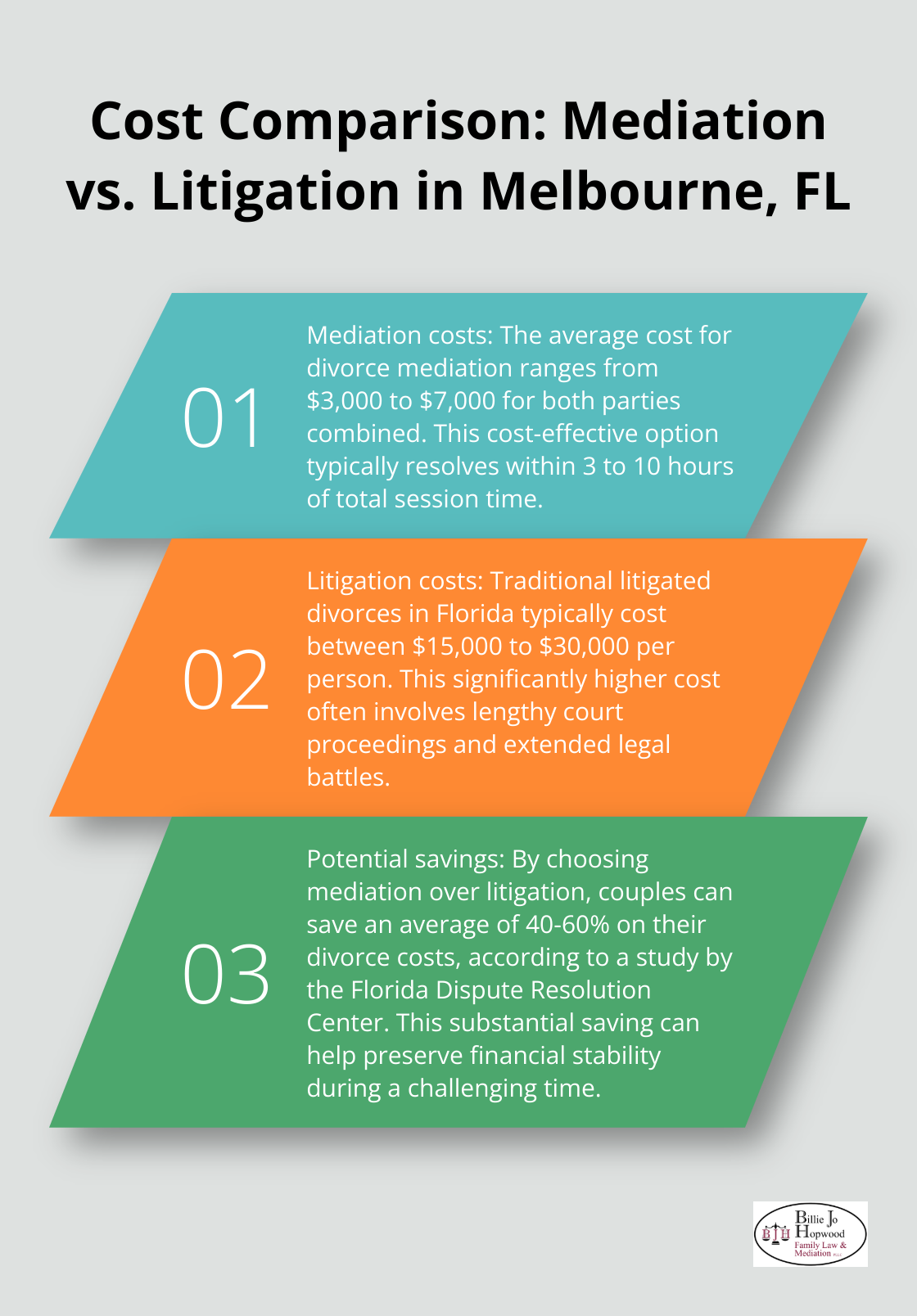
Divorce mediation in Melbourne, Florida offers a cost-effective alternative to traditional litigation. The average cost for divorce mediation ranges from $3,000 to $7,000 for both parties combined. This amount stands in stark contrast to the $15,000 to $30,000 per person typically associated with litigated divorces in Florida.

Ordered list comparing the average costs of divorce mediation and traditional litigation in Melbourne, Florida

Factors Influencing Mediation Costs

Several factors affect the final cost of divorce mediation:

  1. Complexity of issues: Cases with complex asset division or child custody disputes may require more sessions (thus increasing the overall cost).
  2. Mediator’s experience: More experienced mediators often charge higher rates, but their efficiency can lead to quicker resolutions.
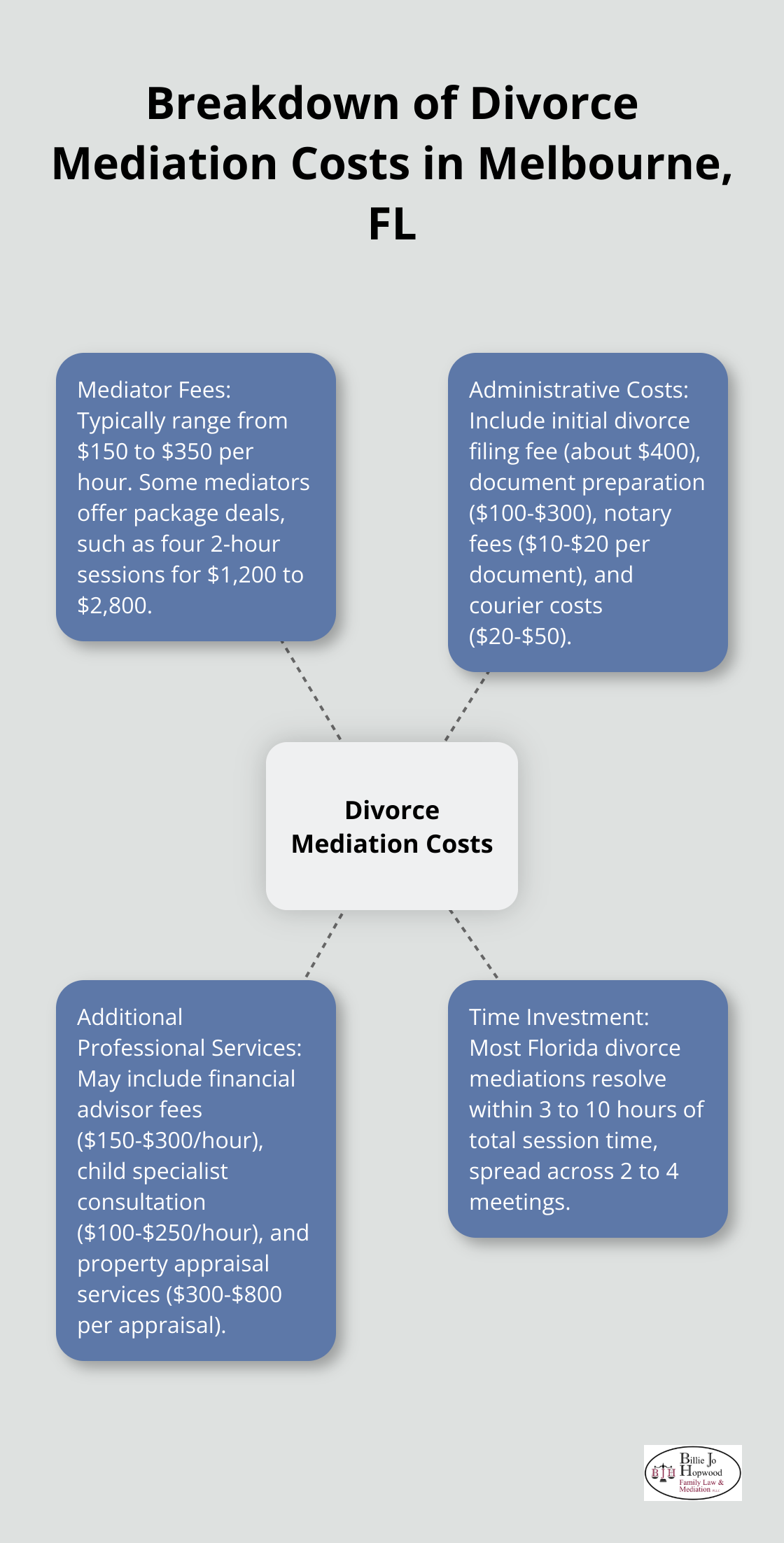
  3. Number of sessions: Most Florida divorce mediations resolve within 3 to 10 hours of total session time (spread across 2 to 4 meetings).
  4. Preparation: Couples who arrive prepared with financial documents and clear objectives often require fewer sessions, which reduces costs.

Mediation vs. Litigation: A Cost Comparison

The financial benefits of choosing mediation over litigation are substantial:

  1. Hourly rates: Mediators in Florida typically charge between $150 to $350 per hour, compared to $300 to $500 for attorneys.
  2. Court costs: Mediation reduces or eliminates costly court appearances, which litigation often requires.
  3. Time savings: The streamlined nature of mediation often leads to quicker resolutions, which minimizes time off work and associated indirect costs.
  4. Long-term savings: Mediated agreements often result in higher compliance rates, which potentially reduces future legal disputes and their associated costs.

Cost-Saving Strategies in Mediation

To maximize savings during the mediation process, try these strategies:

  1. Prepare thoroughly: Gather all necessary financial documents before the first session.
  2. Set clear objectives: Know what you want to achieve from the mediation process.
  3. Communicate effectively: Open and honest communication can expedite the process.
  4. Consider package rates: Some mediators offer flat fees for a set number of sessions.
  5. Explore online mediation: Virtual sessions can reduce travel costs and time commitments.

The cost-effectiveness of mediation makes it an attractive option for many couples in Melbourne. As we move forward, let’s examine the specific breakdown of expenses you might encounter during the divorce mediation process.

What Are the Specific Costs of Divorce Mediation?

Mediator Fees and Hourly Rates

The primary expense in divorce mediation is the mediator’s fee. In Melbourne, Florida, mediators typically charge between $150 to $350 per hour. Some mediators offer package deals for a set number of sessions, which can provide cost certainty. For example, a package of four 2-hour sessions might cost around $1,200 to $2,800.

It’s important to note that while experienced mediators may charge higher rates, their efficiency can often lead to fewer required sessions (potentially reducing overall costs).

Administrative and Filing Fees

Beyond mediator fees, you’ll need to account for administrative and filing costs. The initial divorce filing fee in Brevard County, where Melbourne is located, is approximately $400. This fee is mandatory regardless of whether you choose mediation or litigation.

Additional administrative costs may include:

  1. Document preparation fees: $100 – $300
  2. Notary fees: $10 – $20 per document
  3. Courier or certified mailing costs: $20 – $50

These expenses are typically lower in mediation compared to litigation, as there’s less paperwork involved.

Hub and spoke chart illustrating the various costs associated with divorce mediation in Melbourne, Florida - cost of divorce mediation melbourne florida

Potential Additional Expenses

Depending on the complexity of your case, you might incur additional costs for professional services. These could include:

  1. Financial advisor fees: $150 – $300 per hour
  2. Child specialist consultation: $100 – $250 per hour
  3. Appraisal services for property valuation: $300 – $800 per appraisal

While these services add to the overall cost, they can provide valuable insights that lead to fairer agreements and smoother negotiations. In many cases, the investment in these services during mediation can prevent costly disputes later on.

Cost Comparison with Litigation

Even with potential additional expenses, the total cost of mediation is often significantly lower than litigation. A study by the Florida Dispute Resolution Center found that mediated divorces cost, on average, 40-60% less than litigated divorces.

When you budget for your divorce mediation, consider these various cost components. Many family law firms in Melbourne strive to provide cost-effective solutions tailored to your specific situation. They can help you navigate these expenses and find the most economical path forward in your divorce process.

Now that we’ve outlined the specific costs associated with divorce mediation, let’s explore some strategies to keep these expenses in check and maximize the value of your mediation experience.

How to Reduce Divorce Mediation Costs in Melbourne, Florida

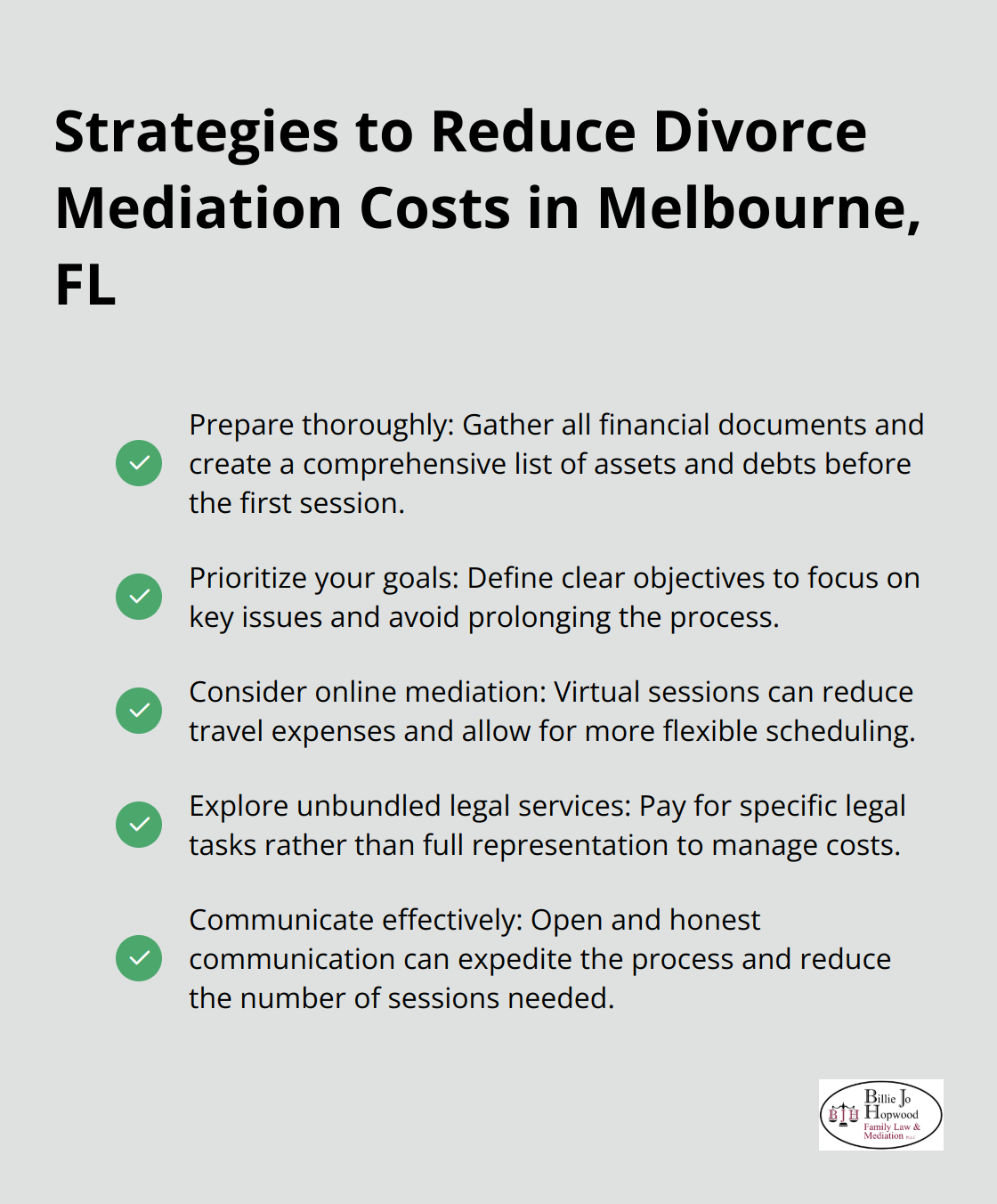
Prepare Thoroughly Before Sessions

One of the most effective ways to cut mediation costs is to come prepared. Gather all necessary financial documents, including tax returns, bank statements, and property valuations, before your first session. This step alone can save hours of mediation time, which directly translates to cost savings.

Create a comprehensive list of assets and debts, and if possible, agree with your spouse on their values. This proactive approach can streamline discussions and reduce the need for additional sessions or professional appraisals.

Prioritize Your Goals

Before entering mediation, clearly define your priorities. What matters most to you? Is it the family home, retirement accounts, or a specific custody arrangement? By focusing on your top concerns, you can avoid getting sidetracked by minor issues that can prolong the process and increase costs.

A Florida Bar survey found that couples who entered mediation with clear objectives resolved their divorces 30% faster than those who didn’t. This efficiency not only saves money but also reduces emotional stress.

Checkmark list of strategies to reduce divorce mediation costs in Melbourne, Florida - cost of divorce mediation melbourne florida

Consider Online Mediation

Virtual mediation sessions have become increasingly popular (especially since 2020). Online mediation can significantly reduce costs by eliminating travel expenses and allowing for more flexible scheduling. This flexibility often means fewer work hours missed, further reducing the indirect costs of divorce.

A recent study by the American Bar Association showed that online mediation sessions were, on average, 20% shorter than in-person sessions, leading to direct cost savings for clients.

Explore Unbundled Legal Services

While full legal representation during mediation can be beneficial, it’s not always necessary. Many attorneys in Melbourne offer unbundled legal services, where you can pay for specific tasks rather than full representation. This à la carte approach can significantly reduce legal fees.

For example, you might hire an attorney to review your mediation agreement or provide advice on specific issues, rather than having them present for all sessions. This targeted approach can provide legal protection while keeping costs manageable.

Mediation is generally more cost-effective than traditional litigation. Couples can save money by resolving their issues outside of court, making it a practical choice for many divorcing couples in Melbourne, Florida.

Final Thoughts

Divorce mediation in Melbourne, Florida provides a cost-effective alternative to traditional litigation. Couples can save thousands of dollars through mediation, with average costs ranging from $3,000 to $7,000 for both parties combined. The process typically resolves within 3 to 10 hours of session time, which reduces expenses and emotional stress.

Mediation promotes better communication and cooperation between parties. This approach benefits couples with children, as it fosters a more amicable co-parenting relationship post-divorce. The cost of divorce mediation in Melbourne, Florida often results in long-term savings, as mediated agreements tend to have higher compliance rates.

Billie Jo Hopwood Family Law & Mediation, PLLC offers guidance through the mediation process. We help families navigate challenging legal situations with empathy and professionalism. Couples who choose mediation can move forward with their lives while preserving their financial stability and emotional well-being.

Understanding Family Law Mediation in Melbourne Florida

Family law mediation in Melbourne, Florida offers a path to resolving disputes without the stress of courtroom battles. At Billie Jo Hopwood Family Law & Mediation, PLLC, we’ve seen firsthand how this process can transform conflicts into agreements.

This alternative approach to settling family matters can save time, money, and relationships. Let’s explore how family law mediation works in Melbourne and why it might be the right choice for your situation.

What Is Family Law Mediation?

Definition and Purpose

Family law mediation is a voluntary process where a neutral third party assists couples in resolving disputes without court intervention. In Melbourne, Florida, this approach has gained popularity for its ability to foster cooperation and find mutually beneficial solutions.

Mediation vs. Litigation

Mediation differs significantly from litigation. It puts control in the hands of the parties involved, with no judge making decisions for them. Instead, couples work together to reach agreements. This often results in more satisfying outcomes and better long-term relationships (especially when children are involved).

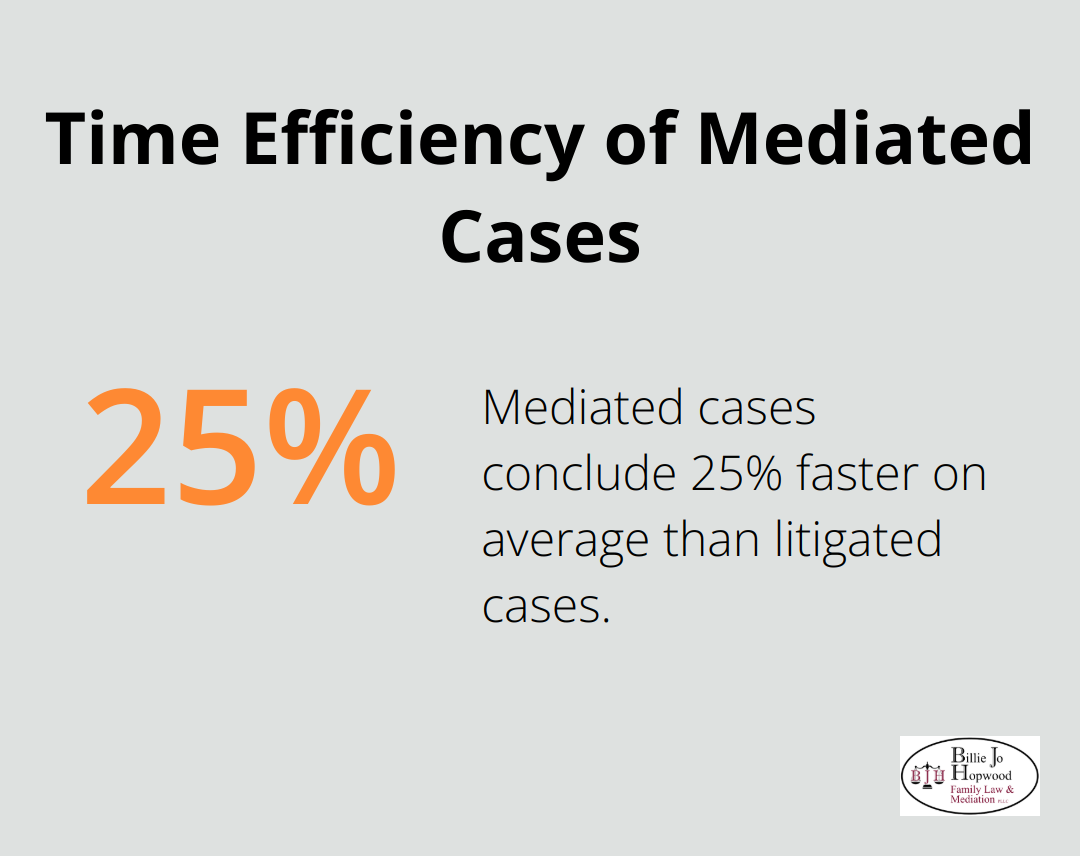
In Melbourne, Florida, mediation typically resolves cases faster and costs less than traditional court proceedings. A study by the Florida Dispute Resolution Center found that mediated cases concluded 25% faster on average than litigated cases.

Chart showing that mediated cases conclude 25% faster on average than litigated cases

Common Issues Addressed

Family law mediation can address a wide range of issues, including:

  1. Property division
  2. Child custody and visitation schedules
  3. Alimony and child support
  4. Debt allocation
  5. Retirement account distribution

One advantage of mediation is its flexibility. Couples can address any issue important to their family, even those that might not typically receive consideration in a courtroom setting.

The Mediator’s Role

A skilled mediator does not take sides or make decisions. Their role involves facilitating communication, identifying areas of agreement, and guiding couples towards mutually acceptable solutions. In Melbourne, Florida, certified family law mediators must complete specific training and meet ethical standards set by the Florida Supreme Court.

While mediation can be highly effective, it’s not suitable for every situation. Cases involving domestic violence or significant power imbalances between parties might require traditional litigation. It’s always best to consult with a qualified family law attorney to determine the most appropriate approach for your unique circumstances.

As we move forward, let’s explore the numerous benefits of choosing mediation for family law disputes in Melbourne, Florida.

Why Choose Mediation in Melbourne Florida?

Financial Advantages

Mediation in Melbourne, Florida offers significant cost savings compared to traditional court proceedings. A Florida Bar Association study revealed that mediated divorces cost approximately 60% less than litigated ones. This substantial reduction allows families to allocate resources to more critical aspects of their lives (such as children’s education or future planning).

Chart showing that mediated divorces cost approximately 60% less than litigated ones - family law mediation melbourne florida

Time Efficiency

The mediation process in Melbourne, Florida resolves disputes much faster than court proceedings. While a litigated divorce can extend to 12 to 18 months, mediated divorces often conclude within 3 to 4 months. This swift resolution enables families to move forward with their lives sooner, reducing stress and uncertainty.

Enhanced Communication

Mediation promotes better communication between parties. A Florida Dispute Resolution Center survey found that 85% of participants reported improved communication skills after mediation. These enhanced skills often lead to more amicable post-divorce relationships (particularly beneficial for co-parenting situations).

Tailored Solutions

Unlike court-imposed decisions, mediation allows for creative and customized solutions. In Melbourne, Florida, couples can craft unique arrangements that address their specific needs, from unconventional custody schedules to innovative property division plans. This flexibility often results in agreements that both parties are more likely to adhere to long-term.

Confidentiality

Mediation offers a level of privacy that court proceedings cannot match. Discussions during mediation sessions remain confidential, protecting sensitive family matters from becoming public record. This confidentiality can be particularly valuable for high-profile individuals or those who simply value their privacy.

The numerous benefits of choosing mediation in Melbourne, Florida extend beyond immediate resolution, often setting the stage for healthier family dynamics in the future. To fully understand how these advantages translate into practice, let’s explore the step-by-step mediation process in Melbourne, Florida.

How Does the Mediation Process Work in Melbourne Florida?

Preparation Phase

The mediation process in Melbourne, Florida starts with thorough preparation. Clients must gather all relevant financial documents (tax returns, bank statements, property valuations). The Florida Bar reports that proper preparation can cut mediation time by up to 30%. We advise clients to create a list of priorities and concerns to focus discussions during the sessions.

Initial Mediation Session

Mediation sessions typically last 2-4 hours. The mediator begins by explaining the process and setting ground rules. Each party then presents their perspective without interruption. This initial phase often reveals common ground and areas of disagreement.

Facilitated Discussions

The mediator facilitates discussions, helping parties explore options and potential compromises. A study by the Florida Dispute Resolution Center found that 70% of family law mediations reach full or partial agreements. Techniques such as caucusing (where the mediator meets privately with each party) can help overcome impasses.

Chart showing that 70% of family law mediations reach full or partial agreements - family law mediation melbourne florida

Agreement Drafting

Once parties reach an agreement, the mediator drafts a Memorandum of Understanding. This document outlines all agreed-upon terms. Both parties and their attorneys review this document carefully to ensure all points are clear and accurately reflect the agreement.

Finalization and Court Approval

After review, both parties sign the final agreement. This becomes a legally binding document once approved by the court. In Melbourne, Florida, the approval process typically takes 2-3 weeks, which is significantly faster than litigated cases (which can take months).

Final Thoughts

Family law mediation in Melbourne, Florida offers a powerful alternative to traditional court proceedings. This approach saves time and money, promotes better communication, and allows for tailored solutions that fit each family’s unique needs. The confidential nature of mediation protects privacy, while the process often leads to more satisfying outcomes for all parties involved.

Family law mediation in Melbourne, Florida presents a compelling option worth serious consideration. This process not only resolves immediate issues but also lays the groundwork for healthier family dynamics moving forward. The benefits of mediation extend far beyond the mediation room, potentially improving long-term relationships and co-parenting arrangements.

At Billie Jo Hopwood Family Law & Mediation, PLLC, we have witnessed the positive impact of family law mediation in Melbourne, Florida. Our team guides families through this process with compassion (and skill). If you navigate a family law dispute, we encourage you to explore mediation as a path to resolution.

Your Guide to Divorce Mediation in Melbourne Florida

Divorce can be a challenging process, but mediation offers a smoother path forward. At Billie Jo Hopwood Family Law & Mediation, PLLC, we’ve seen firsthand how divorce mediation in Melbourne, Florida can help couples navigate this difficult time.

This guide will walk you through the essentials of divorce mediation, from understanding its benefits to choosing the right mediator. We’ll provide practical insights to help you make informed decisions about your divorce process in Melbourne, Florida.

What Is Divorce Mediation in Melbourne Florida?

The Collaborative Approach

Divorce mediation in Melbourne, Florida presents a collaborative process where a neutral third party assists couples in negotiating their separation terms. This method stands apart from traditional litigation, offering a more amicable and cost-effective route to divorce.

The Melbourne Mediation Process

The divorce mediation process in Melbourne typically involves multiple meetings with a certified mediator. These sessions address key issues such as property division, child custody, and financial support. The mediator facilitates discussions, ensuring both parties contribute to the decision-making process.

Advantages of Mediation

Choosing mediation in Melbourne can yield substantial benefits. A study by the American Bar Association indicates that mediated divorces often result in higher satisfaction rates and improved long-term outcomes for families. Couples who opt for mediation report reduced conflict and enhanced co-parenting relationships post-divorce.

Financial Benefits

The financial impact of selecting mediation over litigation proves significant. In Melbourne, the average cost of a mediated divorce typically ranges 40-60% lower than a litigated divorce. This cost reduction allows couples to preserve more assets for their post-divorce lives.

Chart showing that mediated divorce costs 40-60% less than litigated divorce in Melbourne, Florida

Positive Impact on Children

For couples with children, mediation in Melbourne offers a less adversarial approach. Research from the Florida Chapter of the Association of Family and Conciliation Courts reveals that children whose parents mediate their divorce experience reduced stress and adapt better to new family dynamics.

Mediation often leads to more creative and tailored solutions for families in Melbourne. This approach focuses on helping couples find common ground and develop agreements that suit their unique situations. As we move forward, let’s explore the key steps involved in the divorce mediation process.

Navigating the Divorce Mediation Journey in Melbourne, Florida

Selecting Your Mediator

The first step in the divorce mediation process involves choosing a qualified mediator. In Melbourne, mediators must complete a Florida Supreme Court certified training program. When you select a mediator, consider their experience with cases similar to yours. Ask about their success rates and approach to challenging situations. Local knowledge of Melbourne’s family court system can provide invaluable insights during this process.

Financial Disclosure

After you choose a mediator, both parties must provide comprehensive financial information. This typically includes tax returns, bank statements, and property valuations. In Florida, financial affidavits are mandatory. These documents form the foundation for fair asset division and support determinations. Transparency at this stage is essential – hiding assets can lead to legal consequences (and potentially invalidate agreements).

Identifying Key Issues

With finances laid bare, the next phase requires you to pinpoint the specific issues that need resolution. Common areas include property division, alimony, child custody, and support. Couples who clearly define their priorities often achieve more satisfactory outcomes. Try to create a list of your non-negotiables and areas where you’re willing to compromise.

Ordered list of five key steps in the divorce mediation process in Melbourne, Florida - divorce mediation melbourne florida

Negotiation and Agreement

The heart of mediation lies in negotiation. Your mediator will facilitate discussions to help you explore various solutions. Florida law requires consideration of factors like marriage duration and each spouse’s economic circumstances when determining alimony. For child-related matters, the best interests of the child always take precedence.

During this phase, it’s important to remain focused on future arrangements rather than past conflicts. Couples who approach mediation with a forward-thinking mindset reach agreements more quickly (and report higher satisfaction with the outcomes).

Finalizing Your Settlement

Once you reach an agreement on all issues, your mediator will draft a settlement document. This agreement becomes legally binding after both parties sign it and a judge approves it. In Melbourne, the approval process typically takes 2-4 weeks. After approval, you’ll file for an uncontested dissolution, which can be finalized much faster than a litigated divorce.

While mediation offers a collaborative approach, having individual legal counsel review your agreement before signing is advisable. This ensures your rights are protected and the agreement aligns with Florida law.

As you move through the mediation process, you’ll want to ensure you’ve chosen the right mediator for your unique situation. Let’s explore how to make this critical decision in the next section.

How to Select the Best Divorce Mediator in Melbourne

Evaluating Mediator Qualifications

In Melbourne, Florida, certified mediators must complete a rigorous training program approved by the Florida Supreme Court. Certification alone doesn’t guarantee expertise. Look for mediators with additional qualifications such as a law degree or background in family counseling. These complementary skills can prove invaluable during complex negotiations.

The Florida Dispute Resolution Center maintains a database of certified mediators. This resource allows you to verify a mediator’s credentials and specializations. A mediator with extensive experience in family law cases will likely navigate your divorce more effectively than a generalist.

Assessing Local Knowledge and Experience

A mediator’s familiarity with Melbourne’s legal landscape can be a significant advantage. Local mediators understand the nuances of Brevard County family courts and can provide insights into local judges’ preferences and tendencies. This knowledge can help shape strategies and expectations throughout the mediation process.

When you interview potential mediators, ask about their experience with cases similar to yours in Melbourne. Inquire how many divorce mediations they’ve conducted in the area and their success rate in reaching mutually satisfactory agreements. A mediator who has handled numerous cases in Melbourne will likely have a better grasp of local trends and potential pitfalls.

Key Questions for Potential Mediators

During your initial consultation with a mediator, ask pointed questions to gauge their suitability. Here are some key inquiries:

  1. What is your approach to managing high-conflict situations?
  2. How do you ensure both parties have equal opportunity to express their concerns?
  3. What strategies do you employ to overcome impasses in negotiations?
  4. How do you handle power imbalances between spouses during mediation?
  5. Can you provide references from previous clients in Melbourne?

The answers to these questions will give you insight into the mediator’s style, philosophy, and problem-solving abilities. Pay attention to how comfortable you feel communicating with the mediator. Effective mediation requires open dialogue, so choose someone who puts you at ease.

Chart listing three important questions to ask when selecting a divorce mediator in Melbourne, Florida - divorce mediation melbourne florida

Considering Mediation Style

Mediators often have different styles (facilitative, evaluative, or transformative). Ask potential mediators about their approach and consider which style aligns best with your needs. Some couples prefer a more hands-on mediator who offers suggestions, while others want a mediator who primarily facilitates communication.

Evaluating Cost and Availability

While cost shouldn’t be the only factor, it’s important to understand a mediator’s fee structure. Ask about hourly rates, retainer fees, and any additional costs (such as document preparation). Also, inquire about the mediator’s availability and typical timeline for completing the mediation process. A mediator who can accommodate your schedule and work efficiently can help reduce stress during this challenging time.

Final Thoughts

Divorce mediation in Melbourne, Florida offers a collaborative path to resolution. This process prioritizes mutual understanding and empowers couples to make decisions about their future. Mediation provides numerous benefits, including reduced costs, faster resolutions, and improved co-parenting relationships.

We encourage you to explore divorce mediation as an alternative to courtroom battles. Research certified mediators in the Melbourne area with extensive family law experience. Schedule consultations with potential mediators to find someone who aligns with your goals and communication style.

At Billie Jo Hopwood Family Law & Mediation, PLLC, we guide clients through the mediation process with compassion. Our team strives to help you achieve a fair and amicable resolution (setting the foundation for a positive post-divorce future). Divorce mediation in Melbourne, Florida can transform a potentially adversarial process into an opportunity for growth and understanding.