Blog

Legal Definition of Immediate Family Members

The immediate family definition law varies significantly across different legal contexts, creating confusion for many families navigating their rights and obligations.

At Billie Jo Hopwood Family Law & Mediation, PLLC, we see how these varying definitions impact inheritance disputes, medical decisions, and employment benefits daily. Understanding who qualifies as immediate family under different laws protects your family’s interests and prevents costly legal complications.

Who Qualifies as Immediate Family Under Law

Blood Relations and Adoptive Relationships

The legal system recognizes specific blood relations and adoptive relationships as immediate family members with equal rights and protections. Biological children, parents, and siblings hold automatic legal status, while legally adopted children gain identical rights to biological offspring under federal and Florida state law. The Internal Revenue Service treats adopted children the same as biological children for tax purposes, and Florida courts prioritize adoptive parents equally with biological parents in custody decisions.

Step-relationships create legal gray areas that often surprise families during medical emergencies or inheritance disputes. Courts view these relationships differently than biological or adoptive connections, which affects legal rights significantly.
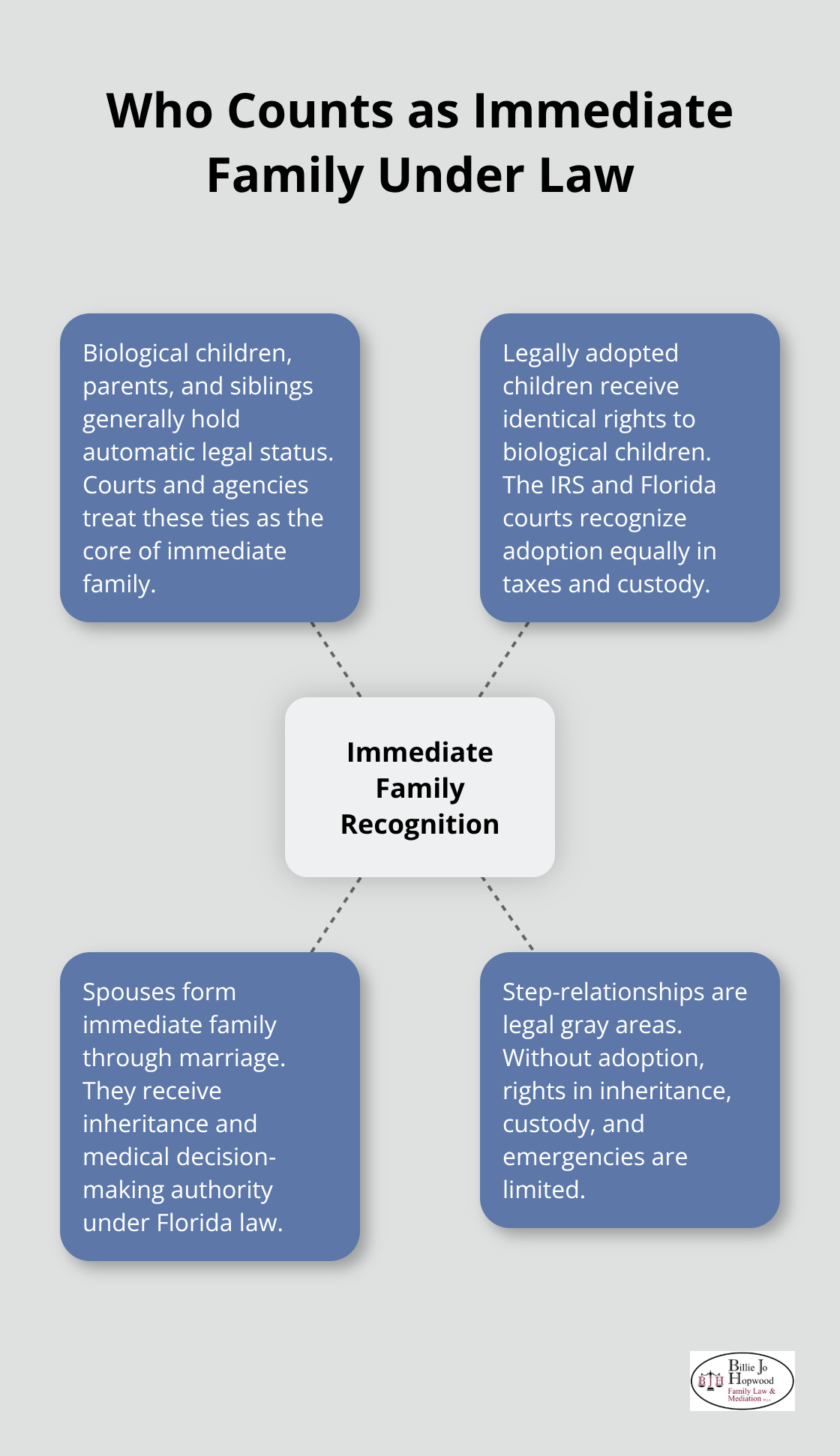
Visual overview of recognized immediate family relationships in Florida and federal contexts - immediate family definition law

Marriage and Partnership Recognition

Florida law grants spouses full immediate family status with automatic inheritance rights and medical decision-making authority. When no children exist from previous relationships, spouses inherit entire estates under Florida’s intestate succession laws. The state recognizes marriage as the primary legal bond that creates immediate family status between non-blood relatives.

Domestic partners and unmarried couples receive no automatic legal recognition as immediate family, regardless of relationship duration or emotional bonds. This distinction becomes problematic during medical emergencies when hospitals may deny visitation rights to long-term partners without legal documentation (such as healthcare directives or power of attorney forms).

Blended Family Legal Realities

Step-parents without formal adoption hold no automatic custody rights or inheritance claims, which creates vulnerabilities during divorce or family crises. Florida courts treat step-children as legal strangers to step-parents unless adoption occurs, despite years of caregiving relationships. The Family and Medical Leave Act excludes step-relationships from its immediate family definition, which prevents unpaid leave for step-parent caregiving.

These limitations force blended families to pursue formal adoption or legal guardianship to secure family protections that biological families receive automatically. The next section examines how these family definitions translate into specific legal rights and responsibilities across different areas of law.

What Legal Powers Do Immediate Family Members Hold

Inheritance Rights That Matter Most

Florida’s intestate succession laws grant immediate family members automatic inheritance rights that bypass probate complications. Spouses receive the entire estate when no children from previous relationships exist, while children from other marriages split 50% of assets with the surviving spouse who receives the remainder. Parents inherit everything only when no spouse or children survive, and siblings gain rights solely when parents, spouses, and children are absent.
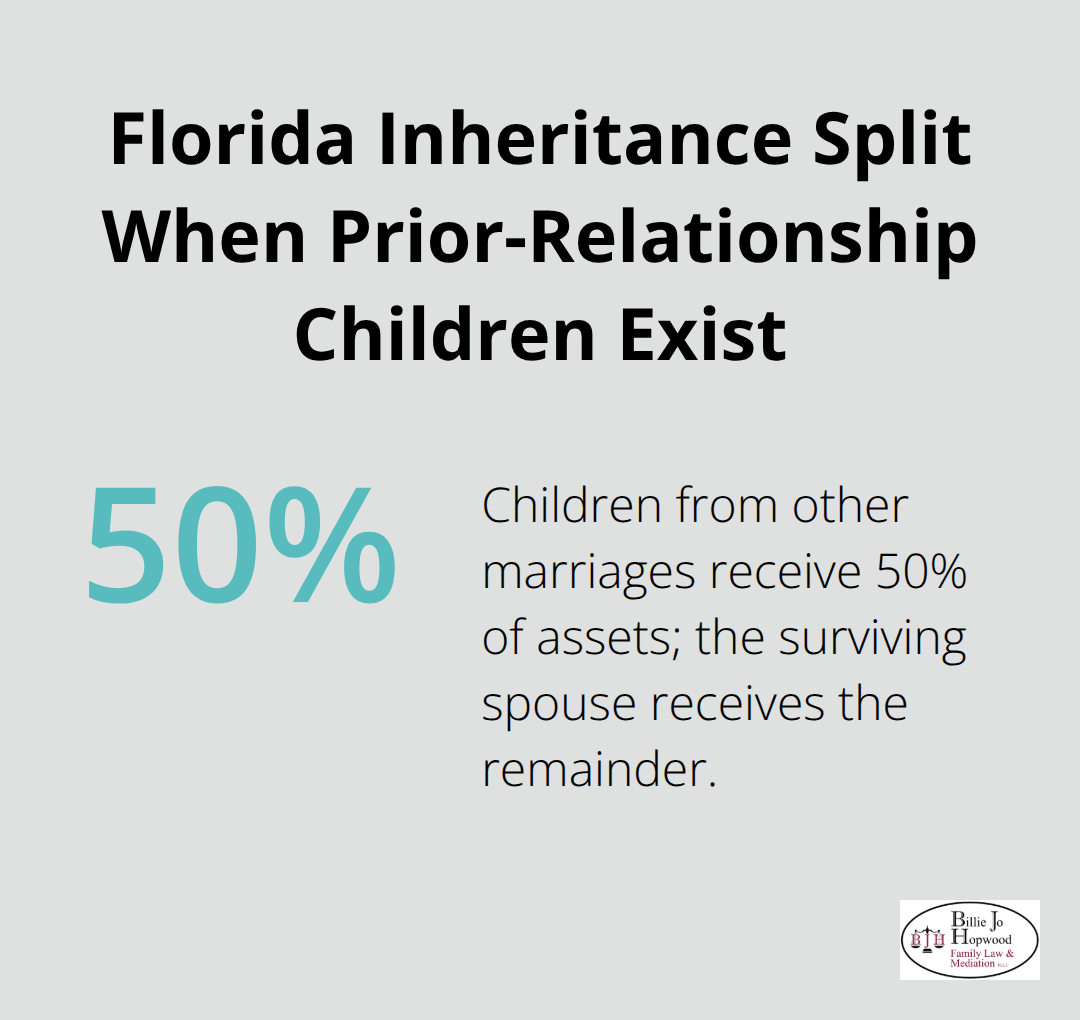
Chart showing that children from other marriages receive 50% of assets while the surviving spouse receives the remainder under Florida intestate rules - immediate family definition law

Joint accounts and payable-upon-death designations transfer directly to spouses without court intervention. These tools provide powerful estate planning options that avoid lengthy probate processes. The Family and Medical Leave Act provides 12 weeks of unpaid leave for care of spouses and dependent children under 21, but excludes step-relationships and unmarried partners entirely.

Federal Tax Benefits and Recognition

Federal tax benefits extend to spouses and biological or adopted children through Internal Revenue Service regulations. Step-children receive no automatic recognition without formal adoption proceedings. The IRS treats adopted children identically to biological children for tax purposes, which affects deductions and filing status options.

Tax law recognizes immediate family members for various benefits including dependency exemptions and medical expense deductions. These financial advantages can result in substantial savings for families who qualify under federal definitions.

Medical Decision Authority During Emergencies

Florida law grants immediate family members automatic authority to make medical decisions when you cannot communicate your wishes. Spouses hold primary decision-making power, followed by adult children and parents in the established hierarchy. Unmarried partners and divorced spouses hold zero authority in medical emergencies unless healthcare directives or power of attorney documents exist beforehand.

Emergency rooms routinely deny visitation rights to long-term partners who lack legal documentation. This creates devastating situations during medical crises when emotional bonds mean nothing without legal recognition. Healthcare insurance policies typically extend coverage to spouses and dependent children, but definitions vary between employers and insurance providers.

Step-Parent Limitations in Medical Decisions

Step-parents without adoption papers cannot make medical decisions for step-children, regardless of years spent in caregiving roles. The Centers for Disease Control and Prevention recognizes immediate family members for public health emergency purposes (affecting quarantine and treatment decisions), but step-relationships fall outside these protections.

These medical authority gaps highlight why blended families need formal legal documentation to protect their interests. State and federal laws create different immediate family definitions that affect these rights in various ways.

How Do State and Federal Laws Define Family Differently

Florida State Versus Federal Family Classifications

Florida state law defines immediate family more broadly than federal regulations, which creates significant complications for families who navigate multiple legal systems. Under Florida Statutes Section 104.0616, immediate family includes spouses, parents, children, grandparents, grandchildren, and siblings for voting purposes. The Family and Medical Leave Act restricts federal recognition to spouses and dependent children under 21, which excludes grandparents and siblings entirely. This gap means Florida residents can assist grandparents with votes but cannot take federal family leave to care for them during medical emergencies.
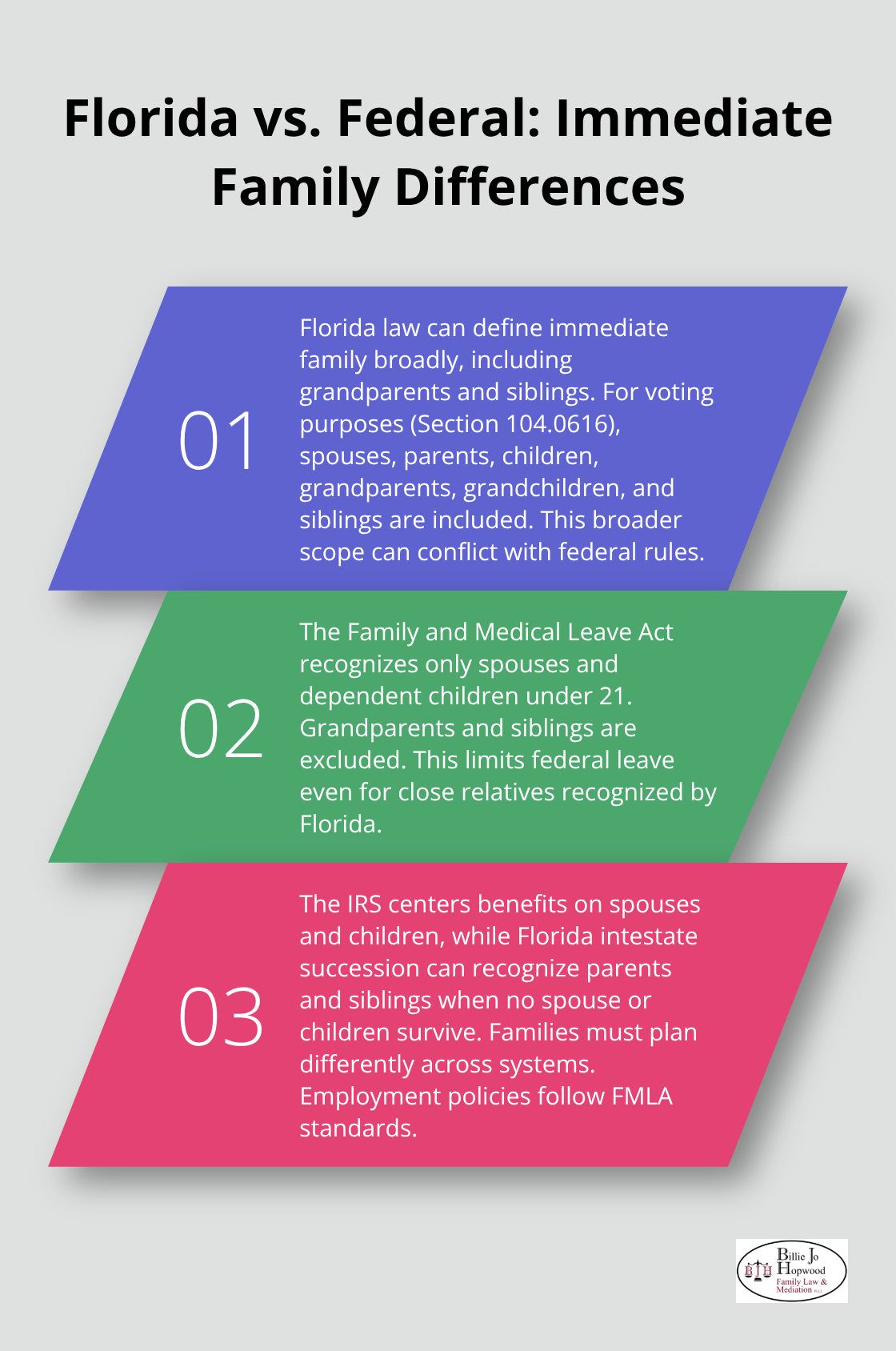
Three-point comparison of Florida, FMLA, and IRS definitions of immediate family

The Internal Revenue Service limits immediate family to spouses and children for tax benefits, while Florida intestate succession laws recognize parents and siblings as heirs when spouses and children are absent. These conflicting definitions force families to plan differently for state versus federal legal matters. Employment policies must comply with federal FMLA standards, which often provide fewer protections than Florida families expect based on state definitions.

Immigration Law Family Classifications

United States immigration law grants immediate family status exclusively to spouses and unmarried children under 21 for permanent resident petitions. This creates the narrowest definition across all legal contexts. Parents of US citizens over 21 qualify separately but face longer processing times than immediate relatives. Siblings, grandparents, and married children fall into preference categories with waiting periods that can exceed 20 years.

Immigration attorneys report that families frequently misunderstand these restrictions. Many assume broader state law definitions apply to federal immigration cases, which leads to disappointment and delays in family reunification efforts.

Insurance Coverage Disparities

Healthcare insurance policies vary dramatically between employers, with some extending coverage to domestic partners while others restrict benefits to legally married spouses only. The Centers for Disease Control and Prevention recognizes immediate family during public health emergencies, but individual insurance companies create their own definitions that may exclude step-children or adopted children (depending on policy language).

These inconsistencies require families to review each policy carefully rather than assume uniform coverage across different legal contexts. Workers’ compensation benefits also follow varying immediate family definitions that affect death benefits and medical coverage eligibility.

Final Thoughts

The immediate family definition law creates a complex web of rights and obligations that varies dramatically between state and federal contexts. Florida families face different protections under state intestate succession laws compared to federal employment benefits, while immigration law imposes the strictest limitations on family recognition. These legal inconsistencies demand proactive planning to protect your family’s interests.

Blended families need formal adoption or legal documentation to secure rights that biological families receive automatically. Unmarried couples must create healthcare directives and power of attorney documents to gain medical decision-making authority during emergencies. Estate planning becomes more complex when state and federal definitions conflict, as joint accounts and payable-upon-death designations provide powerful tools that bypass probate complications only for legally recognized immediate family members.

Step-parents without adoption papers hold no automatic inheritance or custody rights, regardless of emotional bonds or caregiving history. We at Billie Jo Hopwood Family Law & Mediation, PLLC help Melbourne families navigate these challenging legal situations through compassionate guidance and representation in divorce, child custody, and family law matters. Professional legal counsel becomes essential when family structures don’t align with standard legal definitions (or when multiple jurisdictions create conflicting obligations).
Collaborative Law vs Mediation: Which to Choose?

Divorce proceedings in Melbourne, Florida don’t have to mean lengthy court battles. Two popular alternatives offer families more control over their outcomes.

At Billie Jo Hopwood Family Law & Mediation, PLLC, we help clients understand the collaborative law vs mediation debate. Both approaches prioritize cooperation over conflict, but they work differently and suit different situations.

How Do These Two Approaches Actually Work?

The Collaborative Law Process

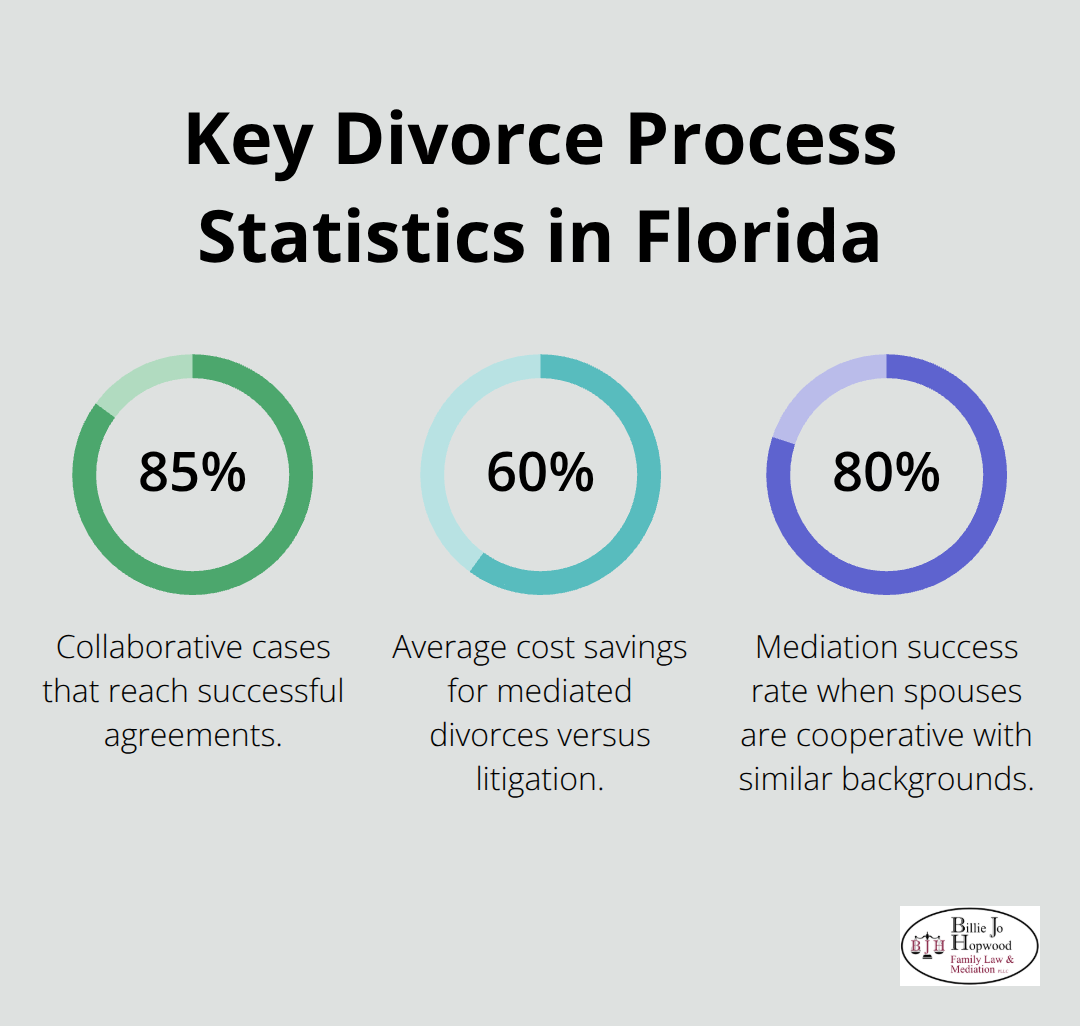
Collaborative law operates through a structured framework where both spouses retain their own attorneys who sign a no-court agreement. This binding commitment means if negotiations fail, both attorneys must withdraw and new legal representation becomes necessary. The Florida Dispute Resolution Center reports that this requirement motivates 85% of collaborative cases to reach successful agreements.

Percentage chart showing 85% collaborative success, 60% mediation cost savings, and 80% mediation success under cooperative conditions. - collaborative law vs mediation

Sessions include both spouses and their attorneys who work together in the same room, often with additional professionals like financial advisors or child custody specialists. The process typically takes 6 to 12 months, with meetings that families schedule around their availability rather than court calendars. Each spouse pays for their own attorney, plus shared costs for any neutral professionals who participate.

The Mediation Framework

Mediation centers around one neutral mediator who facilitates discussions without decisions for the couple. The Florida Bar Association data shows mediated divorces in Melbourne cost approximately 60% less than litigation, with most cases that resolve in 3 to 4 months.

Sessions typically last 2 to 4 hours and allow each party to present their perspective without interruption. The mediator uses techniques like caucusing (private meetings with each spouse) to overcome deadlocks. Unlike collaborative law, couples can consult their own attorneys outside of sessions but attorneys don’t participate directly in negotiations. Once agreements are reached, the mediator drafts a Memorandum of Understanding that becomes the foundation for the final divorce decree.

The Core Distinction

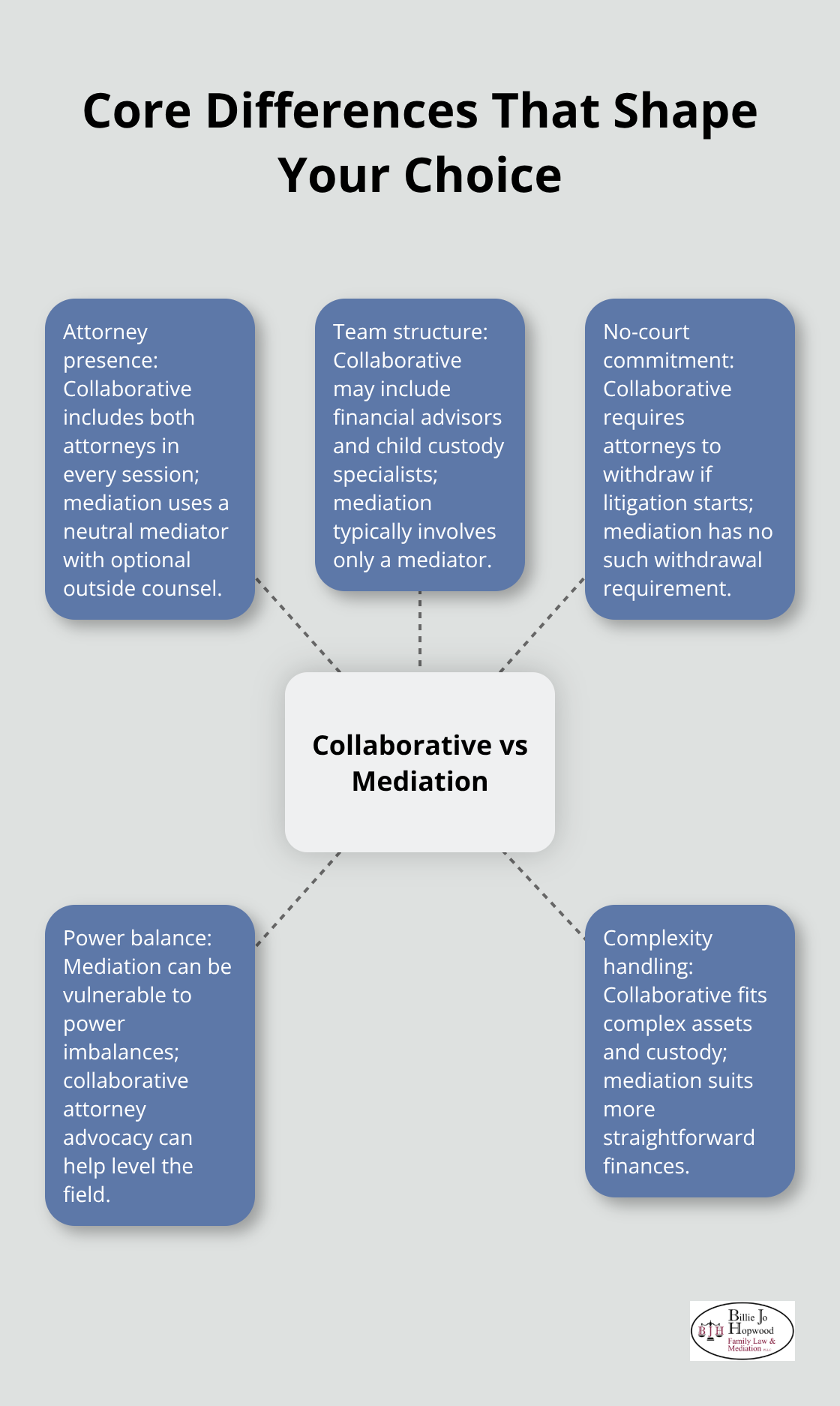
The fundamental difference lies in legal representation during negotiations. Collaborative law provides continuous attorney advocacy throughout discussions, while mediation relies on neutral facilitation with optional outside legal consultation. This distinction shapes how each process handles complex financial matters and emotional dynamics between spouses.

Hub-and-spoke chart comparing collaborative law and mediation on key dimensions. - collaborative law vs mediation

Both approaches offer Melbourne families alternatives to traditional litigation, but their different structures create unique advantages and limitations that affect which method works best for specific situations involving family law disputes.

Why Choose Collaborative Law

Continuous Attorney Support Makes the Difference

Collaborative law provides immediate legal guidance throughout every negotiation session, which sets it apart from other divorce methods. Each spouse has their attorney present during all discussions, creating real-time protection for your interests. The American Bar Association data shows that 85% of collaborative cases reach agreements because attorneys actively guide conversations toward productive solutions rather than let emotions derail progress.

This direct attorney involvement proves particularly valuable when complex financial assets are involved. Financial advisors and child custody specialists often join collaborative teams, providing comprehensive support that addresses every aspect of your divorce. The Florida Dispute Resolution Center reports that collaborative divorces handle intricate property divisions 40% more effectively than unassisted negotiations because legal counsel helps identify potential issues before they become problems.

The No-Court Commitment Creates Accountability

The binding no-court agreement in collaborative law creates powerful motivation for both spouses to reach resolution. When attorneys must withdraw if litigation becomes necessary, everyone involved has strong incentives to make the process work. This commitment eliminates the common litigation threat that can poison negotiations in other divorce methods.

When Collaborative Law Falls Short

This same feature creates the primary drawback of collaborative law. If negotiations fail, both spouses must start over with new attorneys, essentially doubling legal costs and extending timelines. Melbourne families facing this scenario often spend an additional 6 to 8 months finding new representation and rebuilding their cases from scratch (a significant financial and emotional burden).

Best Fit Scenarios

Collaborative law works best when both spouses genuinely commit to cooperation and possess similar negotiation power. This approach proves ideal for couples with complex financial situations who want to preserve ongoing relationships for co-parenting purposes. The structured attorney support particularly benefits families with substantial assets or intricate custody arrangements that require professional guidance.

While collaborative law offers significant advantages, mediation presents a different set of benefits and limitations that may better suit certain family situations.

Why Mediation Often Wins

Speed and Cost Advantages Drive Popular Choice

Mediation delivers Melbourne families the fastest path to divorce resolution.

Ordered list comparing mediation, litigation, and collaborative law timelines and costs.

The Florida Dispute Resolution Center confirms that mediated cases conclude 25% faster than litigation. Most mediation sessions complete within 3 to 4 months compared to the 12 to 18 months that court battles require. The cost difference proves even more dramatic – mediated divorces cost approximately 60% less than litigation according to Florida Bar Association data, with typical mediation expenses that range from $2,000 to $8,000 versus litigation costs that exceed $20,000 per person.

The single mediator structure eliminates the complex schedules that plague collaborative law. While collaborative cases require coordination between multiple attorneys and professionals, mediation sessions adapt to your schedule without bureaucratic delays. The National Mediation Board reports that most successful mediations resolve within 1 to 2 sessions, which makes this approach particularly attractive for couples who seek quick resolution.

Flexibility Creates Custom Solutions

Mediation’s informal structure allows for custom agreements that courts rarely provide. The neutral mediator facilitates creative problem-solving without the rigid legal constraints that bind collaborative attorneys. This flexibility helps couples craft unique custody arrangements or financial settlements that fit their specific circumstances (particularly valuable for families with unconventional work schedules or special needs children).

Power Imbalances Present Real Risks

This same informality creates mediation’s primary weakness – the absence of immediate legal advocacy during negotiations. Without attorneys present, power imbalances between spouses can skew negotiations unfairly. The Ohio State Bar Association notes that mediation works best when both parties possess similar negotiation skills and emotional stability. Complex financial situations often require legal guidance that mediation cannot provide during sessions, which potentially leads to agreements that favor one spouse over another.

Prime Candidates for Mediation Success

Mediation proves most effective for couples with straightforward financial situations who maintain reasonable communication skills. The American Arbitration Association data shows 80% success rates for mediation when both spouses approach the process cooperatively and possess similar education levels or professional backgrounds. With the guidance of a neutral mediator, families can identify what matters most and create solutions that work for their unique situation, making it ideal for couples without significant asset complexity or contentious custody disputes. By focusing on understanding rather than winning, families often leave mediation with agreements they helped shape-agreements they’re more likely to honor long-term.

Final Thoughts

The collaborative law vs mediation choice depends on your specific circumstances and priorities. Mediation offers the most cost-effective solution, with expenses from $2,000 to $8,000 compared to collaborative law’s higher costs due to multiple attorney fees. Time commitments also differ significantly – mediation typically resolves within 3 to 4 months while collaborative law extends 6 to 12 months.

Consider mediation when you and your spouse communicate reasonably well and face straightforward financial situations. Choose collaborative law when you need continuous legal guidance, face intricate financial matters, or require additional professionals like financial advisors. Your comfort level with negotiation plays a major role in this decision (mediation requires you to advocate for yourself with occasional outside legal consultation, while collaborative law provides constant attorney support during every session).

We at Billie Jo Hopwood Family Law & Mediation, PLLC help Melbourne families evaluate their unique situations to determine which approach best serves their needs. Both methods offer significant advantages over traditional litigation. Power imbalances between spouses often favor the collaborative approach where legal representation levels the field.

What Is Mediation in Family Law?

Family disputes don’t have to end up in lengthy court battles. Mediation offers a collaborative path forward that puts families in control of their own outcomes.

At Billie Jo Hopwood Family Law & Mediation, PLLC, we see how understanding what is mediation family law can transform difficult situations into manageable solutions. This alternative approach saves time, money, and emotional stress while protecting relationships that matter most.

How Does Family Law Mediation Actually Work

Family law mediation is a structured negotiation process where a neutral third party helps divorcing couples or separating parents reach agreements outside of court. The mediator facilitates discussions between parties and helps them identify shared interests while they work toward mutually acceptable solutions. Both parties present their positions during mediation sessions while the mediator guides conversations toward productive outcomes. The process typically involves multiple sessions (each lasting two to four hours) with agreements documented in writing once parties reach them.

The Mediation Process Step by Step

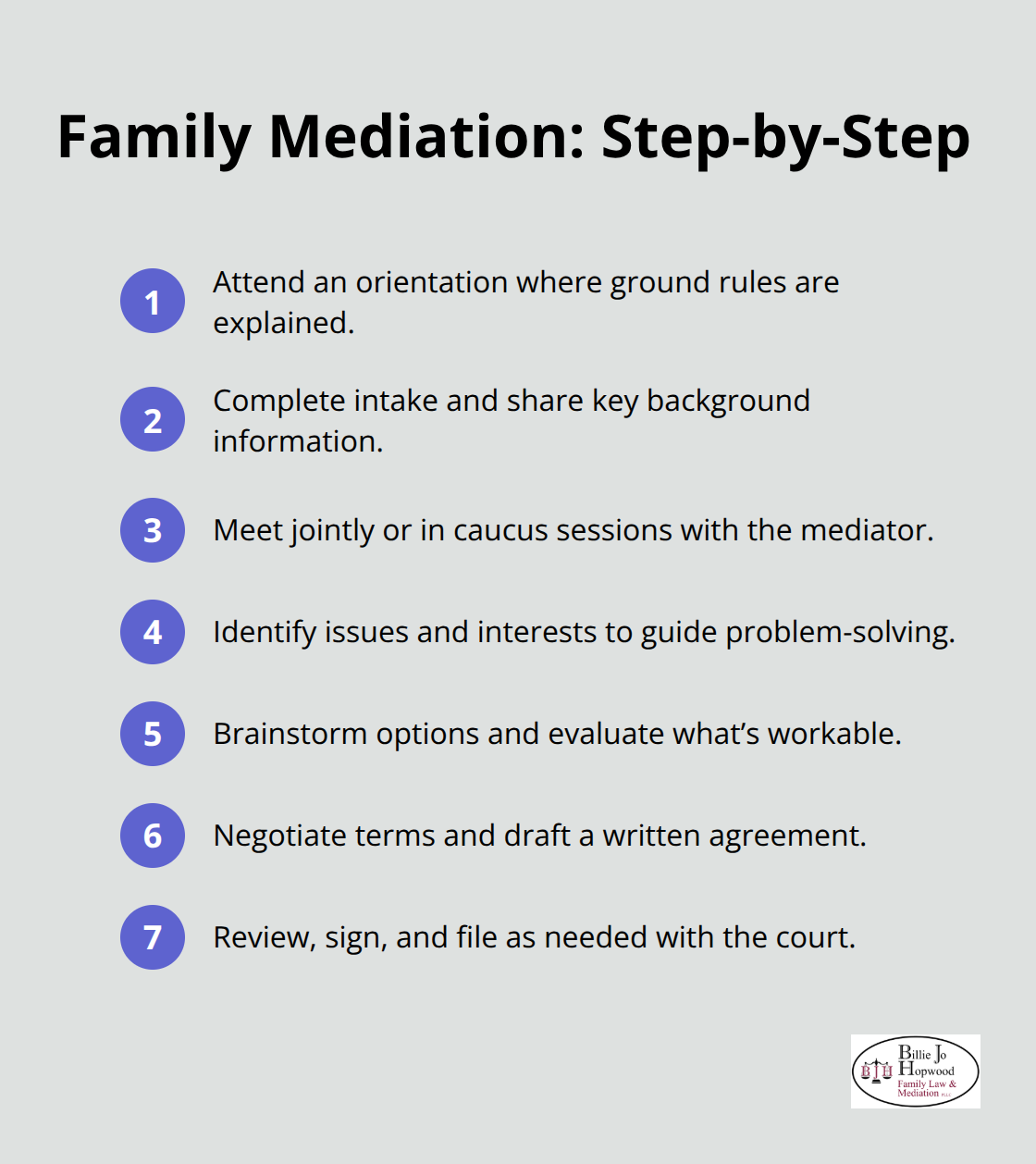
Most mediation begins with an orientation session where mediators explain rules and procedures. Parents then meet with the mediator either together or separately, depending on the situation and comfort levels. The mediator helps identify key issues, explores various options, and assists in the creation of detailed parenting plans.

Compact steps outlining the family mediation process - what is mediation family law

In California, mediation is required by law before judges will hear custody cases, while Texas Civil Practice and Remedies Code Section 154.002 promotes mediation as the preferred dispute resolution method. Sessions focus on practical matters like living arrangements, decision-making authority, and parenting schedules rather than blame assignment or past grievance litigation.

Why Mediation Outperforms Traditional Court Battles

Court proceedings follow rigid procedures with judges who make final decisions based on legal arguments and evidence. Mediation allows families to maintain control over their outcomes while they address emotional and practical needs that courts often overlook. Courts reported that 67% of cases reached agreement through mediation in 2024, compared to the unpredictable nature of court trials. Mediated agreements also show higher compliance rates than court-ordered judgments because parties actively participate in solution creation. The confidential nature of mediation encourages open communication, while court proceedings become part of public record and can damage relationships permanently.

These advantages make mediation particularly effective for specific types of family law cases where cooperation and customized solutions matter most.

Why Mediation Saves Money and Time

Family law mediation delivers measurable financial advantages that traditional litigation cannot match. The American Bar Association reports that mediated divorce cases cost an average of $3,000 to $7,000, while litigated divorces range from $15,000 to $30,000 per spouse. Court battles drag on for 12 to 18 months on average, but mediation typically resolves disputes within 2 to 4 months. These numbers reflect real savings that families can redirect toward rebuilding their lives rather than funding attorney fees and court costs.

Mediation Cuts Legal Expenses Dramatically

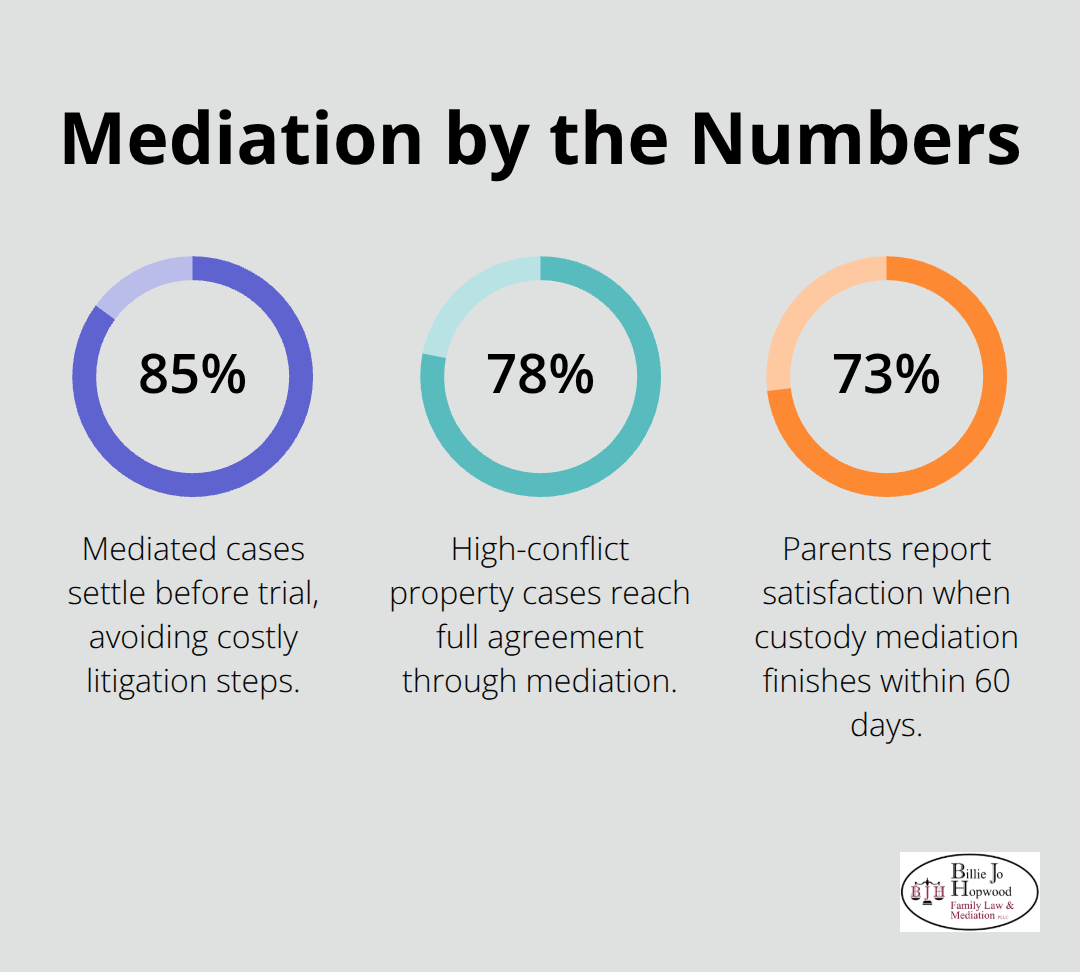
Attorney fees represent the largest expense in contested divorces, with hourly rates that range from $200 to $500 in most markets. Mediation reduces these costs because attorneys spend fewer hours on case preparation, discovery, and court appearances. Research from the Institute for the Advancement of the American Legal System shows that 85% of mediated cases settle before trial, which eliminates expensive litigation procedures like depositions and expert witness fees. Court filing fees alone can exceed $400, while mediation sessions typically cost $150 to $300 per hour (split between both parties).

Key percentages that highlight mediation’s effectiveness

Speed Creates Additional Value Beyond Cost Savings

Mediation sessions can be scheduled within weeks rather than waiting months for court dates. The McCammon Group reports that approximately 85% of their mediated cases reach settlement, often within a single day or series of shorter sessions. This speed prevents the emotional toll that extended court battles place on families, particularly children who benefit from quick resolution of custody arrangements. Parents who complete mediation within 60 days report 40% less stress compared to those involved in year-long court proceedings (according to studies from the American Psychological Association).

Control Over Outcomes Provides Long-Term Benefits

Mediation empowers families to craft solutions that courts cannot provide through rigid legal frameworks. Parents maintain decision-making authority over their children’s schedules, living arrangements, and future modifications to agreements. This control leads to higher compliance rates with mediated agreements compared to court-ordered judgments, as parties actively participate in creating their own solutions. The flexibility of mediation saves money and allows families to address unique circumstances that standard court orders often overlook, setting the foundation for successful co-parenting relationships.

Which Cases Benefit Most From Mediation

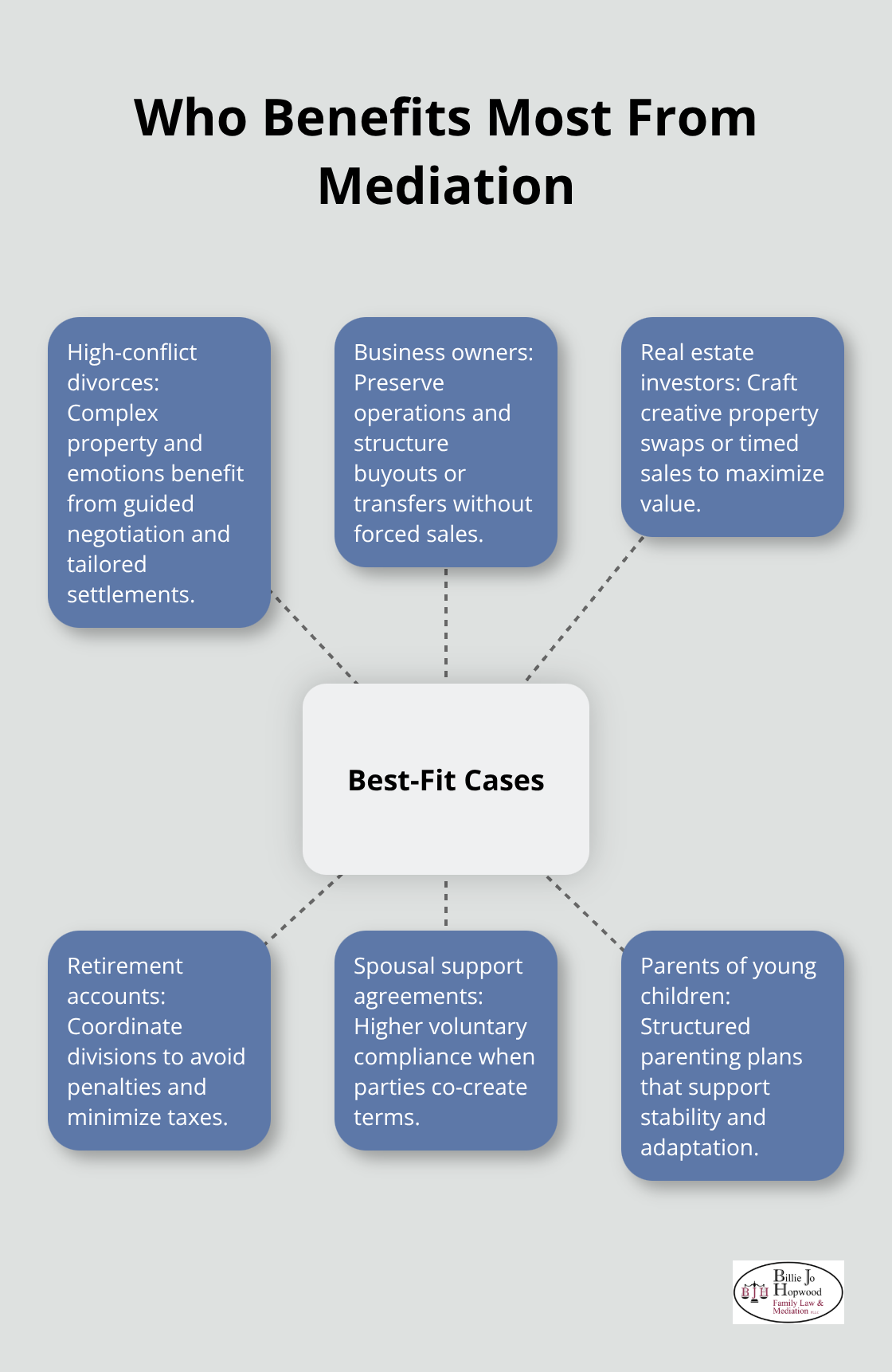
Mediation works best when both parties have assets to divide, children to protect, and relationships to preserve. High-conflict divorces that involve complex property portfolios see the greatest success rates, with 78% of cases that reach full agreement according to the National Center for State Courts. Business owners, real estate investors, and couples with retirement accounts benefit most because mediation allows creative solutions that courts cannot provide. Property division mediation prevents forced sales of family businesses and allows couples to structure asset transfers that minimize tax consequences. Spousal support negotiations through mediation result in agreements that 89% of parties follow voluntarily (compared to 64% compliance with court-ordered alimony).

Hub-and-spoke visualization of cases best suited for mediation - what is mediation family law

Property Division Requires Strategic Mediation Timing

Couples with marital assets that exceed $250,000 should start mediation within 30 days of separation to prevent asset depletion and preserve value. Real estate markets change rapidly, which makes quick resolution essential for maximizing property values during division. Retirement account divisions through mediation avoid the 10% early withdrawal penalties that court orders often trigger, which saves couples thousands in unnecessary fees. Business valuations that are completed before mediation sessions provide concrete numbers that facilitate faster agreements, while delayed valuations create disputes that extend resolution timelines by an average of 4 months.

Child Custody Mediation Succeeds With Proper Preparation

Parents who complete mediation within 60 days of filing custody petitions report 73% satisfaction rates with their parenting plans, according to the American Academy of Matrimonial Lawyers. Successful custody mediation requires both parents to focus on children’s school schedules, extracurricular activities, and medical needs rather than personal grievances. California courts mandate mediation for all custody cases, while Texas courts require it in 85% of contested custody disputes (which reflects the proven effectiveness of this approach). Parents with children under age 10 achieve the highest success rates because younger children adapt more easily to structured parenting schedules that mediation creates.

Final Thoughts

Family law mediation transforms how families resolve disputes by placing control back in their hands. The evidence shows clear advantages: mediated cases cost 50-75% less than litigation, resolve 3-4 times faster, and achieve 85% settlement rates. Parents who understand what is mediation family law gain access to flexible solutions that courts cannot provide through rigid legal frameworks.

The decision to choose mediation depends on your willingness to communicate and compromise. Families with complex assets, business interests, or children benefit most from this collaborative approach. The confidential nature of mediation protects relationships while creating agreements that both parties actively support.

We at Billie Jo Hopwood Family Law & Mediation, PLLC guide Melbourne, Florida families through divorce, child custody, and support matters with compassionate representation. Our approach combines legal knowledge with mediation skills to help families reach agreements that work for everyone involved. The first step toward mediation means choosing a path that prioritizes your family’s future over prolonged conflict (rather than extended court battles).

Finding a Family Law Attorney with Flexible Payments

Legal fees can create significant financial stress during family disputes. Many Melbourne Florida families struggle to afford quality legal representation when they need it most.

We at Billie Jo Hopwood Family Law & Mediation, PLLC understand that finding a family law attorney that takes payments requires careful research. The right payment arrangement can make professional legal help accessible without overwhelming your budget.

What Payment Methods Do Family Law Attorneys Accept?

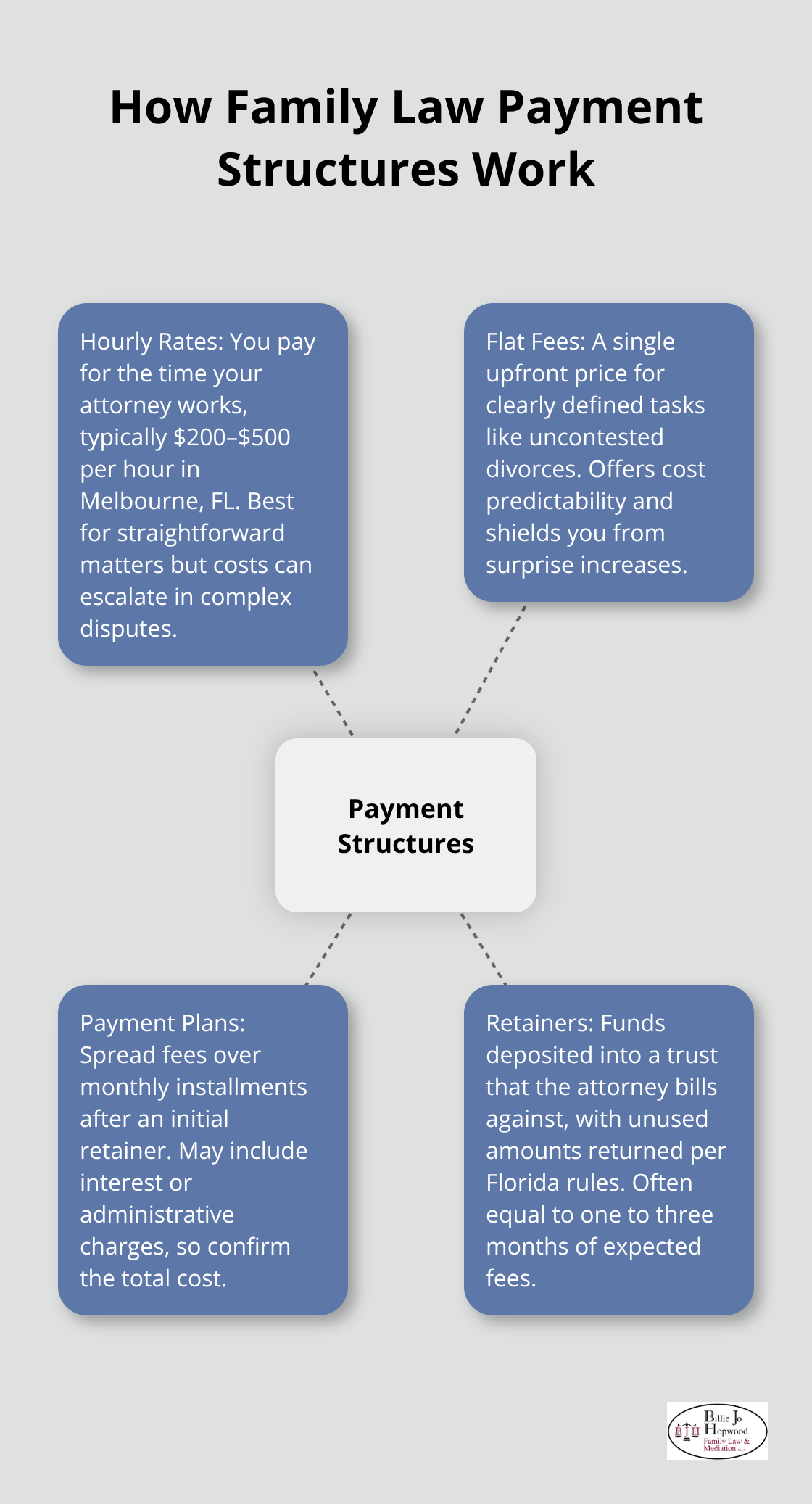
Family law attorneys in Melbourne Florida typically offer three primary payment structures, each with distinct advantages and drawbacks. Hourly rates remain the most common approach, with fees that range from $200 to $500 per hour based on attorney experience and case complexity. The American Bar Association reports that approximately 35% to 50% of these hourly fees cover overhead costs (office rent and staff salaries). This structure works best for straightforward cases but can become expensive during lengthy disputes or complex negotiations.

Overview of hourly rates, flat fees, payment plans, and retainers in family law

Flat Fee Arrangements Provide Cost Predictability

Flat fee arrangements offer complete cost transparency upfront, which makes them ideal for uncontested divorces and simple custody modifications. These fixed payments typically range from $1,500 to $5,000 for uncontested cases in Florida. Unlike hourly rates, flat fees protect clients from unexpected cost increases if complications arise. However, attorneys may charge additional fees for services beyond the original scope, so clients must clearly define what services the flat fee covers before they sign any agreement.

Payment Plans Make Legal Services Accessible

Monthly payment plans allow families to spread legal costs over several months rather than pay large sums upfront. Most attorneys require an initial retainer of 25% to 50% of the total expected fees, with the remainder paid in installments. Payment plans often include interest charges or administrative fees, so clients should calculate the total cost before they commit. Some firms accept credit card payments (which provide additional flexibility but potentially increase overall costs through credit card interest rates).

Retainer Agreements Function as Legal Fee Insurance

Retainer agreements require clients to deposit funds into a trust account before legal work begins. Attorneys draw from this account as they complete billable hours and provide detailed monthly statements that show the balance. Florida law requires attorneys to keep retainer funds in separate trust accounts and return unused portions to clients. Retainers typically equal one to three months of expected legal fees, with most family law cases that require $2,500 to $10,000 initial deposits based on case complexity and anticipated duration.

Understanding these payment structures helps families make informed decisions, but equally important is knowing what questions to ask potential attorneys about their fee arrangements. For families seeking cost-effective alternatives, divorce mediation offers significantly lower costs compared to traditional litigation.

How Do You Choose Payment-Flexible Attorneys

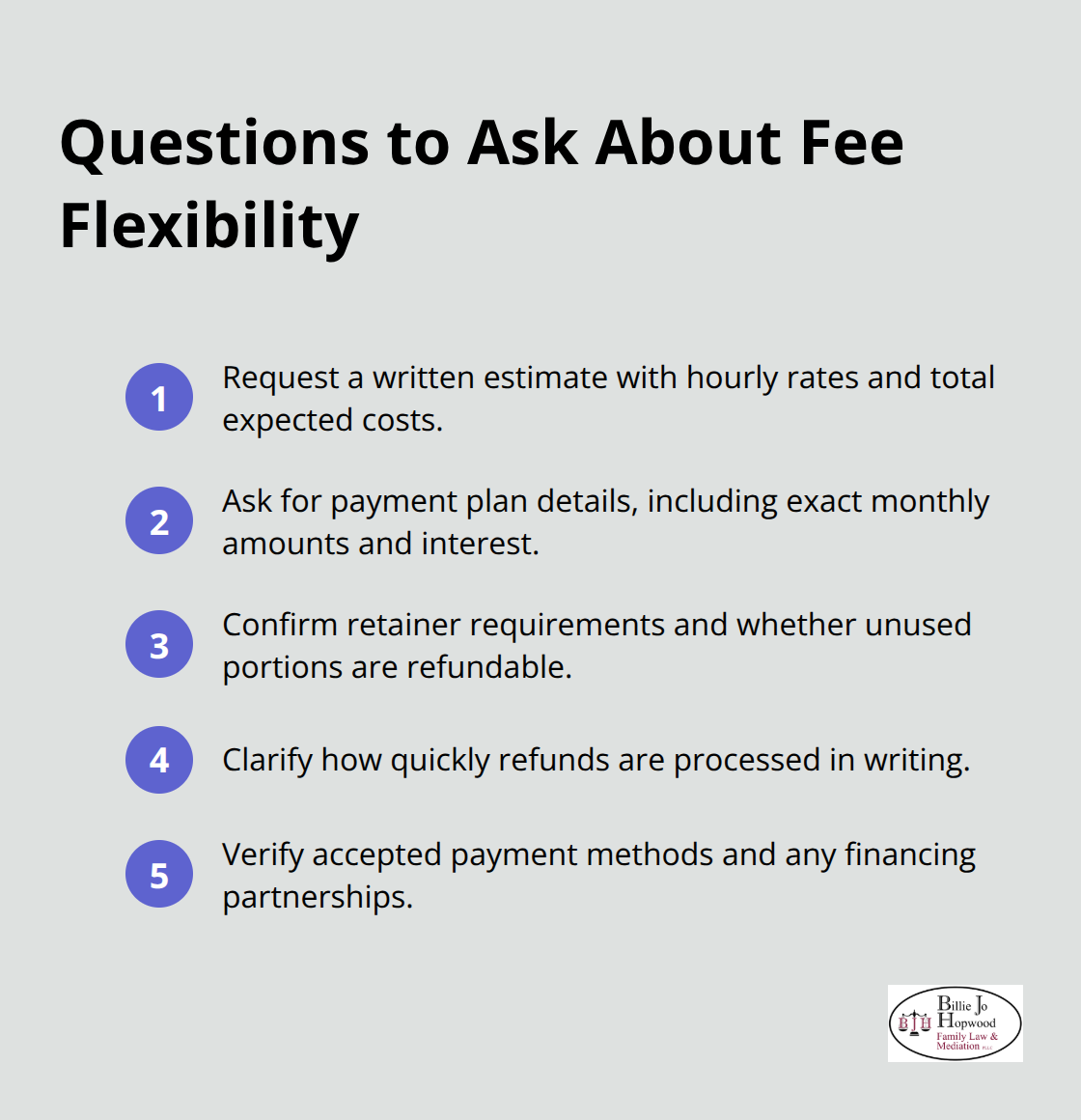
Attorneys who accommodate flexible payments require direct questions about specific fee arrangements and payment options during initial consultations. Ask potential attorneys to provide written estimates that break down hourly rates, anticipated total costs, and available payment plans with exact monthly amounts and interest rates. The Florida Bar Foundation reports that clients who receive detailed fee breakdowns upfront experience 40% fewer billing disputes later. Request information about retainer requirements (including whether unused portions are refundable and how quickly refunds are processed). Ask about accepted payment methods, as attorneys who accept credit cards or offer financing partnerships typically demonstrate greater payment flexibility.

Compact checklist of key questions to discuss with a payment-flexible family law attorney - family law attorney that takes payments

Warning Signs During Fee Discussions

Attorneys who refuse to discuss fees during consultations or provide only vague cost estimates often lack transparency in their billing practices. Avoid lawyers who demand full payment upfront without payment plans, as this indicates inflexibility that could create financial strain during your case. The American Bar Association found that 60% of client complaints involve billing disputes, with unclear fee agreements as the primary cause. Red flags include attorneys who cannot explain their billing procedures clearly, refuse to provide written fee agreements, or pressure clients to sign retainer agreements immediately without review time. Attorneys who dismiss questions about costs or seem uncomfortable when they discuss payment options may not prioritize client financial concerns throughout the legal process.

Written Payment Agreements Protect Your Interests

All payment arrangements must be documented in writing before legal work begins, as verbal agreements often lead to misunderstandings and disputes. Written agreements should specify hourly rates, flat fee amounts, payment schedules, interest charges on installments, and consequences for missed payments. Florida law requires attorneys to provide written fee agreements for cases expected to exceed $100, and these agreements must clearly outline the scope of services covered. The agreement should include details about additional costs such as court filing fees, copying charges, and expert witness fees (which can add hundreds of dollars to your total legal costs). Clients have the right to request modifications to payment terms before they sign, and attorneys who refuse reasonable payment arrangement requests may not suit budget-conscious families.

These payment considerations become even more important when you explore alternative approaches to traditional legal representation that can significantly reduce your overall costs.

What Cost-Saving Alternatives Exist Beyond Traditional Legal Representation

Legal aid organizations in Melbourne Florida provide free or reduced-cost family law services to individuals who qualify, with income limits typically set at 125% of the federal poverty level (approximately $37,000 annually for a family of four). The Legal Aid Society of Brevard County offers comprehensive family law assistance that includes divorce proceedings, custody modifications, and domestic violence protection orders at no cost to eligible clients. Pro bono programs through the Florida Bar connect low-income families with volunteer attorneys who donate their time, though waiting lists often extend three to six months due to high demand. The National Legal Aid & Defender Association reports that only 20% of individuals who seek legal help receive assistance, which makes early application for these services essential.

Family Law Mediation Reduces Costs by 70%

Family law mediation costs between $150 and $300 per hour compared to $400 to $600 per hour for traditional litigation, with most cases that resolve in four to eight sessions rather than months of court battles. The Florida Dispute Resolution Center found that mediated divorces average $3,000 in total costs while litigated divorces often exceed $15,000 per spouse. Mediation eliminates court fees, reduces attorney hours, and speeds resolution time from 12-18 months to 2-4 months for typical cases. Couples who choose mediation retain control over decisions rather than leave outcomes to judges, and 85% of mediated agreements remain in effect without modification compared to 60% of court-ordered arrangements.

Comparison of how often mediated vs. court-ordered family law agreements remain in effect - family law attorney that takes payments

Unbundled Legal Services Target Specific Needs

Unbundled legal services allow clients to purchase specific legal tasks rather than full representation, which reduces costs by 50% to 80% compared to traditional arrangements. Common unbundled services include document preparation ($500 to $1,000), legal research ($200 to $400), and limited court appearances ($800 to $1,500). Clients handle routine tasks themselves while attorneys focus on complex legal issues that require professional guidance. The American Bar Association reports that unbundled services work best for motivated clients who can follow instructions and meet deadlines independently, which makes this option unsuitable for individuals who need extensive support throughout their case.

Final Thoughts

Melbourne Florida families need a family law attorney that takes payments to make legal representation affordable during difficult times. Direct communication about fee structures prevents misunderstandings and builds trust with your legal counsel. Multiple attorney consultations allow you to compare payment options and find arrangements that fit your budget.

Cost-effective legal help combines traditional representation with alternative approaches that reduce expenses. Legal aid organizations serve qualifying families, mediation cuts costs by 70% compared to litigation, and unbundled services let you purchase only necessary legal assistance. These options make professional guidance accessible without overwhelming financial strain.

Melbourne Florida families who face family law matters should contact attorneys to discuss payment structures and available options. We at Billie Jo Hopwood Family Law & Mediation, PLLC provide guidance through divorce, child custody, alimony, and child support cases (with payment arrangements designed to help families access quality legal representation). Professional legal support becomes achievable when attorneys offer flexible payment solutions that work with your financial situation.

Collaborative Family Law: A Cooperative Approach

Family disputes don’t have to end in courtroom battles. Collaborative family law offers a peaceful alternative where both parties work together with trained professionals to reach mutually beneficial agreements.

At Billie Jo Hopwood Family Law & Mediation, PLLC, we’ve seen how this approach transforms difficult situations into manageable conversations. This method prioritizes cooperation over confrontation, saving families time, money, and emotional stress.

What Makes Collaborative Family Law Different

Collaborative family law operates on a simple premise: both parties sign a written agreement that commits them to resolve their disputes outside of court. This contract creates powerful incentives for everyone to cooperate because attorneys must withdraw if the process fails and litigation becomes necessary. The International Academy of Collaborative Professionals reports that 86% of collaborative cases reach full resolution without court intervention.

Percentage of collaborative family law cases that reach full resolution without court intervention

The Team-Based Structure

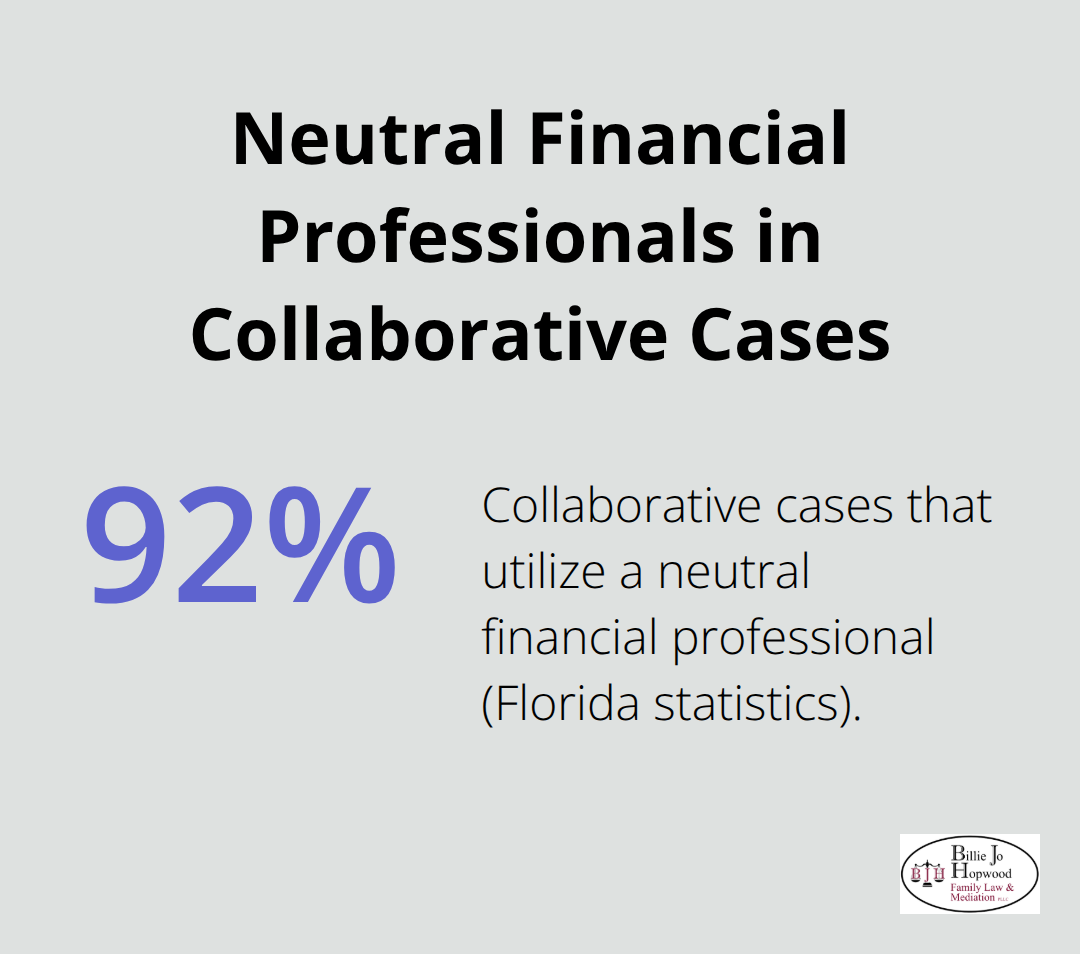
Traditional divorce pits each side against the other with combative attorneys. Collaborative law assembles a neutral team instead. Each spouse selects a collaboratively-trained attorney, but the process also includes shared professionals like financial analysts and mental health coaches. This structure eliminates the dueling professionals approach that drives up costs in litigation. The American Academy of Matrimonial Lawyers notes that 92% of collaborative cases utilize a neutral financial professional, while 84% include a mental health facilitator. These professionals work for both parties simultaneously, not against each other.

Control Over Timing and Outcomes

Traditional litigation follows court schedules that can stretch cases for years. Collaborative law allows families to schedule meetings at their convenience (often completing the entire process within six months). Florida data shows 60% of collaborative divorces finish within this timeframe. More importantly, the couple makes all decisions together rather than having a judge impose solutions. This control leads to higher satisfaction rates and better compliance with agreements long-term.

Privacy Protection

Court proceedings become public record, exposing personal family matters to anyone who requests the files. Collaborative law maintains complete confidentiality throughout the process. All discussions, financial information, and family details remain private between the parties and their team. This privacy protection proves particularly valuable for families with children or public-facing careers (where reputation matters significantly).

The collaborative approach requires both parties to commit fully to the process, which raises important questions about whether this method suits every family situation.

Why Choose Collaborative Family Law Over Court

Cost Savings That Matter

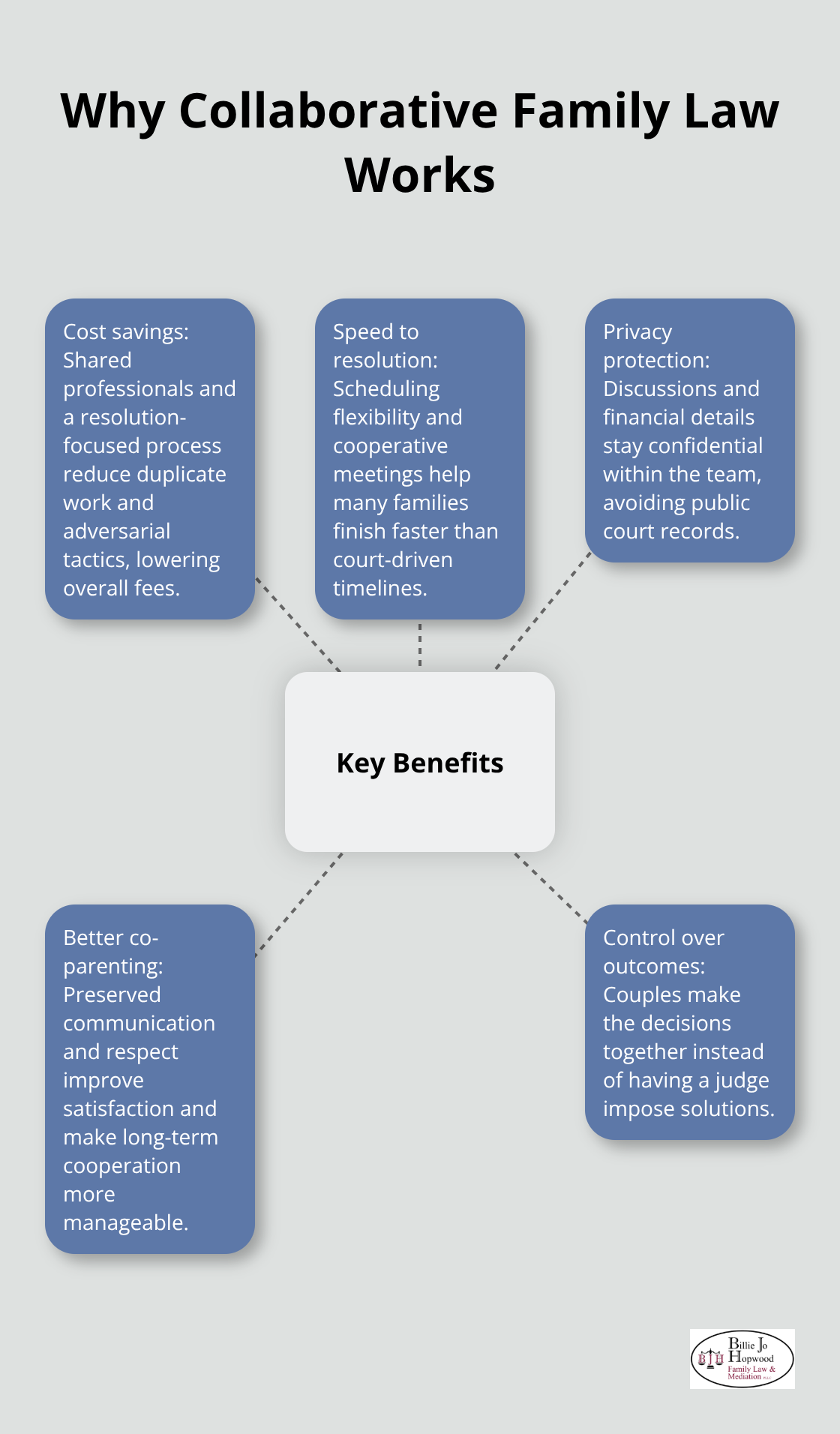
The financial reality of collaborative family law speaks volumes about its value. Florida data shows 63% of collaborative cases cost between $20,000 and $75,000 total, while traditional litigation often exceeds $100,000 per party. This dramatic cost difference stems from the cooperative structure that eliminates adversarial tactics. When both attorneys commit to resolution rather than prolonged conflict, billable hours drop significantly. The shared professional model also cuts expenses since one financial analyst and one mental health facilitator serve both parties instead of each side hiring separate professionals.

Speed Protects Your Financial Future

Traditional divorce cases drag through court systems for 12 to 24 months on average and generate massive legal fees throughout this period. Collaborative cases complete within six months 60% of the time according to International Academy of Collaborative Professionals data. This speed protects your finances in two ways: lower legal costs and faster access to your assets. Lengthy litigation ties up marital property while attorneys battle over every detail. Collaborative law frees up resources quickly so both parties can rebuild their financial lives.

Better Relationships Lead to Better Outcomes

Children benefit most when parents maintain respectful communication post-divorce. The Journal of Divorce & Remarriage reports higher satisfaction rates among families who choose collaborative methods over litigation. This satisfaction stems from preserved relationships that make co-parenting manageable long-term. Collaborative law builds communication skills during the divorce process rather than destroys them through adversarial combat. Parents learn to negotiate effectively, compromise respectfully, and focus on solutions instead of blame.

The American Psychological Association research confirms that cooperative divorce methods produce lower overall conflict (which directly translates to reduced legal expenses and faster resolution timelines). These skills serve families for decades after the divorce finalizes and create stable environments for children while reducing future legal conflicts.

Hub-and-spoke chart showing key benefits of collaborative family law for U.S. families

However, collaborative law works best only under specific circumstances that require careful consideration.

When Does Collaborative Law Succeed

Collaborative law works best when both parties maintain mutual respect despite their differences and share a genuine commitment to avoid court battles. Trust forms the foundation of successful collaborative cases, even when couples disagree on major issues like property division or parenting arrangements. The International Academy of Collaborative Professionals data shows that couples who can communicate effectively without screaming matches or personal attacks achieve resolution in 86% of cases.

High-Asset Cases Benefit Most

Complex financial situations with significant assets, business interests, or retirement accounts require detailed analysis that collaborative law handles exceptionally well. Florida statistics reveal that 92% of collaborative cases utilize neutral financial professionals who organize complex financial information and create realistic post-divorce budgets. These cases justify the collaborative approach because the cost savings over litigation become substantial when dealing with intricate asset valuations and tax implications (particularly for business owners or professionals with multiple income streams).

Percentage of collaborative cases using a neutral financial professional

Communication Skills Matter

Successful collaborative cases require both parties to express their needs clearly and listen to their spouse’s concerns without interrupting or attacking. Couples must focus on future solutions rather than past grievances to make progress in meetings. The process demands emotional maturity from both spouses, as they need to separate their feelings about the marriage from practical decisions about finances and children.

Domestic Violence Disqualifies Most Cases

Collaborative law fails when power imbalances or domestic violence history exists between parties. The cooperative model requires both spouses to negotiate in good faith, which becomes impossible when one party fears the other or cannot speak freely during meetings. Mental health professionals involved in collaborative cases identify these situations quickly, but families with documented abuse patterns should pursue traditional litigation with protective measures instead.

Financial Transparency Requirements

The collaborative process also struggles when one party refuses to disclose financial information honestly or attempts to hide assets from the neutral financial professional. Both spouses must provide complete financial documentation and answer questions truthfully about their income, debts, and assets. This transparency requirement eliminates cases where one party has a history of financial deception or refuses to cooperate with discovery requests (which would make the collaborative process ineffective from the start).

Final Thoughts

Collaborative family law provides clear advantages over traditional litigation through its cooperative structure and shared professional approach. The 86% success rate, combined with cost savings between $20,000-$75,000 compared to litigation’s $100,000+ per party, makes this method financially attractive for many families. The six-month completion timeframe for 60% of cases offers faster resolution while complete privacy protects sensitive family matters.

The decision to pursue collaborative family law depends on your family’s specific circumstances. Couples with mutual respect, complex financial situations, and children benefit most from this approach. Cases with domestic violence or financial deception require traditional litigation instead (where protective measures can be implemented effectively).

We at Billie Jo Hopwood Family Law & Mediation, PLLC guide Melbourne, Florida families through collaborative processes with compassionate representation in divorce, child custody, alimony, and child support matters. The first step involves a consultation to assess whether collaborative family law suits your situation. This initial meeting evaluates your family dynamics, financial complexity, and communication abilities to determine the best path forward.

Florida Family Law Financial Affidavit Guide

Florida family law cases require detailed financial disclosure through court-mandated affidavits. These documents directly impact alimony, child support, and property division decisions.

At Billie Jo Hopwood Family Law & Mediation, PLLC, we see how proper completion of your Florida family law financial affidavit can make or break your case outcome. Small errors often lead to significant legal complications and unfavorable rulings.

When Financial Affidavits Are Required in Family Law Cases

Florida Family Law Rules of Procedure require financial affidavits in all divorce, paternity, and child support cases without exception. The court mandates these documents within specific timeframes, and missed deadlines can derail your entire case. You must file Form 12.902(b) if your annual gross income falls below $50,000, while Form 12.902(c) applies to incomes of $50,000 or more. The Florida Supreme Court designed these two versions to capture different levels of financial complexity, with the long form that requires detailed asset valuations and comprehensive expense breakdowns that many people underestimate.

Court-Imposed Deadlines You Cannot Miss

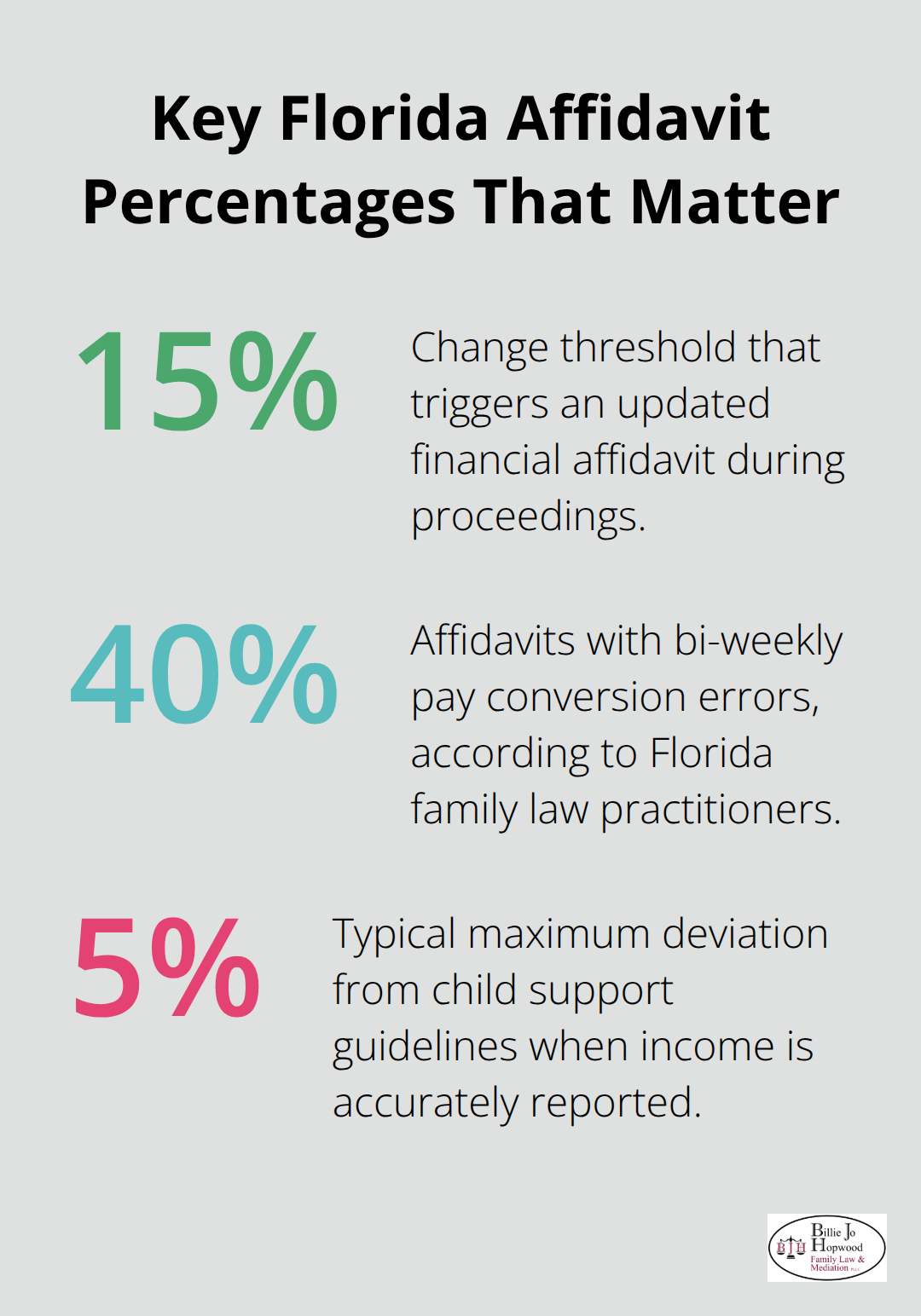
Courts typically require financial affidavits within 45 days of service in divorce cases, though specific counties may impose shorter deadlines. Updated affidavits become mandatory whenever your financial circumstances change more than 15 percent during proceedings. The Mason v. Mason case established that courts can set aside final judgments without time limits when parties provide inaccurate financial information (this makes precision non-negotiable from day one).

Visualization of crucial Florida family law affidavit percentages: update threshold, common error rate, and guideline deviation. - florida family law financial affidavit

Income Thresholds and Form Selection

The $50,000 income threshold applies to total gross annual income from all sources, which includes wages, bonuses, rental income, and investment returns. Many people miscalculate bi-weekly payments when they multiply by 24 instead of 26, which creates immediate credibility issues. Seasonal income variations require careful calculation over 12 months, not cherry-picked favorable periods.

Penalties for Errors and Omissions

Florida Statute 61.30 imposes severe penalties for incomplete or false financial disclosures, which include contempt of court charges and attorney fee sanctions. Misrepresentation of income amounts (even small ones) can trigger perjury charges, since affidavits are signed under oath. Courts regularly cross-examine financial statements, and inconsistencies between tax returns and affidavits often result in case dismissals or unfavorable decisions that affect support calculations for years.

The accuracy of your financial affidavit directly determines how courts calculate your support obligations and divide marital assets.

Step-by-Step Guide to Completing Your Financial Affidavit

Document Collection Strategy That Works

Start with your most recent tax return, which serves as your financial foundation for the affidavit. Collect 12 months of bank statements from all accounts, including checking, savings, and investment accounts that many people forget to include. Gather pay stubs from the past three months, W-2 forms, 1099s, and any documentation of rental income or business profits.

The Florida Supreme Court forms require specific supporting evidence, and missing documents create immediate red flags during court review. Property deeds, vehicle titles, retirement account statements, and insurance policies complete your asset documentation. Credit card statements, loan documents, and mortgage information provide the liability details courts scrutinize heavily.

Income Calculation Methods That Pass Court Scrutiny

Calculate monthly income with year-to-date figures divided by weeks worked, not calendar months, which prevents the common error of understating seasonal fluctuations. Workers with bi-weekly pay must multiply by 26 pay periods annually, never 24, since this mistake appears in 40 percent of affidavits according to Florida family law practitioners.

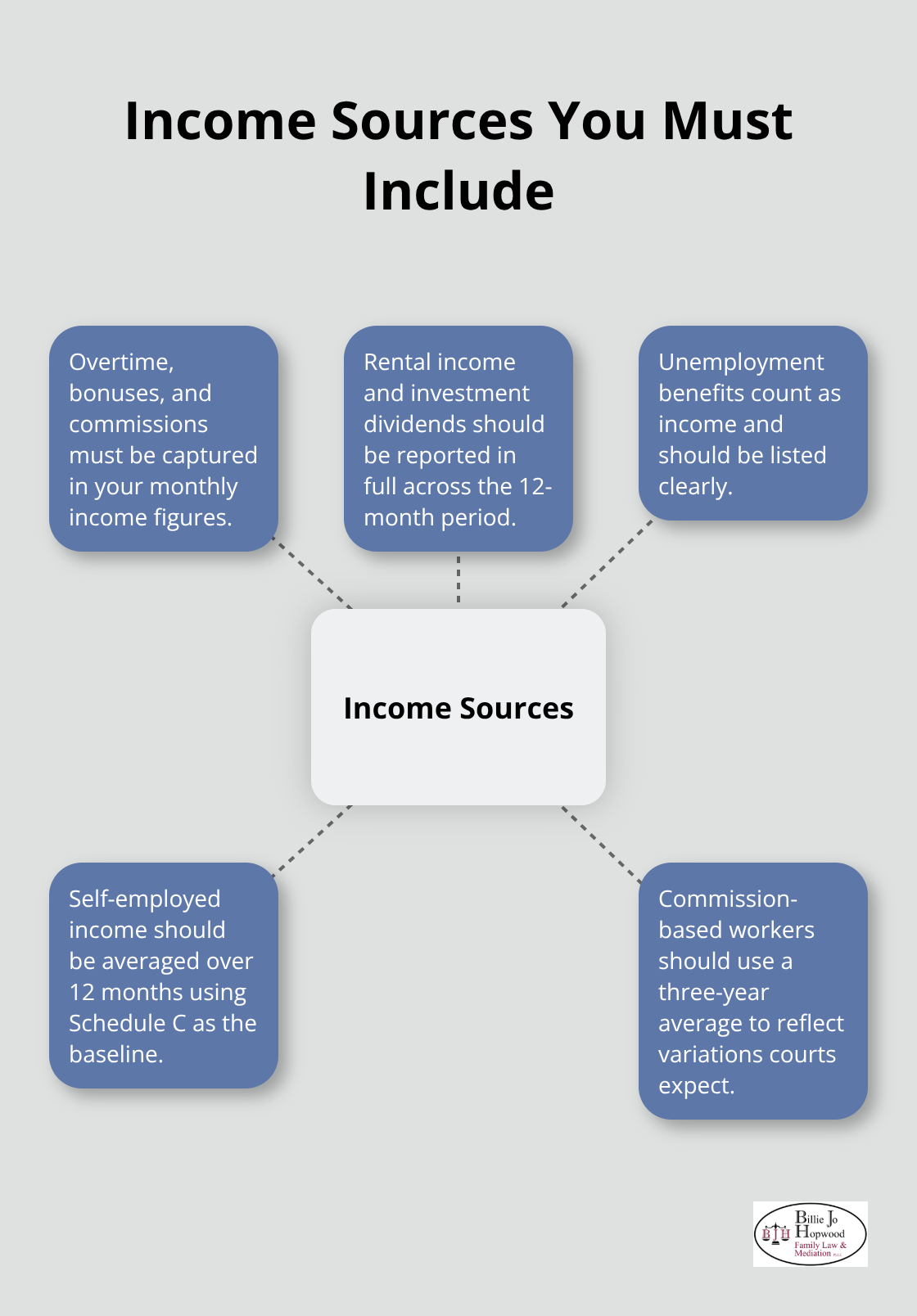
Hub-and-spoke chart showing required income sources and calculation methods for Florida financial affidavits.

Include all income sources: overtime pay, bonuses, commissions, rental income, investment dividends, and unemployment benefits. Self-employed individuals must average their net business income over 12 months with Schedule C from tax returns as the baseline. Commission-based workers should calculate a three-year average to account for income variations that courts expect to see documented thoroughly.

Expense Reporting That Withstands Challenge

Monthly expenses require conversion of all irregular payments into monthly equivalents: annual insurance premiums divided by 12, quarterly property taxes divided by three. Housing costs include mortgage payments, property taxes, insurance, utilities, and maintenance expenses that total your actual monthly housing burden.

Transportation expenses cover car payments, insurance, fuel, and maintenance costs calculated from actual receipts over six months. Childcare, medical expenses, and debt payments must reflect current obligations with supporting documentation readily available for court inspection.

Common Mistakes to Avoid When Completing Forms

Courts reject affidavits that contain mathematical errors in income calculations (particularly bi-weekly pay conversions). Many filers underestimate their monthly expenses or fail to include all income sources, which creates credibility issues during hearings. Asset valuations must reflect current fair market values, not purchase prices or wishful thinking about property worth.

Never round numbers to convenient figures or estimate expenses without documentation. Courts compare your reported expenses against your income levels, and unrealistic ratios trigger additional scrutiny. The accuracy of these calculations directly affects how courts determine your support obligations and property division rights.

How Financial Affidavits Impact Your Case Outcome

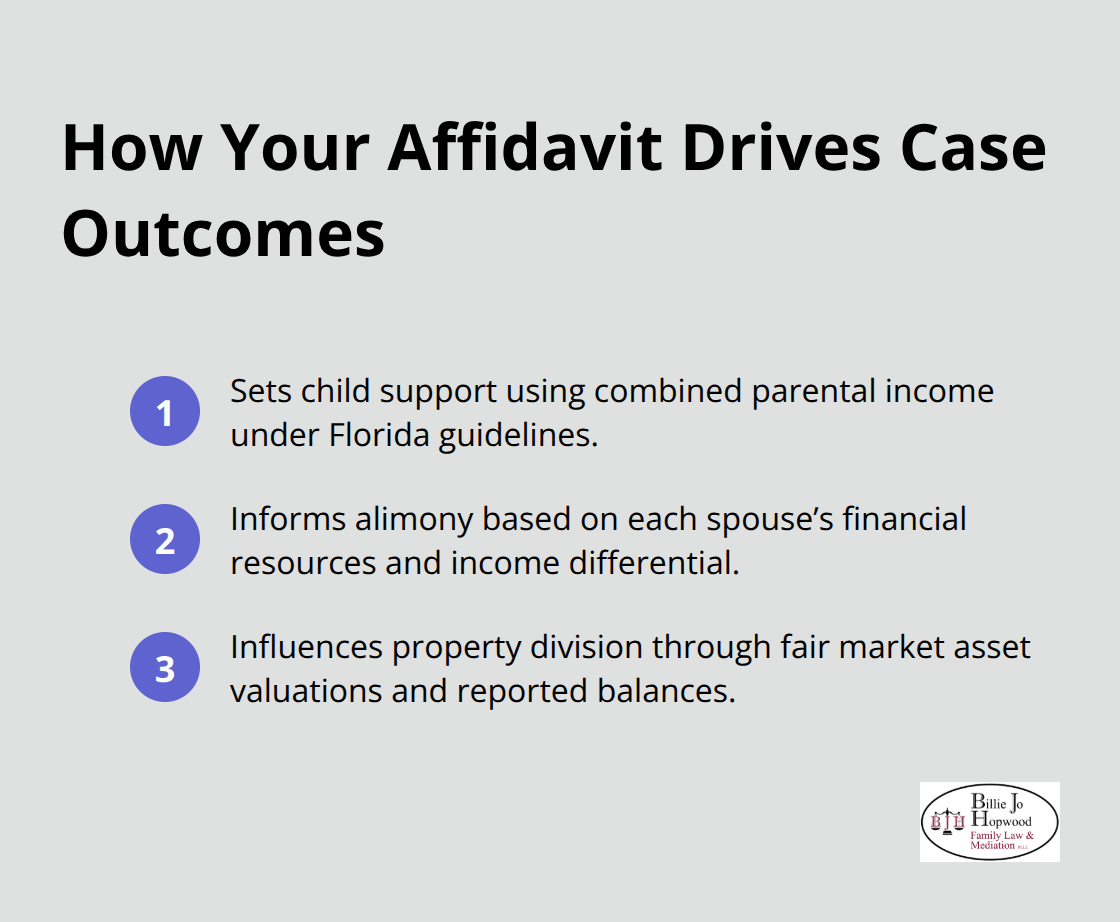
Your financial affidavit numbers convert directly into dollar amounts that determine your monthly support obligations and property division percentages. Courts apply Florida’s child support guidelines that calculate payments based on combined parental income, with deviations rarely exceeding 5 percent from guideline amounts when affidavits show accurate income reports. Alimony calculations rely heavily on the income differential between spouses, with Florida Statute 61.08 requiring courts to consider the financial resources of each party as disclosed in their affidavits.

Compact list summarizing how financial affidavits affect child support, alimony, and property division. - florida family law financial affidavit

Child Support Calculations Follow Your Income Reports

Child support amounts stem from your gross monthly income figures, and a $500 monthly income underreport can reduce your support obligation by $75 to $125 monthly according to Florida’s percentage-based guidelines. Courts multiply your combined monthly income by statutory percentages: 20 percent for one child, 25 percent for two children, and higher percentages for additional children.

The state’s child support worksheet uses your exact income figures to calculate obligations that remain in effect for years. Courts rarely deviate from these calculations when parties provide complete and accurate financial information in their affidavits.

Alimony Awards Depend on Income Differences

Alimony determinations factor your ability to pay based on net income after taxes and mandatory deductions, with permanent alimony awards typically ranging from 20 to 35 percent of the income difference between spouses. Temporary support orders during proceedings use the same affidavit data, making initial accuracy vital since these amounts often become baseline figures for final settlements.

Courts examine the standard of living established during marriage through your expense reports to determine appropriate alimony amounts. Higher reported monthly expenses can justify larger alimony awards when the requesting spouse demonstrates legitimate financial need.

Property Division Reflects Asset Valuations

Asset valuations you report directly affect your share of marital property, with Florida’s equitable distribution requiring fair market values rather than sentimental or purchase price figures. Real estate appraisals that differ significantly from your affidavit values can shift property division by tens of thousands of dollars.

Retirement account balances determine whether you receive offsetting assets or face division orders that affect your long-term financial security. Investment accounts, business interests, and personal property values all factor into the final distribution calculations that courts base on your affidavit figures.

Attorney Fee Awards Based on Income Disparity

Attorney fee awards depend on the income disparity shown in your affidavits, with higher-earning spouses often ordered to pay the other party’s legal costs when significant income gaps exist. Courts consider both parties’ ability to pay their own attorney fees when making these determinations.

Florida Statute 61.16 allows courts to award attorney fees based on the financial resources and need of each party as shown in their financial affidavits. Accurate income reporting protects you from unexpected fee obligations or helps you secure necessary legal representation when you cannot afford it.

Final Thoughts

Your Florida family law financial affidavit serves as the financial foundation for every major decision in your case. Courts base alimony calculations, child support amounts, and property division percentages directly on the numbers you provide. A single miscalculation can cost you thousands of dollars in support obligations or property rights that last for years.

The Mason v. Mason precedent demonstrates how inaccurate financial disclosure can void final judgments without time limits. This reality makes precision non-negotiable from your first filing through case resolution. Courts scrutinize every figure, compare affidavits against tax returns, and impose severe penalties for discrepancies that damage your credibility permanently.

Professional legal guidance becomes invaluable when you navigate Florida’s complex financial disclosure requirements (especially with income calculations and asset valuations). We at Billie Jo Hopwood Family Law & Mediation, PLLC help Melbourne families complete accurate affidavits that protect their financial interests throughout divorce and family law proceedings. Your financial future depends on accurate documentation, proper income calculations, and timely updates when circumstances change.

Family Law Defined: Key Concepts Explained

Family law affects millions of American families every year, yet many people struggle with basic family law definitions and procedures. Understanding these legal concepts becomes essential when facing divorce, custody disputes, or support issues.

At Billie Jo Hopwood Family Law & Mediation, PLLC, we see how proper knowledge helps families navigate complex legal situations more effectively. This guide breaks down the fundamental concepts you need to know.

What Exactly Is Family Law

Family law governs legal relationships between family members and addresses disputes that arise within these relationships. This area of law covers divorce proceedings, child custody arrangements, spousal support, adoption, domestic violence protection, and property division.

Florida family law operates under state jurisdiction, meaning Florida Statutes and local court rules govern most family matters rather than federal law. The Brevard County Circuit Court handles family law cases in Melbourne, with divorce filing fees set at $408 as of 2024.

State Law Controls Family Decisions

Family law differs fundamentally from other legal areas because it operates primarily under state authority rather than federal oversight. Florida eliminated permanent alimony in 2024, establishing new spousal support guidelines that other states have not adopted.

Each state maintains distinct residency requirements, waiting periods, and grounds for divorce. Florida requires mandatory financial disclosure within 45 days of serving a petition (while neighboring states may have different timelines). This state-by-state variation means moving between states can dramatically change your legal options and obligations.

Best Interests Standard Rules Everything

Florida courts must follow the best interests of the child standard in all custody decisions, which differs significantly from contract law or criminal law where different standards apply. This standard considers factors like parental involvement, stability of home environments, and children’s emotional needs.

Courts evaluate each family’s unique circumstances rather than apply rigid formulas. Judges examine parents’ ability to provide care, maintain relationships with both parents, and protect children from conflict.

Mediation Changes Everything

Unlike criminal law where the state prosecutes individuals or contract law where monetary damages resolve disputes, family law prioritizes ongoing relationships and children’s welfare. Florida courts reported that 67% of family law cases reached agreement through mediation in 2024.

Family law cases often require forensic accountants for high-net-worth divorces, child custody evaluators for parenting disputes, and mental health professionals for domestic violence situations. These interdisciplinary approaches set family law apart from other legal practice areas that rely primarily on legal arguments and precedent (making collaboration essential for successful outcomes).

Pie chart showing 67% of Florida family law cases reached agreement through mediation in 2024 - family law def

The next section explores the most common family law matters that bring families to court.

What Cases Fill Family Courts

Divorce proceedings dominate Florida family courts, with the state reporting a divorce rate of 3.0 per 1,000 population in 2024. Florida’s no-fault divorce system allows couples to divorce based on irreconcilable differences without proof of wrongdoing. The mandatory 20-day wait period after filing provides time for reflection, though contested divorces with complex asset division often take 6-12 months to resolve.

Legal separation exists as an alternative in Florida. Couples can live apart while they remain legally married, which preserves certain benefits like health insurance coverage. Property division follows equitable distribution rules. Courts divide marital assets fairly but not necessarily equally based on factors like marriage length, economic circumstances, and contributions to the marriage.

Child Custody Decisions Shape Family Futures

Florida abolished the term custody in favor of parental responsibility and time-sharing arrangements. This change reflects the state’s commitment to maintain both parents’ involvement in children’s lives. Courts create parenting plans that detail decision-making authority for major issues like education, healthcare, and religious upbringing.

Time-sharing schedules specify when children spend time with each parent. Many arrangements approach 50-50 splits when both parents can provide stable environments. The best interests standard evaluates factors including each parent’s ability to maintain relationships with the other parent, stability of home environments, and children’s preferences (if they’re mature enough to express them).

Supervised visitation applies when safety concerns exist. Parental alienation cases require immediate intervention to protect parent-child relationships.

Support Obligations Follow Strict Guidelines

Florida’s child support guidelines use income-sharing models that calculate support based on both parents’ gross incomes and the number of children. The state’s child support calculator considers health insurance costs, daycare expenses, and overnight stays with each parent. Monthly support amounts range from hundreds to thousands of dollars depending on income levels and custody arrangements.

Alimony calculations changed dramatically in 2024 when Florida eliminated permanent alimony. The state established durational limits based on marriage length. Short-term marriages under 7 years rarely qualify for alimony, while moderate-term marriages of 7-17 years may receive support for up to 50% of the marriage duration.

Long-term marriages exceeding 17 years can receive alimony for up to 75% of the marriage length. Courts consider factors like standard of living, earning capacity, and contributions to the marriage (including non-financial contributions like homemaking and child care).

Hub and spoke chart showing alimony duration guidelines for different marriage lengths in Florida

These family law matters require careful navigation through complex legal procedures, which we’ll examine next.

How Does the Family Law Process Actually Work

The petitioner files a petition to start every family law case in Brevard County Circuit Court. The court requires a $408 filing fee, and the petitioner must serve papers on the other party. The responding party has 20 days to file their response in Florida. Both parties must complete mandatory financial disclosure within 45 days of service, which includes tax returns, bank statements, and employment records. Courts schedule case management conferences within 90 days to establish timelines and address immediate issues like temporary support or custody arrangements.

Mediation Outperforms Litigation in Every Measure

Florida requires mediation before trial in most family law cases, and the statistics demonstrate its clear advantages. Courts reported that 67% of cases reached agreement through mediation in 2024, which helps families avoid expensive trials that can cost $15,000 to $50,000 or more. Mediation sessions typically cost $200-400 per hour (split between parties), compared to attorney fees of $300-500 per hour for each side during litigation.

Mediated agreements take 2-4 months to complete, while contested trials stretch 6-12 months after the initial petition. Mediation allows families to control outcomes rather than leave decisions to judges who may not understand specific family dynamics.

Ordered list comparing costs and timelines of mediation versus litigation in family law cases - family law def

Court Timelines Determine Case Success

Uncontested divorces with signed agreements finalize in 20-30 days after Florida’s mandatory wait period. Contested cases that involve complex asset division or custody disputes extend 6-12 months depending on court schedules and discovery needs. High-net-worth cases that require forensic accountants or business valuations add 3-6 months to the process.

Temporary hearings occur within 30-60 days of the initial petition to address immediate needs like child support or exclusive use of the marital home. Final trials typically last 1-3 days for most cases, though complex property divisions can require week-long proceedings.

Post-Judgment Modifications Face High Standards

Courts make post-judgment modifications difficult without substantial changes in circumstances, which makes initial agreements critical for long-term success. The original judgment establishes the baseline for all future modifications. Parties must demonstrate significant changes in income, living situations, or children’s needs to modify support or custody arrangements.

Final Thoughts

Family law definition encompasses the legal framework that governs relationships between family members, from divorce proceedings to child custody arrangements. Florida’s state-controlled system requires understanding specific statutes, timelines, and procedures that differ significantly from other legal areas. The best interests standard guides all family law decisions in Florida, while mediation resolves 67% of cases more efficiently than litigation.

Filing fees of $408 and mandatory 45-day financial disclosure requirements start the legal process, with contested cases extending 6-12 months to resolution. Families face divorce, custody disputes, or support modifications should seek legal guidance early in the process. Complex asset division, high-conflict custody situations, or domestic violence concerns require immediate professional intervention (waiting too long can limit legal options and increase costs significantly).

We at Billie Jo Hopwood Family Law & Mediation, PLLC provide compassionate guidance through challenging family law situations in Melbourne, Florida. Our firm assists families with divorce, child custody, alimony, and child support matters. We help clients navigate Florida’s complex legal requirements while we protect their interests and children’s welfare.

Mediation and the Law: Understanding the Connection

Family disputes don’t have to end up in lengthy court battles. Florida law provides strong support for mediation as an alternative path to resolution.

At Billie Jo Hopwood Family Law & Mediation, PLLC, we see how mediation and the law work together to protect families while reducing conflict. This legal framework offers Melbourne Florida residents a faster, more affordable way to handle divorce and family matters.

What Legal Protections Support Mediation?

Florida’s Mandatory Mediation Requirements

Florida law requires mediation in most family law cases before couples can proceed to trial. The Florida Supreme Court mandates this process for divorce cases that involve custody, parenting time, and support issues. This requirement saves taxpayers millions annually while it reduces court backlogs.

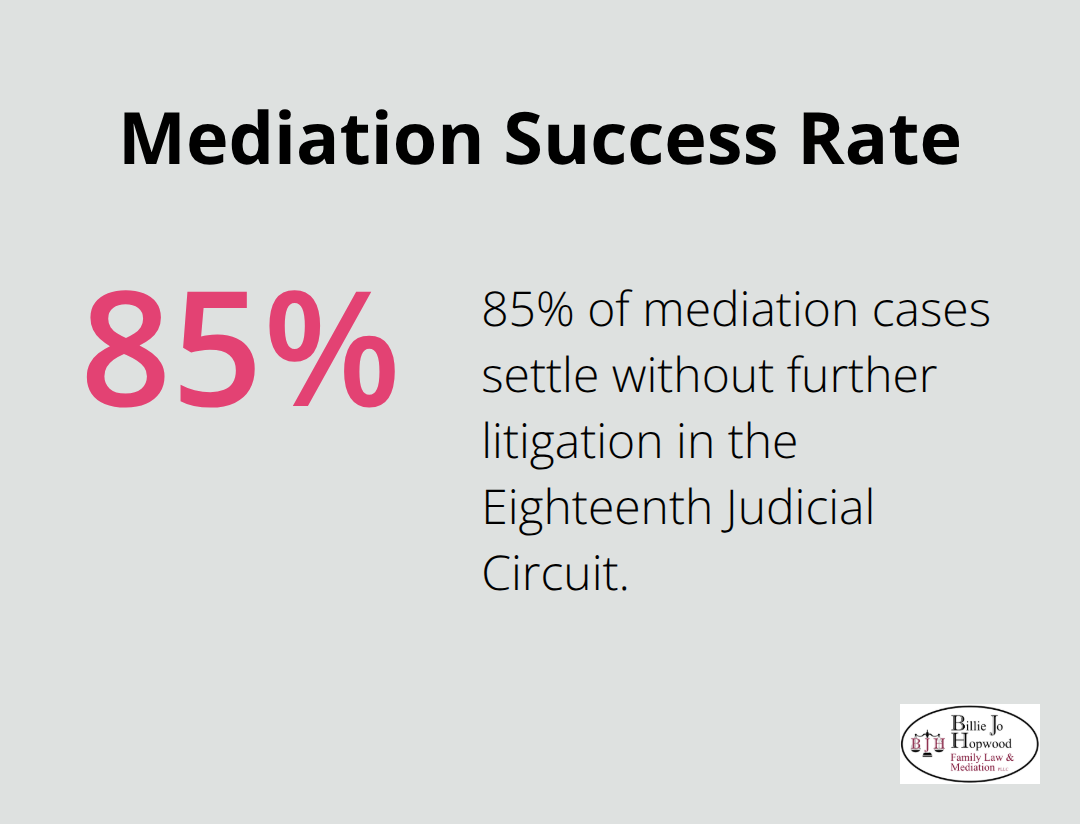
The Eighteenth Judicial Circuit reports that 85% of mediation cases settle without further litigation. Courts cannot force a settlement, but they can require good faith participation. Failure to attend mediation can result in sanctions or case dismissal (depending on the specific circumstances).

Pie chart showing 85% of mediation cases settle without further litigation

Confidentiality Protections Under State Law

Florida Statute 44.405 provides absolute confidentiality for mediation discussions. Nothing said during sessions can be used against you in court later. This protection encourages honest communication about finances, parenting concerns, and relationship issues.

The American Bar Association confirms that 90% of participants report higher satisfaction with mediated agreements compared to judge-imposed decisions. This confidentiality creates a safe space where both parties can explore creative solutions without fear of legal consequences.

Legal Enforceability of Mediated Agreements

Once signed, mediated agreements become legally binding court orders. Courts routinely enforce these agreements with the same authority as any judgment. The National Center for State Courts data shows mediated agreements have higher compliance rates than traditional court orders because both parties helped create the terms.

These agreements carry the full weight of the law (just like any court judgment). Violations can result in contempt of court charges and other legal penalties. This legal backing gives mediated agreements real teeth while maintaining the collaborative spirit of the process.

The next step involves understanding how mediation fits within the broader family law system and when it becomes part of your divorce proceedings.

When Does Mediation Happen in Your Case

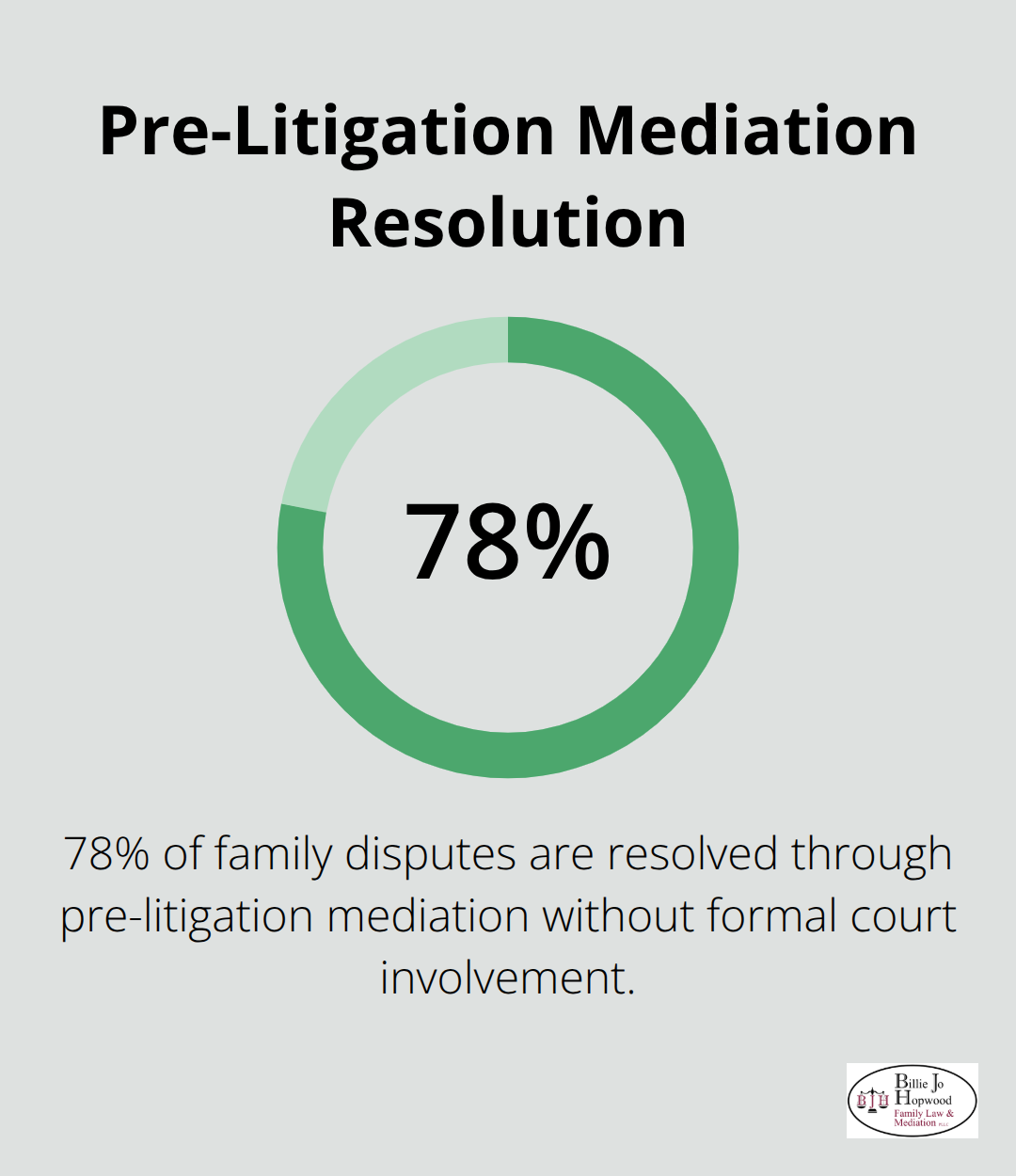
Mediation enters family law cases at three distinct stages. Each stage serves different purposes and offers unique advantages. Most Melbourne Florida couples first encounter mediation as a voluntary option before they file any court papers. The Florida Supreme Court data shows that pre-litigation mediation resolves 78% of family disputes without formal court involvement. This early intervention saves couples an average of $15,000 in legal fees compared to full litigation. Smart couples choose this path when they recognize their marriage ends but want to maintain control over the outcome.

Pie chart showing 78% of family disputes are resolved through pre-litigation mediation without formal court involvement - mediation and the law

Early Mediation Prevents Escalation

Couples who start mediation before litigation begins enjoy the greatest flexibility and lowest costs. They can address property division, parenting plans, and support issues in a private setting without court deadlines or formal discovery requirements. The American Bar Association reports that couples who mediate early spend 60% less time to resolve their divorce compared to those who start with litigation. This approach allows both parties to make decisions without the pressure of pending court dates or mounting legal bills. Pre-litigation mediation also preserves relationships (which becomes vital when children are involved and co-parenting will continue for years).

Court-Ordered Mediation During Active Cases

Once divorce papers are filed, Florida courts mandate mediation for most contested issues. Judges typically order mediation within 90 days of the initial filing. Couples must complete this process before they schedule trial dates. The Eighteenth Judicial Circuit requires mediation attendance but cannot force settlements. This court-ordered mediation costs between $60-120 per party based on combined income, which makes it affordable for most families. Failure to participate in good faith can result in sanctions, case dismissal, or unfavorable court rulings.

Post-Judgment Changes Through Mediation

Life changes after divorce often require modifications to custody, support, or parenting time arrangements. Florida law allows former spouses to use mediation for these post-judgment modifications instead of returning to court immediately. The National Center for State Courts finds that 92% of post-divorce modifications resolve through mediation without judge intervention (this process costs significantly less than filing modification motions). Families can adapt agreements as children grow or circumstances change.

These three mediation pathways offer Melbourne Florida families multiple opportunities to resolve disputes efficiently, but the benefits extend far beyond simple convenience.

Why Choose Mediation Over Court Battles

Financial Savings Add Up Fast

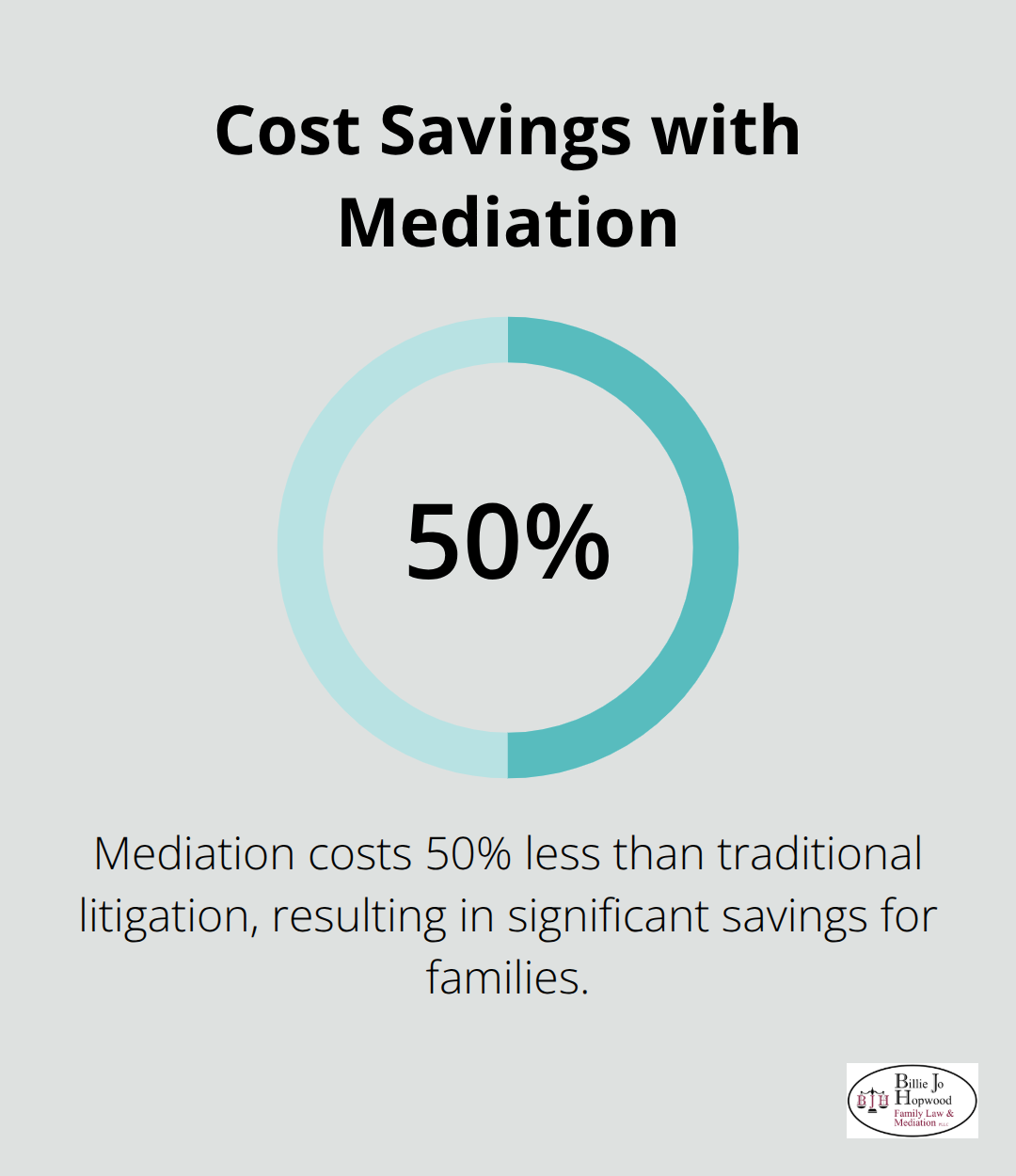
Mediation costs 50% less than traditional litigation according to the American Bar Association. A typical contested divorce through litigation runs $15,000-30,000 per spouse in legal fees alone. Court-ordered mediation in Florida costs just $60-120 per party based on combined income. The U.S. Department of Justice data shows families save an average of $12,000 when they choose mediation over courtroom battles.

These savings come from reduced attorney hours, eliminated discovery costs, and faster resolution times.

Bar chart showing mediation costs 50% less than traditional litigation - mediation and the law

Litigation can drag on for 18-24 months while mediation typically resolves cases within 3-6 months. Courts impose rigid schedules and expensive procedural requirements that mediation avoids entirely.

You Control Your Family’s Future

Judges make decisions based on limited information and rigid legal standards. They don’t know your family dynamics or unique circumstances. Mediation puts decision-making power back in your hands. The National Center for State Courts reports 90% satisfaction rates with mediated agreements compared to 60% for judge-imposed orders.

You can create flexible parenting schedules that work with your work schedule and children’s activities. Property division reflects what matters most to your family rather than generic legal formulas. Payment schedules can accommodate seasonal income or business cycles that courts rarely consider (judges typically apply standard formulas without regard for individual circumstances).

Relationships Survive the Process

Litigation creates winners and losers which damages co-parenting relationships permanently. Children suffer when parents wage war in courtrooms. Studies show that mediated divorces result in 40% less ongoing conflict between former spouses. This reduced conflict translates to better outcomes for children who need both parents to work together.

Mediation teaches communication skills that serve families long after divorce papers are signed. The collaborative approach preserves extended family relationships with grandparents and relatives who often become casualties in bitter court fights (these relationships provide vital support networks for children during difficult transitions).

Final Thoughts

Mediation and the law create a powerful partnership that protects Melbourne Florida families during difficult transitions. Florida’s mandatory mediation requirements, confidentiality statutes, and enforceability standards establish a framework that safeguards your interests while it reduces conflict. These legal protections make mediation a strong alternative to expensive court battles.

Melbourne Florida families choose mediation because it provides real control over outcomes while it preserves relationships that matter most. The 85% success rate in our local courts demonstrates this approach delivers results. Families save thousands of dollars and months of stress while they create agreements that fit their unique circumstances (rather than accept generic court orders).

We at Billie Jo Hopwood Family Law & Mediation, PLLC guide Melbourne families through this process with compassion and understanding. Our firm assists families through challenging legal situations that include divorce, child custody, alimony, and child support matters. The legal framework that supports mediation provides the structure you need while it maintains the flexibility your family deserves.

How Does Mediation Work in Divorce?

Divorce mediation offers couples a collaborative alternative to contentious court battles. Understanding how mediation works in divorce can help you make informed decisions about your family’s future.

At Billie Jo Hopwood Family Law & Mediation, PLLC, we guide couples through this structured process that puts control back in their hands. Mediation typically costs less and resolves faster than traditional litigation.

What Happens During Divorce Mediation

The Mediator’s Essential Function

A neutral mediator facilitates discussions between spouses without making decisions for them. This trained professional guides conversations, helps identify common ground, and suggests potential solutions when negotiations stall. The mediator cannot provide legal advice to either party and maintains strict neutrality throughout the process. Florida courts often require mediation before trial (with the National Center for State Courts reporting that over 75% of mediated cases reach successful agreements).

Pie chart showing 75% of mediated cases reach successful agreements

Complete Process Timeline

Divorce mediation in Melbourne typically requires 3 to 10 hours of session time spread across 2 to 4 meetings. The first session involves both parties as they present their positions while the mediator explains ground rules and confidentiality requirements. Subsequent sessions focus on specific issues like property division, child custody arrangements, and financial support. The mediator moves between private rooms where each spouse works with their attorney, facilitates communication, and explores settlement options. Most cases resolve within one day, though complex situations may need additional sessions.

Documentation Requirements

Successful mediation demands comprehensive financial preparation. Both parties must provide complete asset and debt inventories, tax returns from the past three years, bank statements, retirement account records, and property appraisals. Child-related documentation includes school records, medical information, and current schedules for parents. The Florida Bar found that couples with clearly defined objectives and complete documentation resolve cases 30% faster than those who arrive unprepared. Missing documents often force postponements and increase costs significantly.

Session Structure and Communication

Each mediation session follows a structured format that promotes productive dialogue. The mediator opens with ground rules, then each party presents their position on specific issues. Private caucuses (separate meetings with each spouse) allow for confidential discussions about sensitive topics. The mediator shuttles between rooms, carries messages, and helps parties understand different perspectives. This approach reduces direct confrontation while maintaining open communication channels between the divorcing couple.

These structured sessions create the foundation for resolving the specific issues that matter most to your family’s future.

Why Choose Mediation Over Court Battles

Financial Impact and Timeline Advantages

Divorce mediation in Melbourne costs between $3,000 and $7,000 for both parties combined, while litigated divorces range from $15,000 to $30,000 per person according to the Florida Dispute Resolution Center. Mediators charge $150 to $350 per hour compared to attorneys who bill $300 to $500 hourly. Most mediated divorces resolve within weeks or months, while court litigation can drag on for years with multiple hearings, depositions, and procedural delays. The American Bar Association reports that virtual mediation sessions run 20% shorter than in-person meetings, which further reduces costs and time commitments.

Ordered list comparing costs and benefits of mediation vs. litigation in divorce cases - how mediation works in divorce

Confidentiality and Privacy Protection

Court proceedings become public record, which means your financial details, personal disputes, and family matters are accessible to anyone. Mediation discussions remain completely confidential – nothing said during sessions can be used against you if mediation fails and you proceed to court. This privacy protection allows honest communication about sensitive topics like infidelity, addiction, or financial mistakes without fear of public exposure. Your children, employers, and community never learn intimate details about your divorce when you choose mediation over public court hearings.

Decision-Making Authority

Judges make final decisions based on limited courtroom presentations and legal precedents, often with outcomes that satisfy neither party. Mediation puts you and your spouse in control of every agreement detail. You craft solutions that work for your specific family situation rather than accept generic court orders. This control extends to timing – you schedule sessions around work and family obligations instead of wait months for available court dates. Studies show mediated agreements have higher compliance rates because both parties helped create the terms rather than had decisions imposed by a stranger in a black robe (Journal of Marriage and Family).

These advantages make mediation attractive, but success depends on how well you address the specific issues that matter most to your family.

What Issues Can Mediation Resolve

Property and Asset Division

Property division through mediation addresses Florida’s equitable distribution requirements while couples create customized solutions. Marital assets include homes, vehicles, retirement accounts, businesses, and debts that accumulated during marriage. The process requires full financial disclosure through bank statements, property appraisals, and business valuations. Couples negotiate who keeps the family home, how they divide retirement savings, and who takes responsibility for credit card debts. Florida law requires fair distribution (not necessarily equal splits), which gives mediation flexibility to account for each spouse’s contributions and future needs. Complex assets like business interests or stock options require detailed documentation and sometimes professional valuations to reach fair agreements.

Child Custody and Parental Arrangements

Child custody mediation creates detailed parental plans that address time-share schedules, decision-making authority, and communication protocols. Florida courts prioritize children’s best interests, which mediation supports through collaborative planning rather than adversarial court battles. Parents develop specific schedules for weekdays, weekends, holidays, and school breaks while they consider work schedules and children’s activities. The process covers decision-making responsibility for education, healthcare, and religious upbringing. Studies show children from mediated custody agreements experience less stress and better adjustment compared to those from litigated cases. Mediation also addresses practical details like transportation between homes, communication methods, and procedures for schedule changes.

Hub and spoke chart illustrating the advantages of mediated custody agreements for children - how mediation works in divorce

Financial Support Determinations

Alimony and child support calculations in mediation follow Florida guidelines while they allow flexibility for unique circumstances. Child support uses standardized calculations based on both parents’ incomes and time-share arrangements. Alimony considerations include marriage length, standard of living, and each spouse’s earning capacity. Mediation allows couples to structure payments creatively – perhaps higher amounts for shorter periods or graduated payments that increase over time. The process addresses health insurance coverage, educational expenses, and extraordinary costs for children with special needs. Unlike court orders with rigid terms, mediated agreements can include automatic review dates and modification procedures that adapt to changing circumstances.

Final Thoughts

Mediation offers couples substantial advantages over traditional court litigation. The process costs less, resolves faster, and maintains complete privacy while both parties control their final agreements. Understanding how mediation works in divorce helps couples make informed decisions about their family’s future.

Mediation may not work for every situation. Cases that involve domestic violence, substance abuse, or significant power imbalances between spouses often require court intervention (when one party refuses to participate honestly or attempts to hide assets, litigation becomes necessary to protect your rights). Preparation remains key to success when mediation fits your circumstances.

Gather all financial documents, consider your priorities, and approach the process with flexibility and open communication. We at Billie Jo Hopwood Family Law & Mediation, PLLC guide Melbourne families through this collaborative process. Our firm assists with divorce, child custody, alimony, and child support matters through both mediation and traditional representation when needed.

Family Law Advocacy: Protecting Your Rights

Family law cases can quickly become overwhelming when you don’t understand your fundamental rights. Many people face violations of court orders, hidden assets, and denied visitation without knowing how to respond effectively.

At Billie Jo Hopwood Family Law & Mediation, PLLC, we see how proper family law advocacy makes the difference between protecting your interests and losing what matters most to you.

What Family Law Rights Do You Actually Have?

Property Division in Florida Divorce

Florida follows equitable distribution laws, meaning courts divide marital assets fairly but not necessarily equally. You have the right to full financial disclosure from your spouse, including all bank accounts, retirement funds, real estate, and business interests. The American Bar Association reports that hidden assets appear in approximately 30% of divorce cases, which makes documentation vital.

Pie chart showing 30% of divorce cases involve hidden assets according to the American Bar Association - family law advocacy

Start to gather financial records immediately when you consider divorce – three years of tax returns, bank statements, and investment accounts create your foundation. Florida courts presume equal contribution to marital assets regardless of who earned more income. Non-marital property like inheritances or gifts received before marriage typically remains separate, but when you commingle these assets with marital funds, their status can change.

Child Custody and Support Rights

Florida courts prioritize the best interests of the child standard in all child custody decisions. You have the right to request shared parental responsibility unless domestic violence or substance abuse exists. The state eliminated permanent alimony in 2023, but child support follows strict income share guidelines based on both parents’ earnings. According to Florida Department of Revenue data, child support compliance rates reach only 68% statewide. Parents must complete a mandatory parenting course (costing approximately $40) before they finalize any case involving children. Time-sharing schedules can include overnight visits, holiday rotations, and summer arrangements. Document all interactions with your children and maintain detailed calendars of parenting time – courts rely heavily on established patterns when they make custody modifications.

Alimony and Spousal Support Entitlements

Florida’s 2023 alimony reform eliminated permanent support and created strict durational limits. Marriages under 10 years qualify for short-term alimony not exceeding 50% of marriage length. Marriages between 10-20 years allow moderate-term support up to 60% of marriage duration. Long-term marriages over 20 years can receive support up to 75% of marriage length (with exceptional circumstances potentially extending this). Courts consider 12 factors including standard of living, financial resources, and earning capacity. The requesting spouse must demonstrate actual need while the paying spouse must show ability to pay. Retirement terminates alimony obligations unless the recipient proves exceptional circumstances exist. Understanding these rights becomes even more important when violations occur, which unfortunately happens more often than most people realize.

What Rights Violations Should You Watch For

Family law violations happen far more frequently than courts can effectively monitor. Florida Department of Revenue statistics show that 32% of non-custodial parents fail to pay court-ordered child support within the first year after divorce finalization.

Pie chart showing 32% of non-custodial parents fail to pay court-ordered child support within the first year after divorce finalization - family law advocacy

The National Center for Health Statistics reports that visitation interference occurs in approximately 40% of custody cases nationwide, with fathers who experience denial of court-ordered time-sharing at twice the rate of mothers. These violations carry serious legal consequences – contempt of court charges can result in wage garnishment, asset seizure, and even jail time up to 179 days per violation.

Blocked Visitation and Parenting Time Interference

Custodial parents who deny court-ordered visitation face immediate legal action through contempt proceedings. Florida courts impose makeup time requirements that often double the missed parenting time, plus attorney fees for the wronged parent. Document every denied visit with timestamps, text messages, and witness statements – judges need concrete evidence to enforce compliance. Police reports become necessary when a parent refuses to return children or blocks scheduled exchanges. The Florida Department of Children and Families tracks parental alienation cases, which have increased 15% since 2020 according to their annual reports.

Financial Deception During Asset Division

Hidden assets represent the most costly violation in family law cases. The American Academy of Matrimonial Lawyers found that cryptocurrency concealment has increased 73% in divorce proceedings since 2019. Forensic accountants can trace these assets, but discovery costs range from $5,000 to $25,000 (depending on complexity). Florida courts impose severe penalties for concealment – automatic award of hidden assets to the innocent spouse plus attorney fees and sanctions. Watch for sudden business expenses, new safe deposit boxes, or transfers to family members during divorce proceedings. Bank account monitoring services cost approximately $50 monthly but can identify suspicious transactions that standard discovery might miss.

Child Support Payment Failures

Non-payment of child support affects millions of children nationwide. Florida’s Department of Revenue collected only $1.2 billion of the $2.8 billion owed in child support during 2023. Courts can garnish wages, seize tax refunds, and suspend driver’s licenses for non-compliance. Interstate cases become more complex when parents move across state lines to avoid payment (the Uniform Interstate Family Support Act addresses these situations). Document all missed payments with exact dates and amounts – this evidence becomes vital for contempt proceedings and collection efforts. Protecting yourself from these violations requires proactive steps and proper legal guidance.

How Do You Safeguard Your Family Law Rights

Protection of your rights in family law demands aggressive documentation and strategic action from day one. The Florida Bar Association reports that cases with comprehensive documentation achieve favorable outcomes 78% more often than those that rely on verbal agreements or incomplete records.

Bar chart showing cases with comprehensive documentation achieve 78% more favorable outcomes compared to those relying on verbal agreements or incomplete records

Create a detailed chronological file immediately when family law issues arise – include dates, times, witnesses, and exact quotes from all conversations with your spouse or co-parent. Email communications provide stronger evidence than text messages because they contain timestamps and cannot be easily altered. Voice recordings require two-party consent in Florida, but detailed written summaries of phone conversations made immediately afterward carry significant legal weight.

Document Everything With Legal Precision

Court-admissible evidence follows strict requirements that many people overlook. Screenshots of social media posts need metadata preservation – simple photos often get excluded because judges cannot verify authenticity. Financial documentation must include three years of complete records that cover bank statements, tax returns, pay stubs, and investment accounts. The American Academy of Matrimonial Lawyers found that 85% of successful asset recovery cases involved forensic accounting evidence collected within the first 90 days of divorce filing. Store all documents in multiple formats – physical copies, cloud storage, and with your attorney. Calendar entries that document parenting time, missed visits, and communication attempts become powerful evidence in custody modifications. Florida courts require specific formatting for exhibits (so professional legal guidance prevents costly procedural mistakes that can exclude vital evidence from consideration).

Choose Experienced Legal Representation Immediately

The timing of legal representation directly impacts case outcomes according to Florida Supreme Court statistics. Cases with attorney involvement from the initial filing resolve 40% faster and achieve more favorable settlements than those where legal counsel enters mid-process. Attorney selection requires careful evaluation – look for practitioners who handle 80% or more family law cases rather than general practice lawyers. Florida Bar certification in marital and family law indicates advanced training and continued education requirements. Initial consultations should include case strategy discussions, fee structures, and realistic timeline expectations. Flat-fee arrangements work better for uncontested matters, while hourly billing suits complex litigation. The average family law case in Florida costs between $8,000 and $15,000 according to the Florida Association of Family and Conciliation Courts (but early legal intervention often reduces total expenses by preventing costly mistakes and procedural delays).

Master Court Procedures and Critical Deadlines

Florida family courts operate under strict procedural rules that can destroy your case if you miss key deadlines. Response times for petitions typically allow 20 days, but extensions require formal motions filed before expiration. Financial affidavits must be updated every 90 days during active litigation, and incomplete forms result in automatic case delays. Discovery deadlines cannot be extended without court approval and opposing counsel consent. Motion practice requires specific formatting – incorrect margins or font sizes can result in rejection by the clerk’s office. Court appearances demand professional attire and proper etiquette (address judges as “Your Honor” and stand when they enter or leave). Case management conferences occur every 120 days in contested matters, and failure to appear can result in default judgments against you. For unmarried couples, cohabitation agreements can provide essential legal protection by establishing clear property rights and financial responsibilities before disputes arise.

Final Thoughts

Your family law rights form the foundation of your financial security and parental relationships for years to come. The statistics we’ve examined show that violations occur in nearly one-third of all cases, which makes proactive protection absolutely necessary. Without proper documentation and legal guidance, you risk the loss of custody time, hidden assets, and court-ordered support payments that rightfully belong to you.

Professional family law advocacy provides the strategic advantage needed to navigate Florida’s complex legal system successfully. Cases with attorney representation from the beginning resolve 40% faster and achieve significantly better outcomes than those handled without legal counsel. The procedural requirements, strict deadlines, and evidence standards demand professional knowledge that most people simply cannot master while they manage the emotional stress of family disputes (which often clouds judgment during critical decisions).

We at Billie Jo Hopwood Family Law & Mediation, PLLC understand how overwhelming family law cases can become. We’re committed to help Melbourne, Florida families through these challenging situations with compassionate legal guidance. Your rights matter, and their protection requires decisive action today.