Family disputes don’t have to end in courtroom battles. Collaborative family law offers a peaceful alternative where both parties work together with trained professionals to reach mutually beneficial agreements.
At Billie Jo Hopwood Family Law & Mediation, PLLC, we’ve seen how this approach transforms difficult situations into manageable conversations. This method prioritizes cooperation over confrontation, saving families time, money, and emotional stress.
What Makes Collaborative Family Law Different
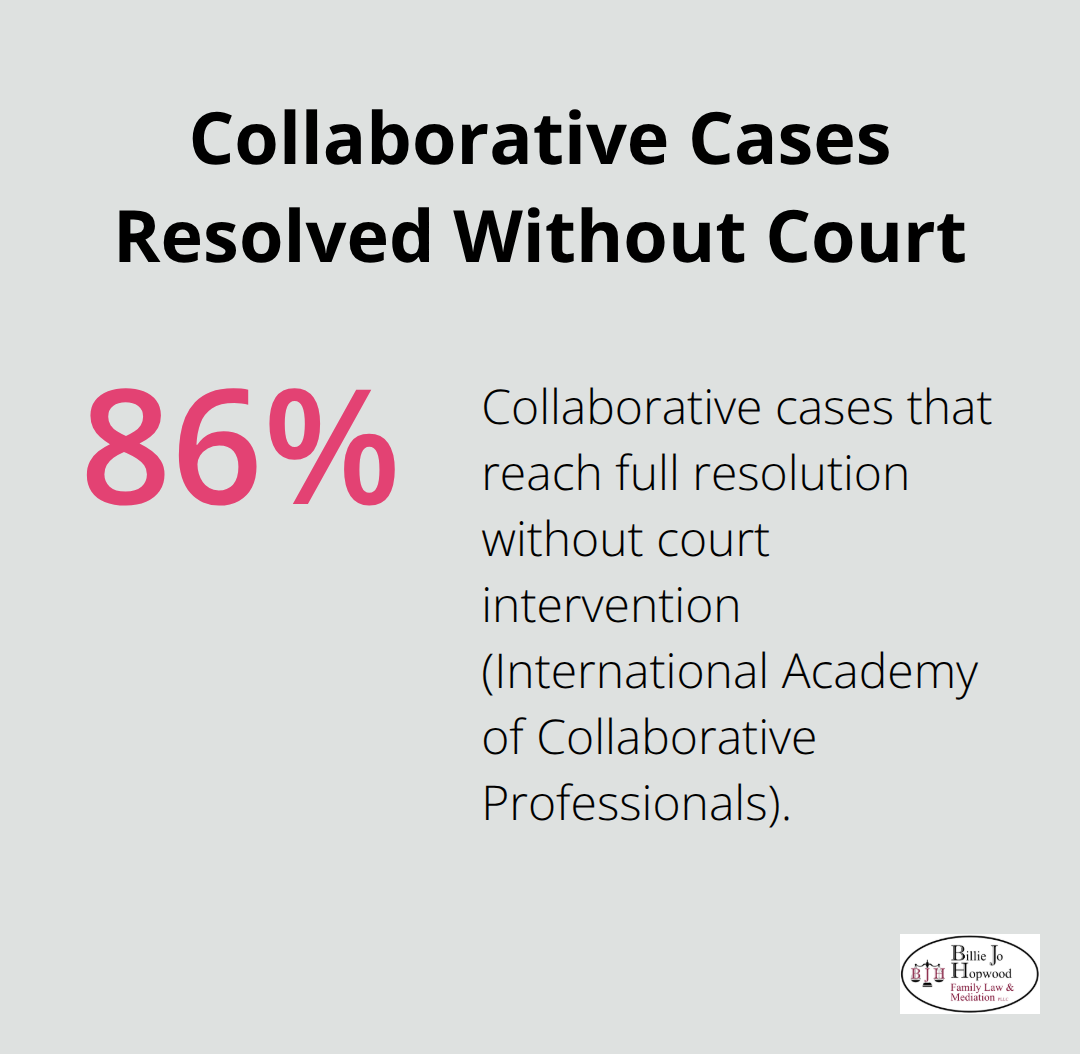
Collaborative family law operates on a simple premise: both parties sign a written agreement that commits them to resolve their disputes outside of court. This contract creates powerful incentives for everyone to cooperate because attorneys must withdraw if the process fails and litigation becomes necessary. The International Academy of Collaborative Professionals reports that 86% of collaborative cases reach full resolution without court intervention.
The Team-Based Structure
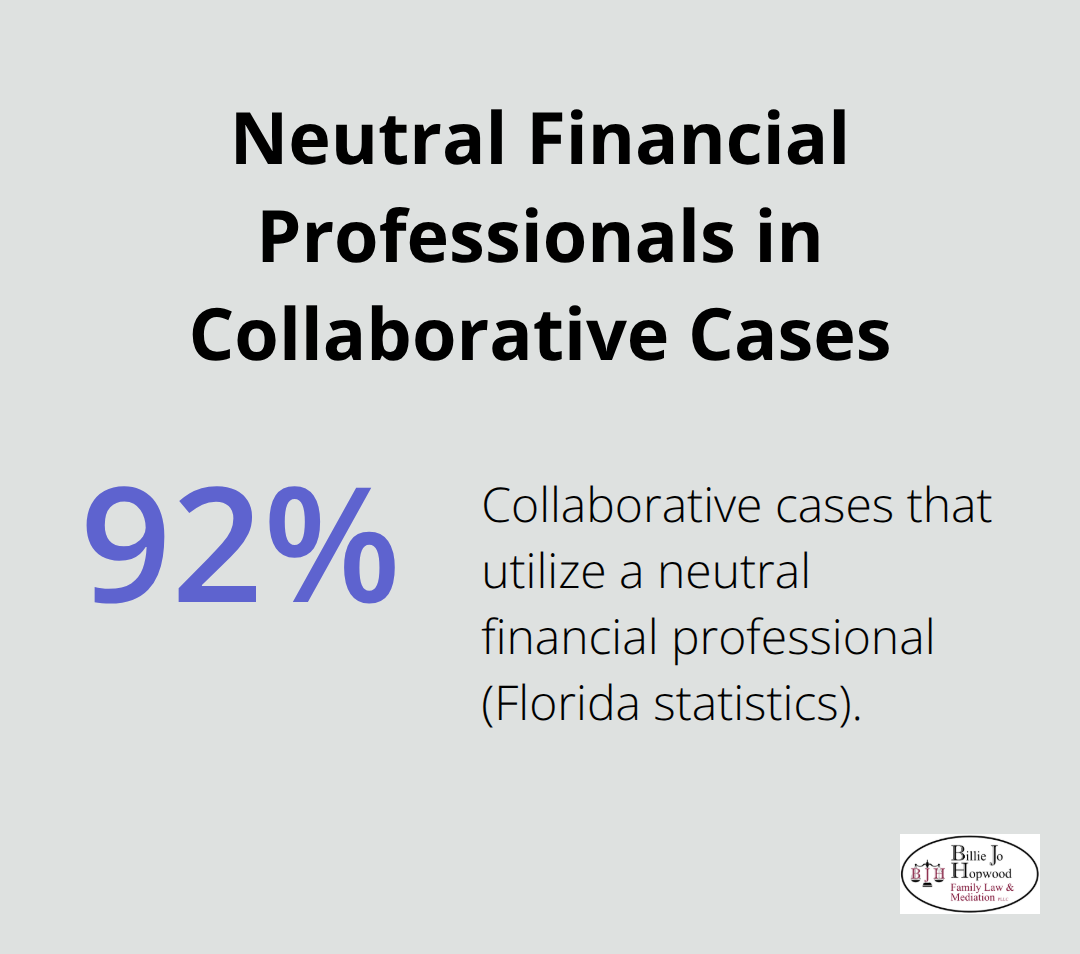
Traditional divorce pits each side against the other with combative attorneys. Collaborative law assembles a neutral team instead. Each spouse selects a collaboratively-trained attorney, but the process also includes shared professionals like financial analysts and mental health coaches. This structure eliminates the dueling professionals approach that drives up costs in litigation. The American Academy of Matrimonial Lawyers notes that 92% of collaborative cases utilize a neutral financial professional, while 84% include a mental health facilitator. These professionals work for both parties simultaneously, not against each other.
Control Over Timing and Outcomes
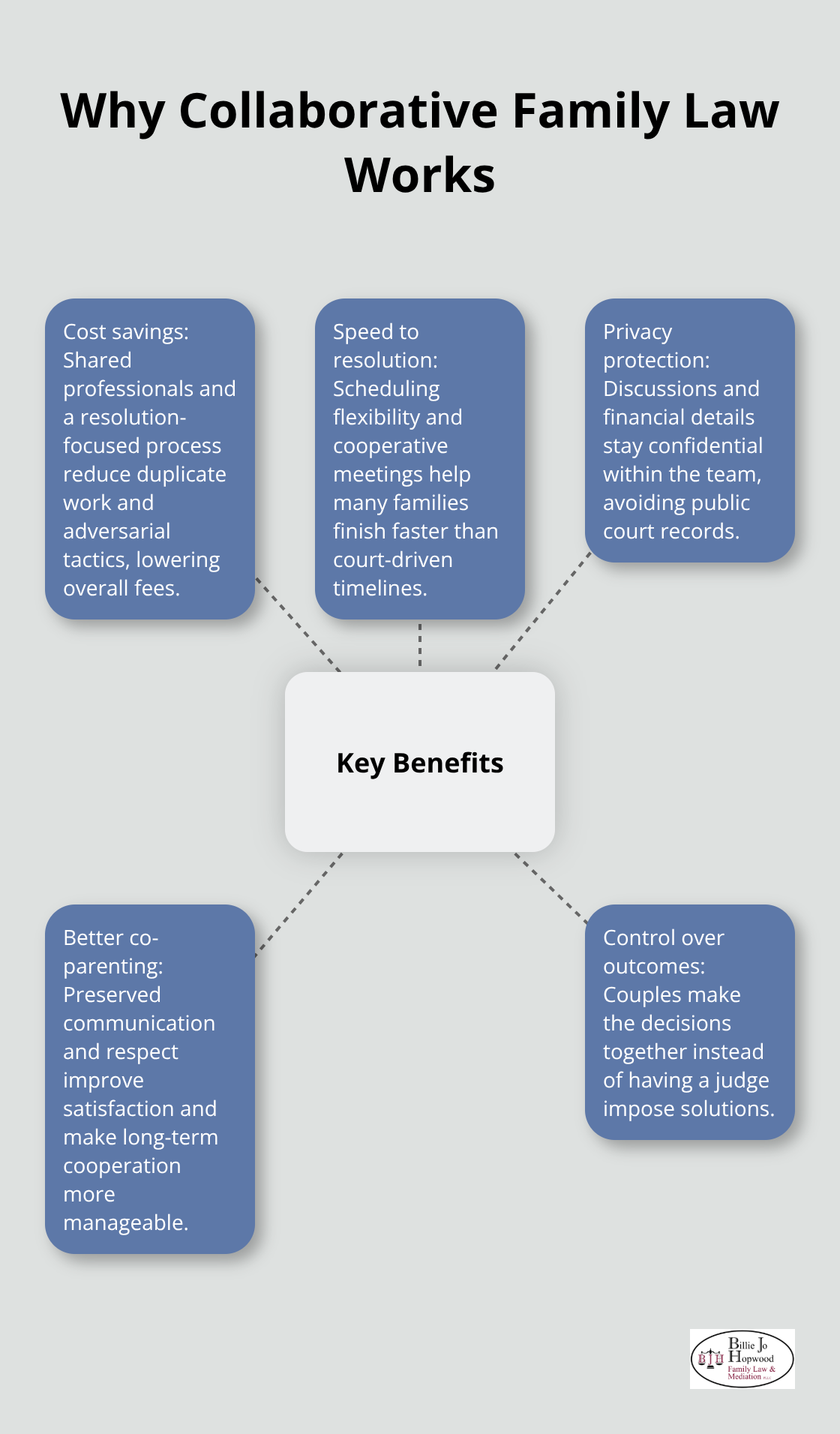
Traditional litigation follows court schedules that can stretch cases for years. Collaborative law allows families to schedule meetings at their convenience (often completing the entire process within six months). Florida data shows 60% of collaborative divorces finish within this timeframe. More importantly, the couple makes all decisions together rather than having a judge impose solutions. This control leads to higher satisfaction rates and better compliance with agreements long-term.
Privacy Protection
Court proceedings become public record, exposing personal family matters to anyone who requests the files. Collaborative law maintains complete confidentiality throughout the process. All discussions, financial information, and family details remain private between the parties and their team. This privacy protection proves particularly valuable for families with children or public-facing careers (where reputation matters significantly).
The collaborative approach requires both parties to commit fully to the process, which raises important questions about whether this method suits every family situation.
Why Choose Collaborative Family Law Over Court
Cost Savings That Matter
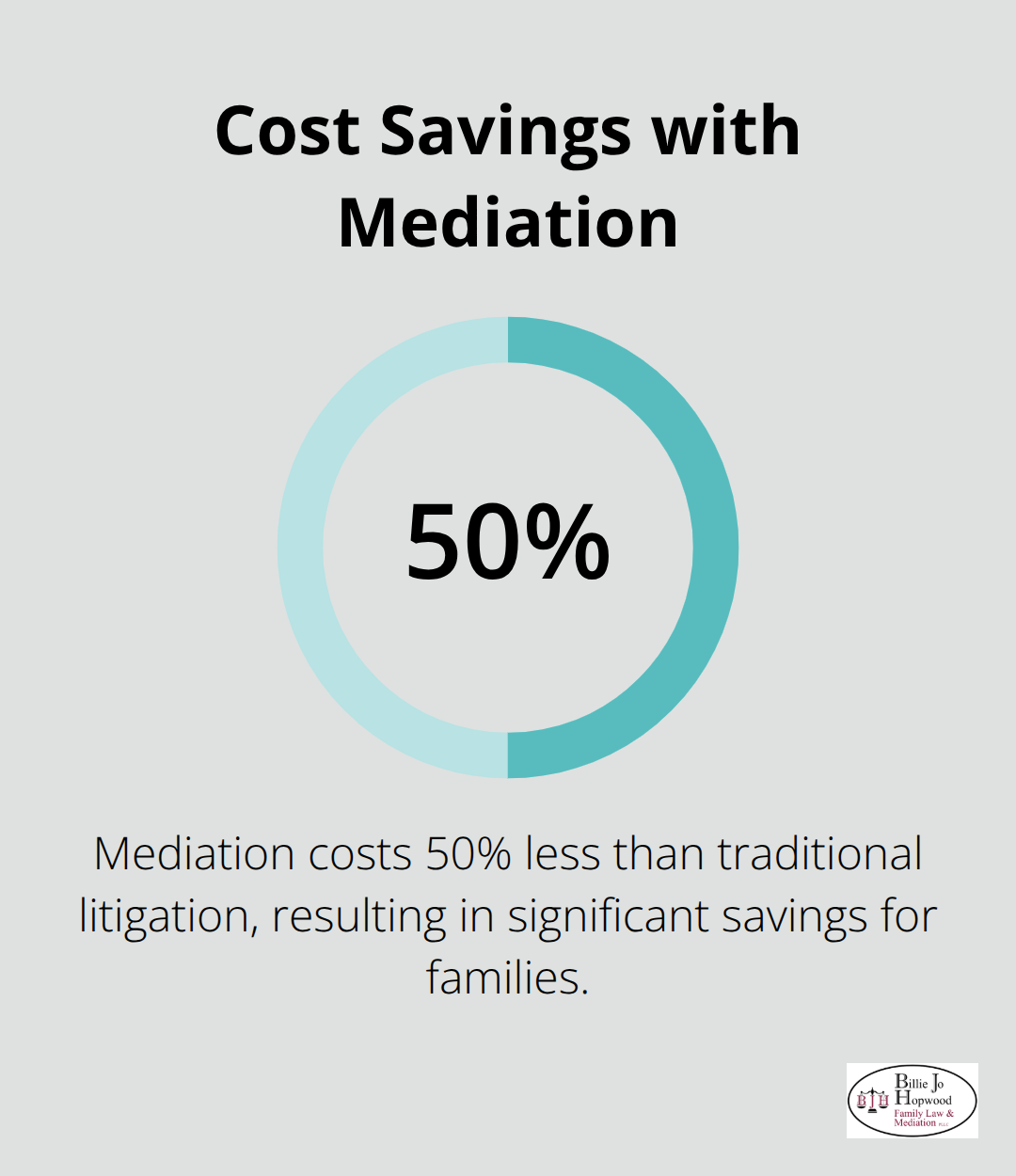
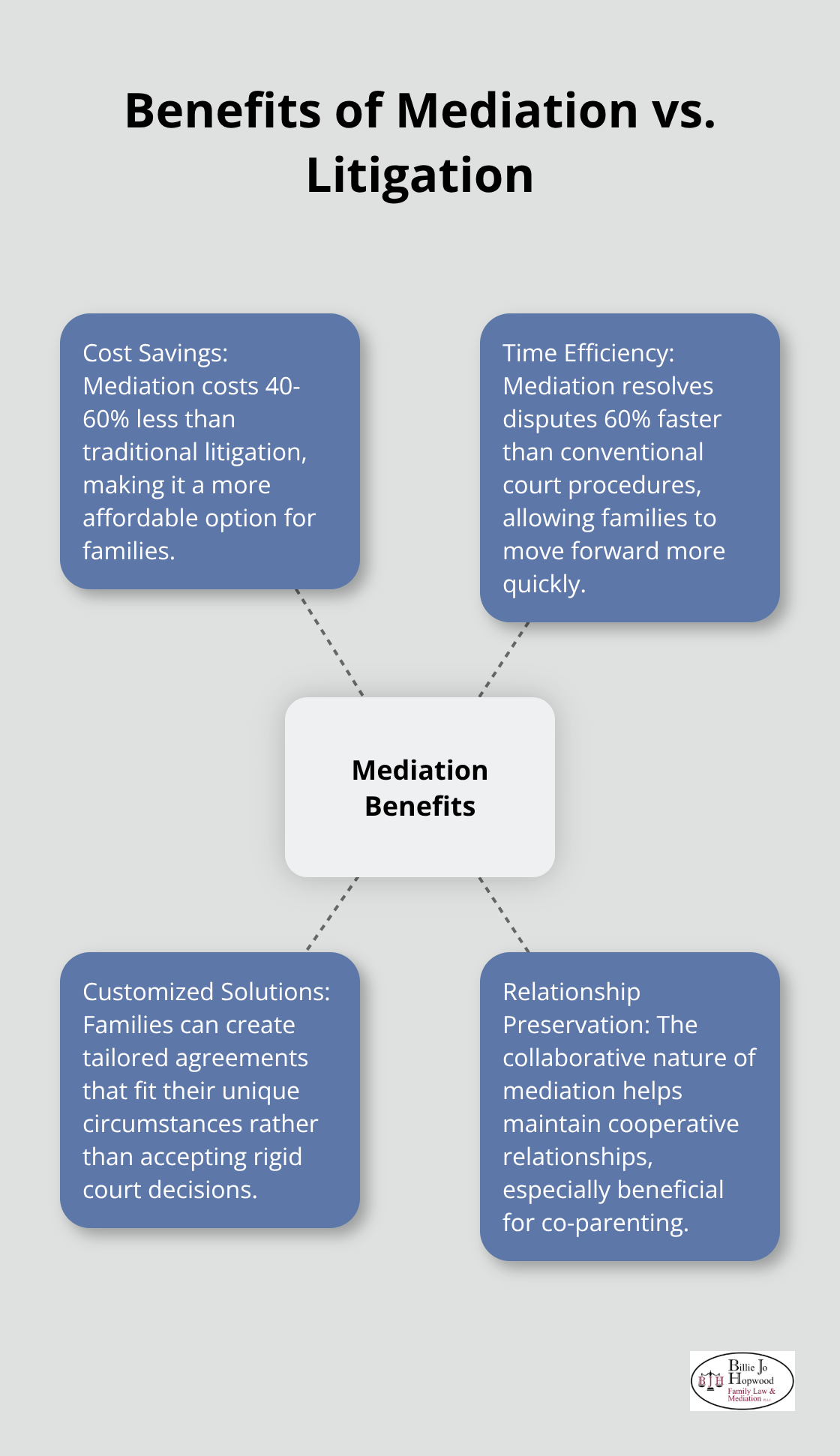
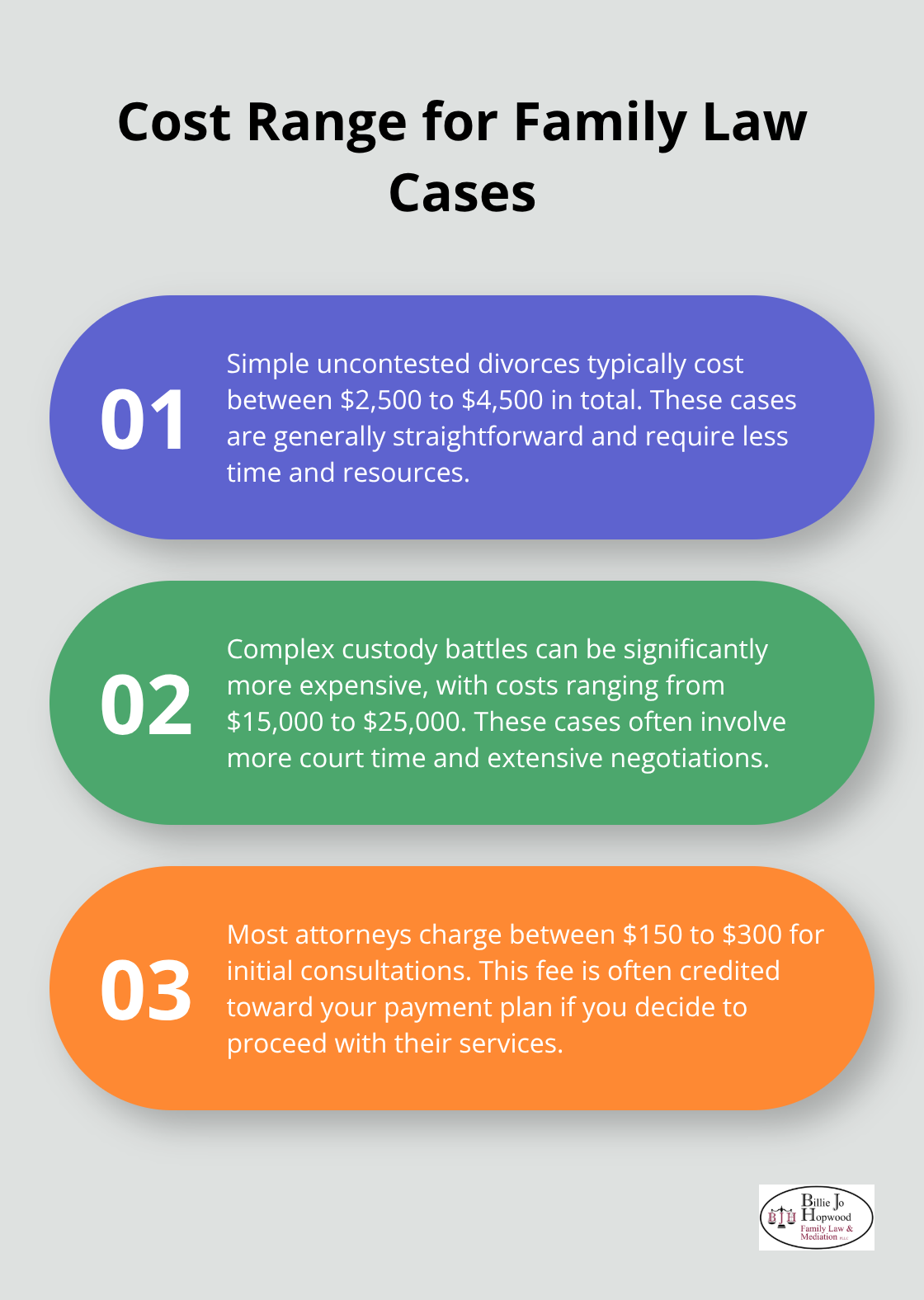
The financial reality of collaborative family law speaks volumes about its value. Florida data shows 63% of collaborative cases cost between $20,000 and $75,000 total, while traditional litigation often exceeds $100,000 per party. This dramatic cost difference stems from the cooperative structure that eliminates adversarial tactics. When both attorneys commit to resolution rather than prolonged conflict, billable hours drop significantly. The shared professional model also cuts expenses since one financial analyst and one mental health facilitator serve both parties instead of each side hiring separate professionals.
Speed Protects Your Financial Future
Traditional divorce cases drag through court systems for 12 to 24 months on average and generate massive legal fees throughout this period. Collaborative cases complete within six months 60% of the time according to International Academy of Collaborative Professionals data. This speed protects your finances in two ways: lower legal costs and faster access to your assets. Lengthy litigation ties up marital property while attorneys battle over every detail. Collaborative law frees up resources quickly so both parties can rebuild their financial lives.
Better Relationships Lead to Better Outcomes
Children benefit most when parents maintain respectful communication post-divorce. The Journal of Divorce & Remarriage reports higher satisfaction rates among families who choose collaborative methods over litigation. This satisfaction stems from preserved relationships that make co-parenting manageable long-term. Collaborative law builds communication skills during the divorce process rather than destroys them through adversarial combat. Parents learn to negotiate effectively, compromise respectfully, and focus on solutions instead of blame.
The American Psychological Association research confirms that cooperative divorce methods produce lower overall conflict (which directly translates to reduced legal expenses and faster resolution timelines). These skills serve families for decades after the divorce finalizes and create stable environments for children while reducing future legal conflicts.
However, collaborative law works best only under specific circumstances that require careful consideration.
When Does Collaborative Law Succeed
Collaborative law works best when both parties maintain mutual respect despite their differences and share a genuine commitment to avoid court battles. Trust forms the foundation of successful collaborative cases, even when couples disagree on major issues like property division or parenting arrangements. The International Academy of Collaborative Professionals data shows that couples who can communicate effectively without screaming matches or personal attacks achieve resolution in 86% of cases.
High-Asset Cases Benefit Most
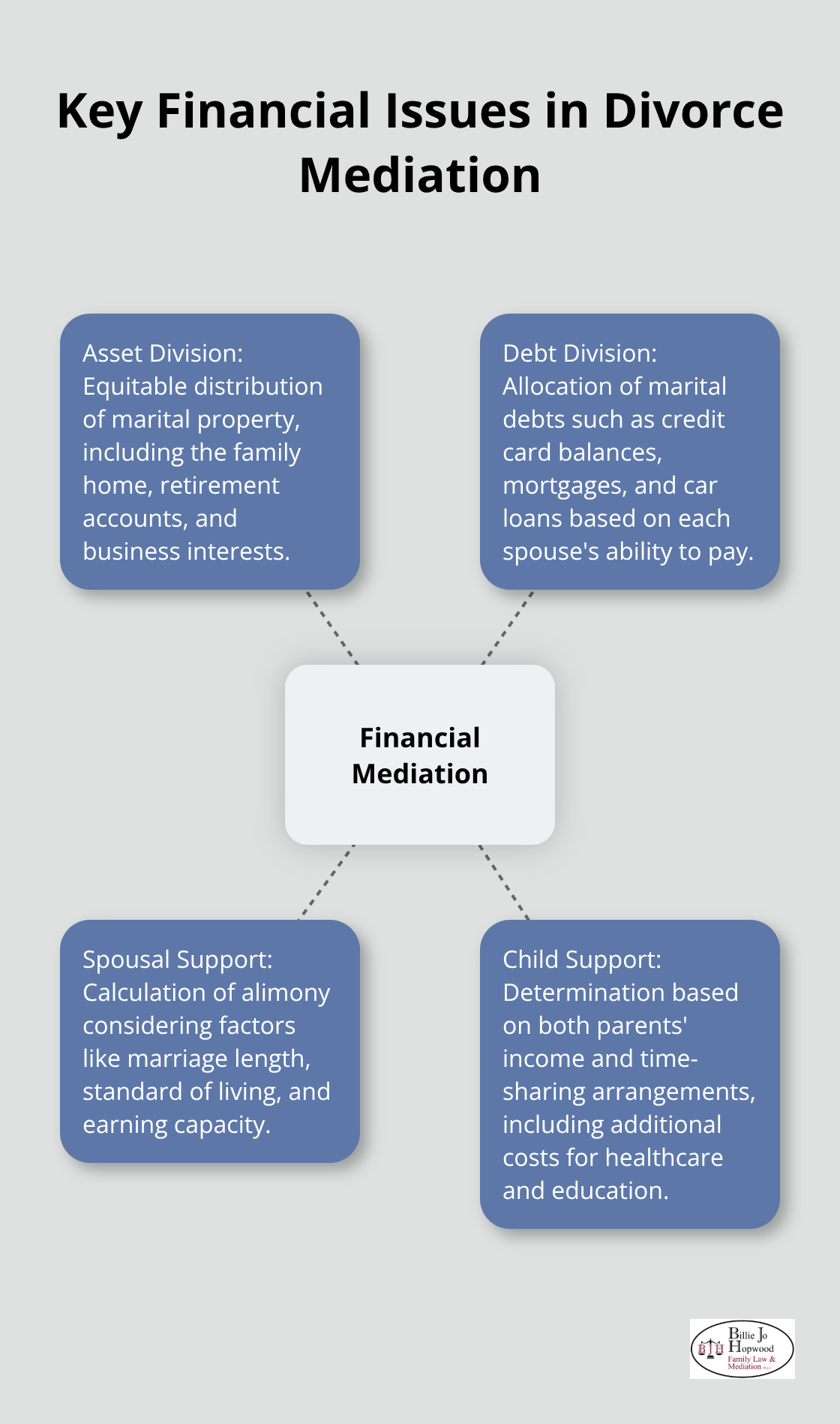
Complex financial situations with significant assets, business interests, or retirement accounts require detailed analysis that collaborative law handles exceptionally well. Florida statistics reveal that 92% of collaborative cases utilize neutral financial professionals who organize complex financial information and create realistic post-divorce budgets. These cases justify the collaborative approach because the cost savings over litigation become substantial when dealing with intricate asset valuations and tax implications (particularly for business owners or professionals with multiple income streams).
Communication Skills Matter
Successful collaborative cases require both parties to express their needs clearly and listen to their spouse’s concerns without interrupting or attacking. Couples must focus on future solutions rather than past grievances to make progress in meetings. The process demands emotional maturity from both spouses, as they need to separate their feelings about the marriage from practical decisions about finances and children.
Domestic Violence Disqualifies Most Cases
Collaborative law fails when power imbalances or domestic violence history exists between parties. The cooperative model requires both spouses to negotiate in good faith, which becomes impossible when one party fears the other or cannot speak freely during meetings. Mental health professionals involved in collaborative cases identify these situations quickly, but families with documented abuse patterns should pursue traditional litigation with protective measures instead.
Financial Transparency Requirements
The collaborative process also struggles when one party refuses to disclose financial information honestly or attempts to hide assets from the neutral financial professional. Both spouses must provide complete financial documentation and answer questions truthfully about their income, debts, and assets. This transparency requirement eliminates cases where one party has a history of financial deception or refuses to cooperate with discovery requests (which would make the collaborative process ineffective from the start).
Final Thoughts
Collaborative family law provides clear advantages over traditional litigation through its cooperative structure and shared professional approach. The 86% success rate, combined with cost savings between $20,000-$75,000 compared to litigation’s $100,000+ per party, makes this method financially attractive for many families. The six-month completion timeframe for 60% of cases offers faster resolution while complete privacy protects sensitive family matters.
The decision to pursue collaborative family law depends on your family’s specific circumstances. Couples with mutual respect, complex financial situations, and children benefit most from this approach. Cases with domestic violence or financial deception require traditional litigation instead (where protective measures can be implemented effectively).
We at Billie Jo Hopwood Family Law & Mediation, PLLC guide Melbourne, Florida families through collaborative processes with compassionate representation in divorce, child custody, alimony, and child support matters. The first step involves a consultation to assess whether collaborative family law suits your situation. This initial meeting evaluates your family dynamics, financial complexity, and communication abilities to determine the best path forward.